Trump’s War Sparks Global Oil Crisis, Gas Prices Soar
A global oil crisis, marked by soaring gas prices and economic turmoil, has emerged following a conflict initiated by former President Trump. Nobel laureate Paul Krugman warns of 'physical' oil shortages as the Strait of Hormuz faces potential closure, impacting everything from transportation to agriculture. The situation is described as the worst energy shock since the 1970s, with significant economic fallout and uncertainty ahead.

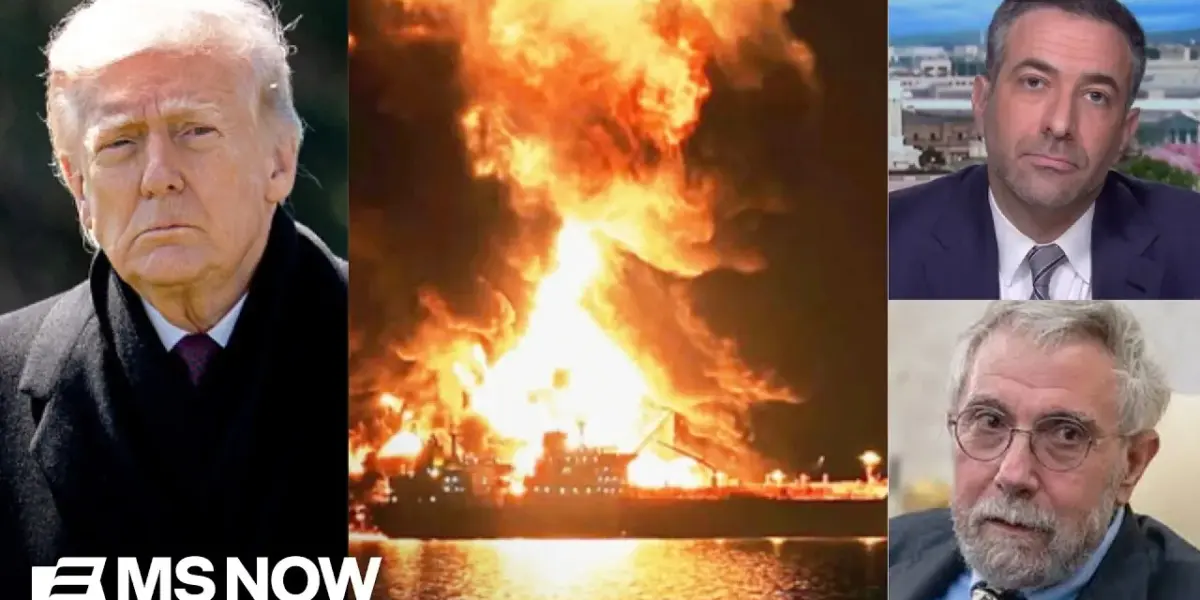
Oil Prices Skyrocket Amidst Trump-Initiated Conflict
Gasoline prices have surged to $4 a gallon, a drastic increase that is already impacting everyday citizens and the broader economy. This crisis is directly linked to a conflict initiated by former President Trump, which has led to the potential closure of the Strait of Hormuz, a critical chokepoint for global oil transport. Twenty percent of the world’s oil passes through this strait, and its blockage by Iran is a primary driver of the current price spikes.
Economic Fallout: Stock Market Plunges, Recession Fears Grow
The economic repercussions are widespread and severe. The stock market has experienced a significant downturn, with analysts pointing to the war and the resulting uncertainty as key factors. Stocks are reportedly on pace for their worst quarter in four years, a decline not seen in many years. Some market watchers are even calling the situation a ‘gut punch’ that could lead to a ‘Trump recession.’ While recessions aren’t always solely attributable to the incumbent, if this downturn is caused by the war, the blame falls on Trump’s policies.
Confusion and Contradiction in Policy
Amidst the crisis, there appears to be significant confusion and contradiction within the Trump administration’s policy. Reports indicate that Trump and his aides considered a mission to reopen the Strait of Hormuz but decided against it, fearing it could escalate the conflict beyond their control. Trump has publicly stated that other countries should take responsibility for securing the waterway, suggesting that the U.S. Navy shouldn’t bear the entire burden. He even pointed to the Royal Navy as a potential force to address the issue.
“There are countries around the world who ought to be prepared to step up on this critical waterway as well. It’s not just the United States Navy.”
– Former President Trump (via Truth Social)
This stance has been described as a ‘surrender’ on a crucial energy issue. Furthermore, there are discussions within the White House about potentially deploying troops on the ground, adding another layer of uncertainty to an already volatile situation.
Nobel Laureate Paul Krugman Explains the ‘Physical’ Shortage
Nobel Prize-winning economist Paul Krugman, in a recent newsletter, highlighted that the crisis is becoming ‘physical.’ He explained that for weeks, the world has been relying on oil that was already in transit and unaffected by the conflict. However, that supply is now running out. Physical oil shortages are beginning to appear in Asia and will soon hit Europe. This marks a shift from financial speculation to a genuine ‘where is the oil?’ scenario.
The Impact on Diesel and Jet Fuel
Krugman emphasized that the impact on diesel fuel is far more significant than on gasoline. Every truck and much of business activity relies on diesel. While gas prices have risen by $1 a gallon, diesel has jumped by $1.70 a gallon. Jet fuel prices have doubled, leading airlines like United to cancel flights due to the prohibitive costs. The price of fertilizer for American farms has also surged, as much of it was transported through the Strait of Hormuz.
“$4 a gallon gas, that’s less than half the problem. The effects on diesel fuel, which everything runs on there. Every truck runs on diesel. All of the business activity runs on diesel and gas is up $1 a gallon, diesel is up $1.70 a gallon. Jet fuel has doubled.”
– Paul Krugman
Krugman described this as the ‘greatest shock to global energy supplies ever,’ surpassing even the crises of the 1970s. He attributes this unprecedented situation to the decisions of one individual who initiated a war he now appears to be backing away from.
Citizens Bear the Brunt of Rising Costs
The human cost of this crisis is palpable. Ordinary citizens are struggling with the rising prices at the pump and the associated increase in the cost of groceries. For those who spend hours commuting for work, the increased fuel costs represent a significant financial burden. Many feel that the situation is unfair, especially when already dealing with other economic pressures.
Market Uncertainty and Future Outlook
The stock market’s volatility reflects the deep uncertainty surrounding the conflict and its resolution. While a potential de-escalation might offer temporary relief, the underlying issues remain. Analysts warn that current market prices may not fully reflect the potential severity of a sustained closure of the Strait of Hormuz. A sustained disruption could lead to oil prices of $200 a barrel, a scenario that would be catastrophic for the global economy.
What’s Next?
The coming weeks will be critical in determining the trajectory of the oil crisis. All eyes will be on diplomatic efforts to de-escalate the conflict and reopen the Strait of Hormuz. The administration’s next moves, along with the responses of international allies, will significantly influence global energy markets and the broader economic outlook. The world watches to see if a sustainable solution can be found before the situation deteriorates further.
Source: ‘Where is the oil?!’: ‘Warmonger’ Trump’s crisis gets REAL as gas prices SKYROCKET (Nobel economist) (YouTube)

Related Articles


President’s Ballroom Meltdown Distracts From Real Issues
President Trump's press conference, meant to discuss voting, devolved into a heated defense of a halted White House ballroom project. His combative exchanges with reporters, particularly when questioned about rising gas prices, highlight a distraction from pressing national issues.


Markets Rally as Iran War Hopes Rise, Gas Prices Surge
Markets surged on questionable hopes of an end to the Iran war, while oil prices climbed, pushing gas to over $4 a gallon. President Trump urged allies to secure their own oil amidst shifting tones on the U.S. military campaign and disruptions to the Strait of Hormuz.


Houthis Threaten Global Trade: Bab el-Mandeb Strait Risk
Yemen's Houthi rebels are threatening to block the Bab el-Mandeb Strait, a critical global shipping route. Such a move could trigger an unprecedented oil shock and severely disrupt world trade. The group appears prepared for potential military retaliation, possibly adopting a strategy of attrition.