Trump’s War Rhetoric Fuels Global Instability and Distrust
An analysis of Donald Trump's recent statements on the escalating conflict with Iran reveals a pattern of unsubstantiated claims and inflammatory rhetoric. Critics argue this approach fuels global instability, alienates allies, and potentially exacerbates the conflict.

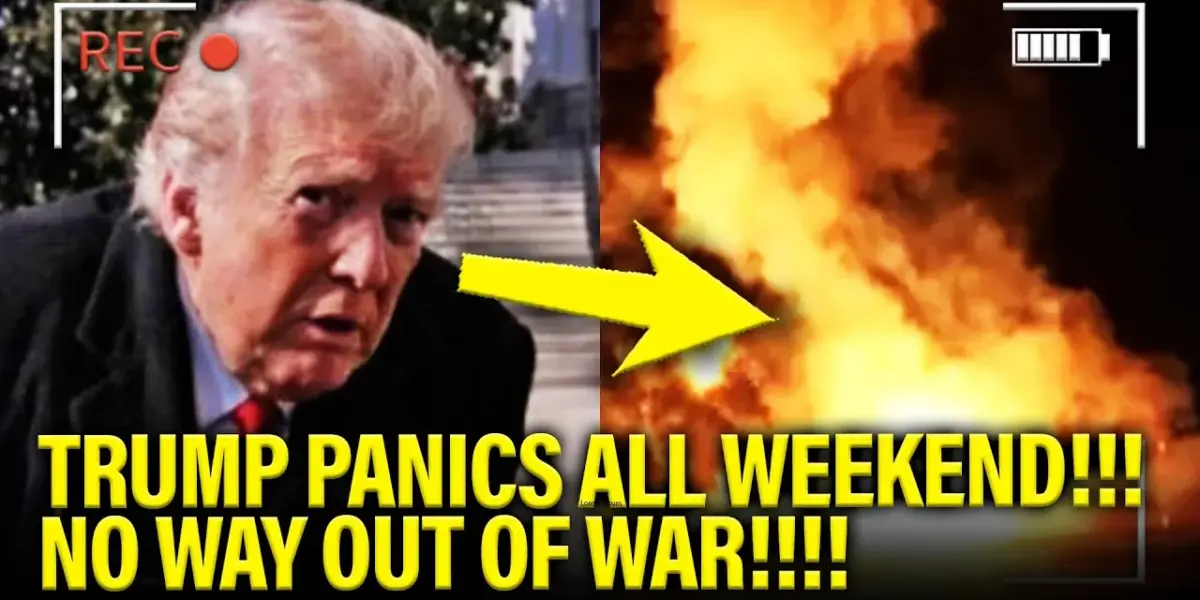
Trump’s War Rhetoric Fuels Global Instability and Distrust
In a landscape increasingly defined by geopolitical tension, the pronouncements of former President Donald Trump regarding the escalating conflict involving Iran have drawn sharp criticism for their perceived inaccuracy, inflammatory nature, and potential to exacerbate global instability. The analysis presented in the transcript suggests a pattern of Trump making unsubstantiated claims about international cooperation, military successes, and the motivations of global actors, all while seemingly downplaying the severity of ongoing hostilities and the potential for wider conflict.
Questioning the Narrative of United Fronts
Central to the critique is Trump’s assertion that numerous nations are joining the United States in a naval coalition to ensure safe passage through the Strait of Hormuz. The transcript strongly refutes this, labeling it as a fabrication that would likely surprise the very countries Trump claims are participating. This divergence between Trump’s public statements and the alleged reality on the ground is presented as a sign of desperation and a willingness to mislead, potentially alienating actual allies and making the U.S. appear weak on the international stage.
The transcript also challenges Trump’s claims of having “destroyed 100% of Iran’s military capability.” Evidence to the contrary, such as ongoing attacks attributed to Iran on surrounding nations and U.S. interests, is cited. Furthermore, Trump’s assertion that Iran has been “totally decapitated” is directly contradicted by observations of a smooth transfer of power and the visible unity of Iranian leadership. This narrative suggests a disconnect between Trump’s pronouncements and the complex, ongoing realities of the region.
The Peril of Inflammatory Language and Misinformation
The analysis highlights the damaging effect of Trump’s rhetoric, particularly his statement about “bombing the hell out of the shoreline.” Such language, the transcript argues, not only alienates potential international partners but also serves to rally the Iranian population around their current regime. The argument is made that this approach, rather than fostering support for the U.S., inadvertently strengthens the very government it aims to oppose, by framing the conflict as a stark choice between the current Islamic Republic and a perceived threat of obliteration. This perspective suggests a fundamental misunderstanding of how to build coalitions and garner support in times of conflict.
Adding to the concern is Trump’s engagement with news regarding military incidents. His public commentary on damaged U.S. tanker planes in Saudi Arabia, where he disputes the extent of the damage and criticizes media outlets, is seen as problematic. The transcript posits that even if his claims are accurate, revealing such operational details in a war zone is akin to providing intelligence to the adversary. This pattern of challenging established reporting, while simultaneously potentially compromising sensitive information, is presented as a dangerous combination.
A Widening and Interconnected Global Conflict
The transcript paints a picture of a conflict that is not isolated but is rapidly expanding and interconnecting across multiple fronts. It draws parallels between the current situation and Russia’s invasion of Ukraine, suggesting a deepening alliance between Iran and Russia. The claim that Iran is providing drone support to Russia, thus drawing Ukraine into the conflict under Article 51 of the UN Charter, is presented as a significant formalization of this global war. This perspective suggests that the actions in the Middle East are not disconnected from the war in Eastern Europe, but are part of a larger, more complex geopolitical struggle.
Further evidence of this expansion includes North Korea’s ballistic missile tests, which are linked to the U.S. repositioning its missile defense systems from South Korea to the Middle East due to a perceived depletion of munitions. The refusal to provide promised military support to Taiwan is also cited as a consequence of these shifting priorities. The transcript also points to incidents such as smoke rising from the U.S. embassy compound in Baghdad and extensive damage in Beirut, Lebanon, as indicators of the war’s broadening reach and intensity.
Historical Context and Strategic Missteps
The analysis touches upon historical patterns of conflict and strategic decision-making. The mention of the KC-135 Stratotanker crash in Iraq, and the perceived delay or lack of transparency in acknowledging casualties, raises questions about military reporting and accountability. The transcript also references the strategic implications of removing missile defense systems from South Korea, a move allegedly warned against, highlighting the complex trade-offs and potential vulnerabilities created by resource allocation in a globalized conflict.
The piece implicitly draws a contrast between Trump’s approach and more conventional strategic thinking. The former Defense Secretary Mark Esper’s assessment that Iran may have more endurance than the U.S. and Israel, and that their institutions remain largely intact, offers a counterpoint to Trump’s optimistic but questioned narratives of imminent victory. Esper’s observation that the Iranian people have not yet taken to the streets to protest is juxtaposed with concerns about economic pressures and political implications within the U.S.
The transcript concludes by questioning the strategic basis of Trump’s pronouncements, particularly his statement that the war will end “when I feel it in my bones.” This is presented as a lack of objective strategy, contrasting with the complex realities of international conflict. The overall impression is one of a leader whose rhetoric, while perhaps resonating with a specific base, is seen by critics as actively undermining U.S. credibility, alienating allies, and contributing to a dangerous escalation of global hostilities.
Why This Matters
The analysis presented here underscores the critical importance of accurate and responsible communication during times of international crisis. The transcript argues that rhetoric lacking factual grounding, coupled with inflammatory language, can have tangible and detrimental consequences on global stability. It suggests that such communication can:
- Erode international trust and cooperation, making it harder to form necessary coalitions.
- Serve as a propaganda tool for adversaries, rallying domestic support against perceived external threats.
- Potentially mislead the public about the true nature and scope of ongoing conflicts.
- Create diplomatic challenges by misrepresenting the positions and actions of allied nations.
- Contribute to a cycle of escalation by provoking stronger reactions from opposing forces.
Implications, Trends, and Future Outlook
The ongoing conflict, as depicted, highlights a dangerous trend of interconnected global warfare. The lines between regional conflicts and broader geopolitical struggles are increasingly blurred, with actions in one theater having direct repercussions in others. The reliance on drone technology, the sophisticated use of misinformation, and the strategic positioning of military assets are all becoming defining characteristics of modern conflict. The transcript suggests that a failure to grasp these interconnected dynamics, or a deliberate disregard for them, could lead to unforeseen and catastrophic escalations.
The future outlook appears to be one of continued volatility. The analysis implies that without a clear, fact-based strategy and a commitment to building genuine international consensus, the world risks being drawn into protracted and expanding conflicts. The role of political rhetoric in shaping public perception and influencing strategic decisions remains a critical factor, and the implications of divisive or misleading communication are profound.
Source: Trump PANICS ALL WEEKEND as he CAN’T ESCAPE WAR (YouTube)

Related Articles
U.S. Iran Tensions Rise Amid Shifting Alliances
Rising tensions between the U.S. and Iran are creating a volatile geopolitical situation. With conflicting signals on de-escalation and potential shifts in alliances like NATO and U.S.-Israel relations, the path forward remains uncertain. The global economy and regional stability hang in the balance.

Iran Targets US With Cyberattacks, Escalating Digital Warfare
Iran is increasingly using cyberattacks to challenge the U.S., as seen in a recent hack of the FBI director's account. Experts say this is a strategic shift due to Iran's limitations in conventional warfare. The U.S. needs to strengthen its digital defenses, focusing on encryption and cloud computing, rather than solely relying on traditional security measures.
Ukraine Strikes Russian Oil Refinery, Eyes Iran Threat
Ukrainian forces struck a key Russian oil refinery, disrupting Moscow's war capabilities. Meanwhile, Finland's president urged continued U.S. support for Ukraine, as Kyiv shares its air defense expertise globally amid growing geopolitical complexities involving Iran and potential sanctions against Hungary.