Trump’s ‘War Porn’ Propaganda Exposes Dangerous Folly
Senator Andy Kim and Ken Harbaugh critique the Trump administration's "war porn" propaganda and foreign policy, highlighting perceived incompetence, isolationism, and a dangerous disregard for the human cost of conflict, drawing parallels to past U.S. foreign policy failures.

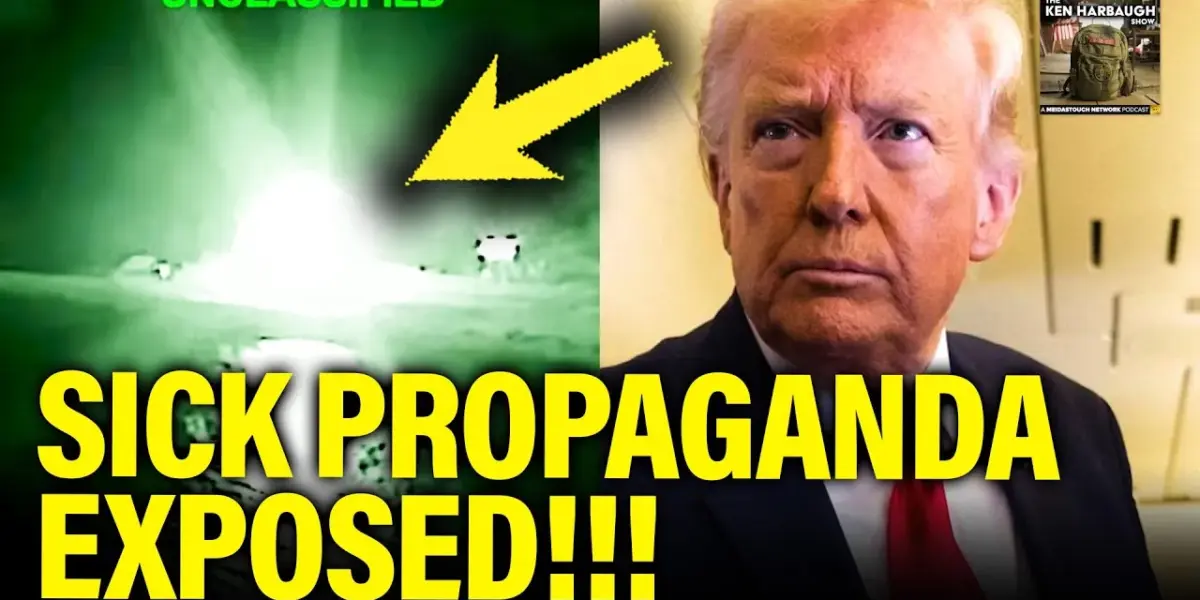
Trump Administration’s ‘War Porn’ Sparks Outrage, Echoes Historical Follies
A recent video from the Midas Touch Network, featuring insights from Senator Andy Kim, has sharply criticized the Trump administration’s approach to foreign policy, particularly its use of what is described as “war porn” and a perceived fetishization of conflict. The analysis centers on the administration’s handling of escalating tensions with Iran, highlighting a disconnect between the White House’s rhetoric and the grim realities of warfare, drawing parallels to past U.S. foreign policy missteps.
The “War Porn” Spectacle
The core of the critique lies in the White House’s release of a montage featuring movie clips, video game footage, and actual gun camera imagery depicting American bombs killing people. This content, described as “absurd and disgusting,” is seen as a new low, even for an administration that has been accused of setting a precedent for such behavior. Ken Harbaugh, the narrator, argues that this “war porn” message, “War is fun. War is exciting. The best thing about an American bomb blowing something up is that we can get a few viral memes out of it,” is deeply disrespectful to those who have experienced war firsthand and to American service members currently deployed.
“This represents a new low and that’s saying a lot given just how low the Trump regime has taken us. This montage of movie and video game clips with actual gun camera footage showing American bombs killing people. It’s one of the most disgusting and disrespectful things I’ve seen.”
Senator Kim’s Stark Assessment
Senator Andy Kim, a former senior adviser to General Petraeus in Afghanistan and a National Security Council member, offers a sobering perspective. He expresses a profound sense of déjà vu, lamenting that the U.S. appears to have learned few lessons from past military “misadventures” like Iraq and Afghanistan. Kim highlights a significant concern: America’s increasing isolation on the world stage.
“I feel like we haven’t learned the lessons at all and that we are just right back to where it was. And it just in in many ways even worse situation because like I’ve never seen like I as you said I worked at the State Department. I worked at the Pentagon at the White House. I’ve never seen America this alone in the world,” Kim stated. He recounts hearing from allies at the Munich Security Conference who are “done with all this chaos” and, alarmingly, now view the United States as a national security threat to their own nations.
Incompetence and Hubris on Display
The administration’s handling of potential threats and the safety of American citizens abroad is also under intense scrutiny. When questioned about the apparent lack of planning for embassy evacuations, the President’s response, “Well, it all happened so fast,” is met with disbelief. Senator Kim describes the situation as “shockingly bad,” attributing it not just to incompetence but to “such a hubris with this president, such an arrogance.”
Kim points out the logical inconsistencies in the administration’s justifications for military action. If there was an imminent threat, he questions why embassies were not evacuated proactively, drawing a contrast with the response to the situation in Beirut. He argues that the protection of Americans abroad appears to have been an “afterthought,” and that the administration is “reverse engineering an explanation for why they did this” without a coherent strategy or clearly defined goals.
Undermining Homeland Security
The critique extends to the administration’s impact on domestic security. The transcript notes that the U.S. cybersecurity agency, CISA, had its staff dramatically cut by Trump, with many personnel redirected to immigration work. This, coupled with weakened counterterrorism efforts at home, raises serious concerns, especially in the context of engaging in overseas conflicts.
“I’m on the homeland committee I see this unfolding before my eyes that we went into a war without homeland security in the kind of posture that we needed to be if we’re at war,” Kim warns. The administration’s surprise at Iran potentially disrupting the Strait of Hormuz and the failure to replenish strategic petroleum reserves are cited as further evidence of a lack of preparedness and foresight.
Lack of Transparency and Accountability
Senator Kim expresses frustration with the administration’s reliance on classified briefings as a shield against public accountability. He argues that leaders “need to talk to the American people, make the case” for military actions, rather than conducting consultations solely behind closed doors. The administration’s reluctance to engage in public discourse is seen as a tacit admission that their policies do not align with the will of the American people, who, according to Kim, “don’t want us to be in a open-ended regime change war in the Middle East again.”
The administration’s alleged “war porn” is contrasted with their reluctance to release videos of other controversial actions, such as boat strikes in Venezuela or potential bombings of school children in Iran, deeming them “classified” when it suits their narrative. This selective transparency fuels accusations of hypocrisy and a deliberate effort to control the public’s perception of conflict.
Broader Geopolitical Ramifications
The implications of the current foreign policy extend beyond the immediate conflict. The analysis suggests that the oil price spikes resulting from the tensions could lead to reduced sanctions pressure on Russia, impacting efforts to address the war in Ukraine. Furthermore, the emboldening of adversaries like Russia and China is a significant concern. China, in particular, may be less receptive to U.S. pressure on issues like Taiwan and Indo-Pacific expansion, given America’s perceived overextension and isolation.
“The fact that, you know, we just see you know Americans in harm’s way again, you know, service members back in the Middle East and it just it doesn’t have to be this way and it shouldn’t be this way,” Kim emphasizes, underscoring that the current trajectory is a choice with avoidable consequences.
Why This Matters
The analysis provided by Senator Kim and Ken Harbaugh serves as a critical examination of a dangerous trend: the trivialization of war and the erosion of strategic thinking within the U.S. government. The “war porn” phenomenon is not merely a stylistic choice but a symptom of a deeper issue – a detachment from the human cost of conflict and a disregard for historical lessons. The perceived incompetence, hubris, and lack of transparency surrounding recent military actions raise profound questions about accountability and the future of American leadership on the global stage.
The implications are far-reaching, affecting not only American service members and civilians but also the nation’s standing among allies, its economic stability through volatile energy markets, and its ability to counter threats from adversaries. The critique suggests that a return to constitutional principles, a focus on the will of the American people, and a commitment to transparency and strategic clarity are essential to navigating these perilous times.
Future Outlook
The outlook presented is one of significant concern. The administration’s current path is seen as leading to increased danger, diminished global influence, and a weakening of U.S. security both at home and abroad. The call for accountability, particularly from those on the Homeland Security Committee, suggests a desire to rectify these perceived failures. However, the current political climate, characterized by partisan division, makes the prospect of bipartisan cooperation on these critical national security issues uncertain. The piece implicitly argues for a reevaluation of the U.S. approach to foreign intervention, urging a return to a more cautious, strategic, and people-centered foreign policy.
Source: Top Senator BLOWS LID off Trump WAR PROPAGANDA (YouTube)

Related Articles

Iran Hacks FBI Chief, Exposing U.S. Cyber Vulnerabilities
A recent hack of FBI Director Kash Patel's personal email by an Iran-linked group highlights Iran's growing cyber threat to the U.S. Experts explain how simple security oversights are exploited, emphasizing the need for basic defenses like two-factor authentication to protect against propaganda and potential infrastructure attacks.

Protesters Challenge Presidential Power, Ignite Debate
Millions are protesting nationwide under the "No Kings" banner, challenging presidential authority and policies they deem unconstitutional. Organizers emphasize First Amendment rights while debating foreign policy, immigration, and the balance of power.

DHS Funding Crisis Sparks Chaos, Congressman Blames Poor Communication
Congressman Darrell Issa blames "failure to communicate" for the DHS funding crisis leading to unpaid TSA agents and airport chaos. The House is preparing a short-term bill as security concerns rise.