Trump’s ‘War’ on Economy Fuels Global Oil Crisis
The release of strategic oil reserves has failed to curb rising prices amidst escalating tensions with Iran. Experts argue this "war" on the economy, driven by a need for distraction, risks global recession and further domestic discontent.

Trump’s ‘War’ on Economy Fuels Global Oil Crisis
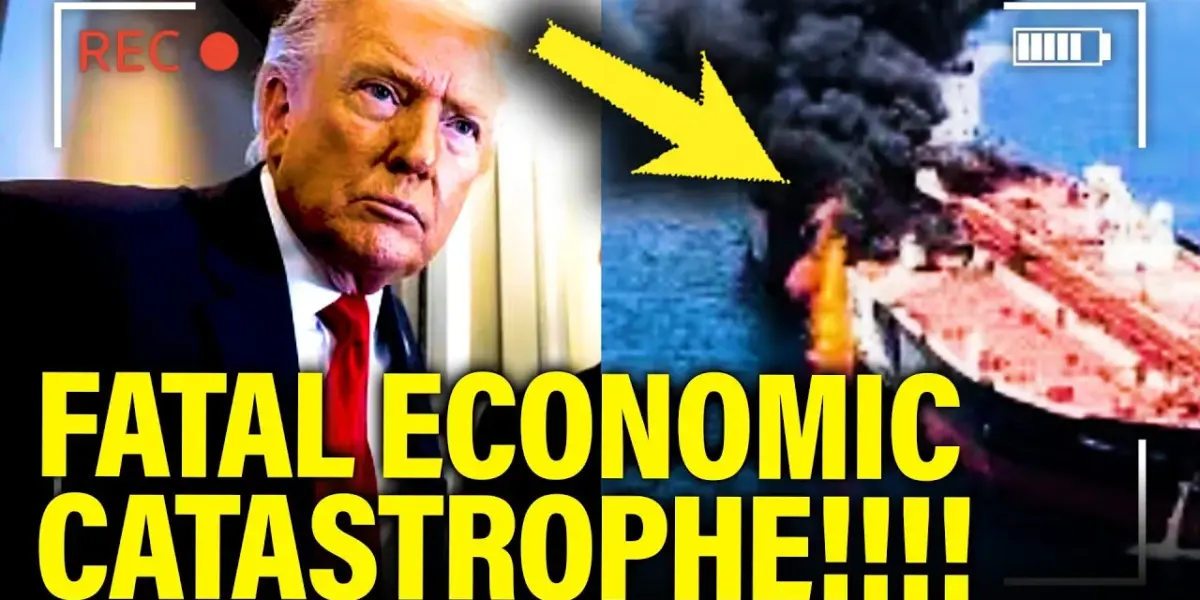
The recent escalation of tensions with Iran, framed by some as a deliberate strategy by the Trump administration, is raising alarming questions about its impact on the American economy and global stability. While not a declared military conflict, the assertion is that the administration’s actions have effectively declared war on the American people and their economic well-being, with potentially devastating consequences.
Oil Prices Surge Amidst Strategic Reserve Release
In a dramatic bid to counter Iran’s escalating rhetoric and actions, 37 allied nations, alongside the United States, released a significant volume of oil. A combined 400 million barrels from allied nations and an additional 172 million barrels from the U.S. Strategic Petroleum Reserve were injected into the market within a 24-hour period. The hope was to stabilize, or even lower, oil prices. However, the opposite occurred. As of the recording, crude oil prices were touching $100 a barrel, a sharp increase that suggests the released oil was insufficient to fill the void created by the geopolitical instability.
Iran’s Strategy: Blockading Hormuz and Triggering Recession
The core of Iran’s perceived strategy, under its new leadership, appears to be the potential closure of the Strait of Hormuz. This chokepoint is crucial, with approximately 20% of the world’s oil passing through it daily. The threat of turning this vital waterway into a “parking lot” or a blockade is seen as a direct attempt to trigger a global economic recession, specifically targeting America and its allies by impacting their energy supply and prices. This move is viewed as a stark counterpoint to the Trump administration’s narrative of having achieved a decisive victory, with Iran seemingly demonstrating a different reality on the ground.
Echoes of Past Follies and Domestic Economic Woes
The situation is being compared to past foreign policy missteps, specifically referencing a “George Bush folly” and the notion that declaring “mission impossible” does not equate to the end of a conflict. Iran’s alleged response, including attacks on 20 strategic U.S. and allied bases and oil tankers, paints a picture of a conflict far from over. This external pressure comes at a precarious time for the domestic economy. Economic indicators from February, predating the most recent escalation, already painted a grim picture: zero job creation, with an estimated loss of 90,000 jobs, figures likely to be revised downward. Inflation remains a concern, with grocery prices up 3.1% year-over-year, and these figures were recorded before the current “Iran war” intensified.
A Pattern of ‘War Footing’ and Distraction
The argument is made that Donald Trump has been on a “war footing” since taking office, a tactic to expand presidential powers. This has manifested in declarations of war against various perceived threats, from terrorists in Venezuela to the Haitian people. When these external targets were exhausted, the focus allegedly shifted inward, targeting Democrats, free speech, and domestic protests, deploying National Guard and ICE forces. The current confrontation with Iran is presented as a strategic move to distract from declining approval ratings and domestic policy failures, a tactic likened to “wagging the dog” which, historically, is seen as ineffective in masking underlying problems.
Miscalculations and Shifting Definitions of Victory
A key miscalculation, it is argued, was the administration’s belief that a repeat of the limited response to a June incident, where Iran did not significantly retaliate against a partial strike on its nuclear program, would occur again. The assumption that taking out Iran’s leadership would lead to an internal uprising has been contradicted by intelligence assessments, which suggest a crackdown, not a revolution. The definition of “winning” has reportedly shifted from “regime change” and setting back the nuclear program to merely degrading Iran’s missile and naval capabilities. This strategic ambiguity and the persistent impact on global energy markets, even with these redefined goals, are seen as a critical failure, particularly with midterm elections on the horizon.
Domestic Political Fallout and Voter Sentiment
The economic fallout from the Iran tensions is expected to exacerbate existing domestic political challenges for the administration. Pre-existing low approval ratings, attributed to policies such as the “depraved, inhumane immigration policy,” are unlikely to be salvaged by foreign policy actions. The economic data – rising inflation, stagnant job growth, declining consumer confidence, and a loss of support among young voters, independents, and the Hispanic community – paints a picture of a populace growing increasingly dissatisfied. Election results, with Democrats significantly outperforming in numerous races and flipping numerous seats, are presented as evidence of a broader public rejection of the administration’s direction and policies.
Why This Matters
The analysis suggests a dangerous confluence of foreign policy adventurism and domestic economic vulnerability. The potential for a blocked Strait of Hormuz poses a direct threat to global energy markets, with ripple effects that could trigger widespread inflation and recession. This, in turn, could further erode public confidence and exacerbate political divisions. The effectiveness of using foreign conflicts as a distraction from domestic failures is being tested, with early indicators suggesting it is a strategy with diminishing returns. The geopolitical implications are vast, potentially destabilizing the entire Middle East and impacting international relations for years to come.
Implications, Trends, and Future Outlook
The trend observed is one of increasing geopolitical risk directly impacting economic stability. The reliance on oil as a geopolitical weapon by nations like Iran, and the potential for such actions to disrupt global supply chains, highlights a vulnerability in the current international economic order. The future outlook suggests continued volatility in oil prices and potential economic headwinds, particularly if diplomatic solutions are not prioritized. The administration’s approach of escalating tensions and redefining objectives in the face of setbacks could lead to prolonged conflict and further economic strain. The response of the electorate, as evidenced in recent elections, indicates a growing skepticism towards foreign entanglements that do not demonstrably benefit the domestic population or economy.
Historical Context
The current situation is viewed through the lens of historical precedents where foreign policy actions have been used to rally domestic support or distract from internal issues. The concept of “wagging the dog” – using a foreign crisis to divert attention from domestic problems – has a long, though often unsuccessful, history in political strategy. Furthermore, the complex relationship between the U.S. and Iran, marked by decades of tension and mistrust, provides a backdrop to the current escalation. Understanding Iran’s strategic objectives, its capacity to disrupt global energy markets, and the potential for miscalculation on both sides is crucial for contextualizing the current events within the broader sweep of international relations and energy politics.
Source: Trump HIT with FATAL Economic News over WAR DISASTER (YouTube)

Related Articles
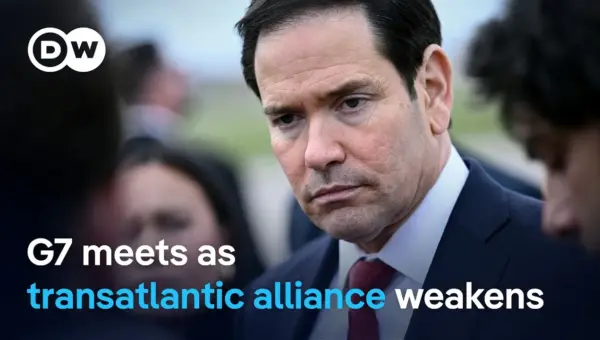
G7 Allies Clash Over Iran War Strategy, Urge Focus on Russia
G7 foreign ministers met in Paris, revealing deep divisions over the U.S. war with Iran. European allies urged the U.S. to pressure Russia, linking its actions to the conflict and fearing support for Ukraine will wane.

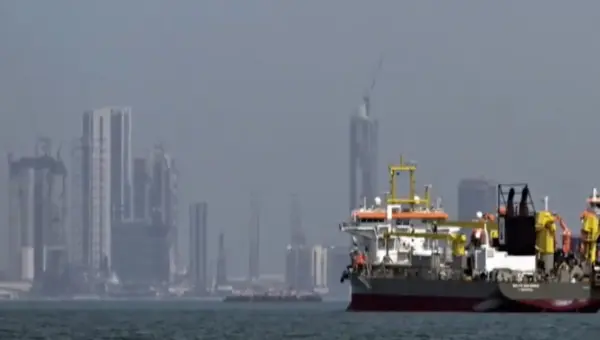
Iran Blocks China Ships, Exposing Beijing’s Weak Grip
Iran's recent decision to block Chinese ships at the Strait of Hormuz is exposing the limits of Beijing's influence in the Middle East. This action is causing delays and cancellations for Chinese manufacturers, turning a perceived geopolitical win into an economic strain.
Trump’s “Walk Away” Tactic Signals Tougher Stance on China
Retired Air Force Brigadier General David Stillwell believes President Trump's strategy of being willing to walk away from negotiations puts pressure on China. This tactic, combined with US global actions and strengthened alliances, signals a more assertive American foreign policy.