Trump’s War Claims Crumble Amidst Escalating Mideast Crisis
President Trump's claims of victory in the Middle East are being challenged by escalating attacks and a volatile oil market. Reports of disrupted shipping lanes and a significant cyberattack paint a grim picture, raising questions about the administration's strategy and the broader geopolitical implications.

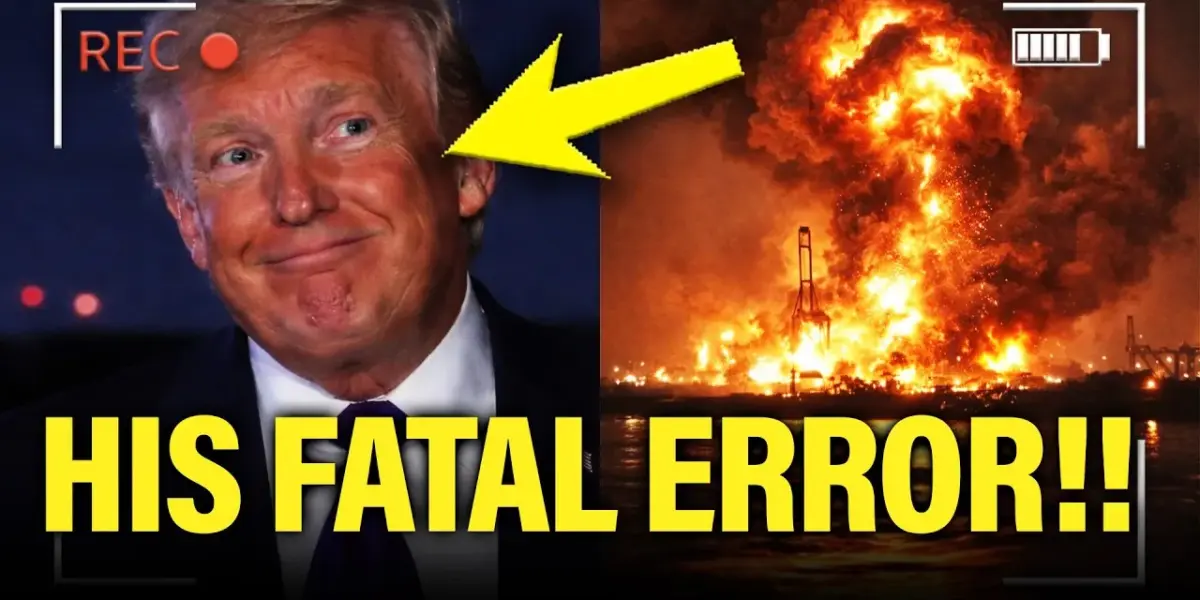
Trump’s Bold Claims Clash with Alarming Realities in the Middle East
The geopolitical landscape is fraught with tension, and the recent escalation of conflict involving Iran has placed the Trump administration’s narrative under intense scrutiny. While President Trump has declared victory and assured the safety of vital shipping lanes, reports from the ground paint a starkly different picture, suggesting a burgeoning crisis with significant global implications.
Assertions of Victory vs. On-the-Ground Attacks
Following a period of heightened military activity, President Trump has publicly asserted that the United States has decisively defeated Iranian capabilities and secured the Strait of Hormuz. “I want all the businesses to know the Strait of Hormos is safe. Let’s use it. Go out there. We’ve saved the day,” he stated, projecting an image of control and success. He further elaborated on Iran’s supposed weakness, claiming they possess “no navy. They’ve got no air force. They’ve got no anti-air traffic… We’re just riding free range over that country.”
However, this optimistic portrayal is directly contradicted by ongoing reports of attacks. The UK’s Office of Maritime Trade Operations has reported Iranian attacks on container ships in the Persian Gulf, including an incident near the United Arab Emirates. This follows earlier attacks on three ships in the Strait of Hormuz, with the Iranian Revolutionary Guard Corps Navy reportedly issuing warnings and conducting strikes for what they deemed unauthorized passage. The strait, a critical chokepoint for global oil transport, is described as being “effectively shut down right now,” leading to a surge in oil prices.
Economic Repercussions and Strategic Reserves
The disruption to shipping and the ensuing uncertainty have sent oil prices soaring, with projections suggesting a potential rise to $200 per barrel. In an effort to counteract this, the Trump administration authorized the release of 172 million barrels from the U.S. Strategic Petroleum Reserve. However, this move has been met with skepticism. Releasing such a significant portion of the reserve over 120 days, at a rate of approximately 1.4 million barrels per day, is seen by some analysts as potentially depleting critical national reserves without fundamentally stabilizing the market, especially given global daily demand of 20-30 million barrels. The immediate effect of this announcement was a surge in crude oil prices, pushing diesel and gasoline prices higher.
Geopolitical Alliances and Shifting Dynamics
The conflict is also unfolding against a backdrop of complex international alliances. Reports indicate meetings between U.S. and Russian delegations, including figures like Jared Kushner, in Miami. This occurs even as U.S. intelligence suggests Russian support for Iran’s actions. Simultaneously, Ukrainian President Zelenskyy is reportedly seeking U.S. assistance with anti-drone technology, as Iran’s drone and missile technology, which has been employed against Ukraine, is also a growing concern in the Middle East. The narrative suggests an emerging axis of Iran, Russia, and China, challenging U.S. and NATO interests.
Iran’s proposed path to ending the conflict, as outlined by President Ebrahim Raisi and conveyed through discussions with Russian and Pakistani leaders, includes recognition of Iran’s “legitimate rights,” reparations, and international guarantees against aggression. This framing, utilizing language similar to that employed by Ukraine, is seen by some as an effort to create moral equivalence and undermine international efforts for peace, potentially at the behest of Russia.
Cyber Warfare and Broader Regional Impact
Beyond physical attacks, Iran has also reportedly engaged in cyber warfare. A significant cyberattack targeted the U.S. medical technology company Striker, with hackers claiming retaliation for U.S. actions. The attack reportedly wiped employee devices, deleted data, and forced the shutdown of Striker’s offices in 79 countries, highlighting a new dimension to the conflict.
The scope of the conflict is expanding, with multiple countries in the Middle East experiencing impacts. The list of nations affected by the recent hostilities, including Oman, Kuwait, UAE, Saudi Arabia, Qatar, Bahrain, Iraq, Iran, Israel, Lebanon, and the Strait of Hormuz, underscores the regional nature of the crisis.
A Troubling Disconnect in Public Communication
Adding to the disquiet is a perceived disconnect between the administration’s public statements and the escalating situation. President Trump’s remarks about Iran’s lack of military capabilities and the safety of shipping lanes stand in stark contrast to the continuous reports of attacks and economic volatility. When questioned about potential Iranian revenge plots, such as a reported drone threat in California, the response was to state it was “being investigated” and that “a lot of things happening,” a response that has drawn criticism for its vagueness.
The administration’s communication strategy, including the use of social media to share what some have described as trivial or even inappropriate content, such as bowling videos juxtaposed with threats of nuclear weapon development, has also raised concerns about the seriousness with which the escalating crisis is being addressed.
Why This Matters
The events unfolding in the Middle East have profound implications for global stability and economic security. The Strait of Hormuz is a vital artery for global energy markets, and its disruption can lead to significant price shocks, impacting economies worldwide. Furthermore, the apparent escalation of a regional conflict into a broader geopolitical struggle involving major global powers like Russia and China poses a serious threat to international order. The administration’s handling of this crisis, particularly the discrepancy between stated successes and observable realities, raises critical questions about transparency, strategic effectiveness, and the potential for miscalculation. The administration’s approach to managing international alliances, particularly concerning support for Ukraine amidst broader geopolitical realignments, is also a crucial factor in the ongoing global reordering.
Historical Context and Future Outlook
The current tensions echo historical patterns of conflict and proxy engagement in the Middle East. Decades of complex relationships between the U.S., Iran, and regional powers have created a volatile environment. The current situation appears to be a dangerous escalation, potentially drawing in more actors and exacerbating existing instabilities. The reliance on strategic petroleum reserves, while a tool for market stabilization, highlights the vulnerability of global energy supplies. The increasing use of cyber warfare indicates a new frontier in conflict, with potentially far-reaching consequences. The future outlook depends heavily on de-escalation efforts, clear communication, and a strategic approach that acknowledges the complexities of the region and the interconnectedness of global security. The administration’s ability to navigate these challenges, foster international cooperation, and effectively communicate the realities of the situation will be critical in determining the outcome.
Source: Trump PANICS over HIS FATAL ERROR in WAR!! (YouTube)

Related Articles

Stocks Ignore War Risks, Focus on “Taco Moments”
Stock markets appear to be overlooking the severe supply chain risks stemming from the Iran conflict, focusing instead on potential diplomatic de-escalations. While the S&P 500 shows resilience, bond and commodity markets signal deep concern over disruptions to critical resources like LNG, helium, and fertilizers.

U.S. Iran Tensions Rise Amid Shifting Alliances
Rising tensions between the U.S. and Iran are creating a volatile geopolitical situation. With conflicting signals on de-escalation and potential shifts in alliances like NATO and U.S.-Israel relations, the path forward remains uncertain. The global economy and regional stability hang in the balance.


Iran Targets US With Cyberattacks, Escalating Digital Warfare
Iran is increasingly using cyberattacks to challenge the U.S., as seen in a recent hack of the FBI director's account. Experts say this is a strategic shift due to Iran's limitations in conventional warfare. The U.S. needs to strengthen its digital defenses, focusing on encryption and cloud computing, rather than solely relying on traditional security measures.