Trump’s War Admissions Spark Impeachment Calls, Cuba Claims
Donald Trump's recent press conference statements regarding Iran's surprise attacks and his claims about taking Cuba have ignited controversy. Critics are calling for impeachment, citing alleged incompetence and dangerous rhetoric, while Iran disputes his accounts of diplomatic engagement.

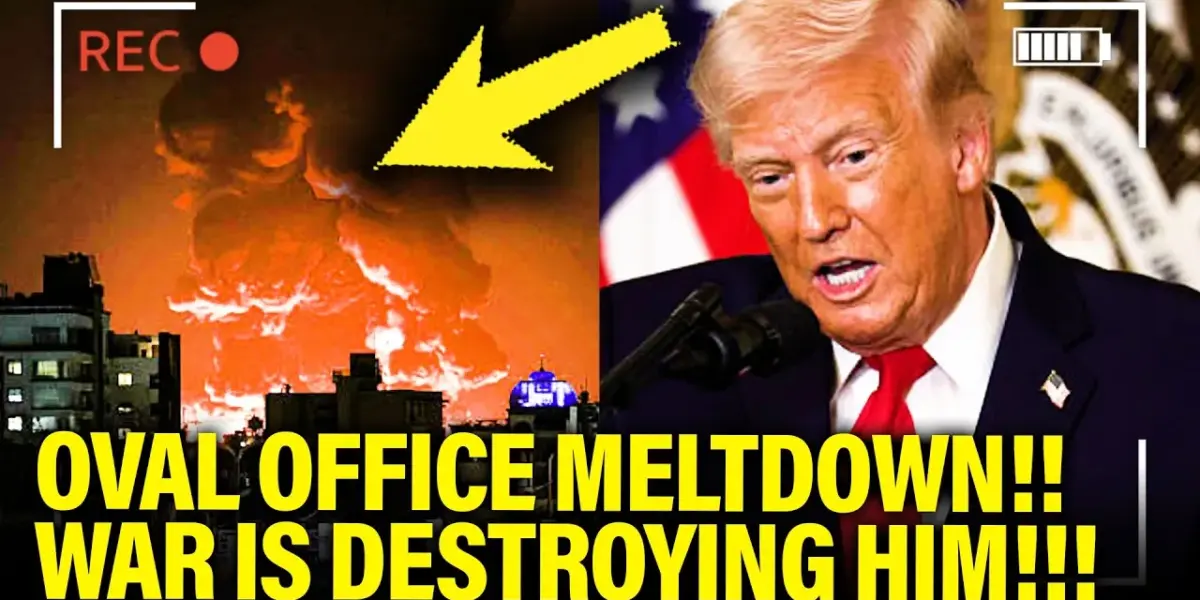
Trump’s ‘Incriminating’ War Admission Ignites Impeachment Storm
In a recent press conference, former President Donald Trump made statements regarding the ongoing conflict with Iran that have drawn sharp criticism and calls for impeachment. The core of the controversy lies in Trump’s assertion that the retaliatory strikes by Iran on Qatar, Saudi Arabia, the UAE, Bahrain, and Kuwait were entirely unexpected. “Nobody nobody knew that Iran was going to strike Qatar, Saudi Arabia, UAE, Bahrain, and Kuwait. Nobody expected that. We were caught utterly surprised by this. Who would have ever expected this?” Trump stated. This declaration, made in the context of the Oval Office, has been labeled as an “incriminating admission” by critics, who argue it demonstrates a profound lack of preparedness and awareness from the former President during a critical geopolitical moment.
Questioning Preparedness and Expertise
The presenter of the original video transcript directly challenges Trump’s claim of surprise. “If that’s truly the case, Donald, you deserve to be impeached immediately on that statement alone,” the presenter asserts, going further to suggest broader grounds for impeachment and legal repercussions. The transcript highlights Trump’s own words: “Nobody. Nobody. No, no, no, no. The greatest experts, nobody thought they were going to hit.” This perceived failure to anticipate Iran’s actions, especially when neighboring Arab nations reportedly issued warnings, has fueled accusations of incompetence and a disregard for intelligence briefings. The transcript suggests that warnings were known to generals, admirals, and even to media outlets like Midas Touch Network months in advance, painting a picture of willful ignorance on Trump’s part.
Cuba Claims and Distraction Tactics
Adding another layer to the controversy, Trump also made remarks about Cuba that have been interpreted as aggressive and imperialistic. “It’s a beautiful island. I’m going to take it. I’m just going to take it. It’s mine. I will do whatever I want.” He further elaborated, stating, “I think Cuba see the end. You know, all my life I’ve been hearing about the United States and Cuba. You know, when will the United States do it? I do believe I’ll be the honor of having the honor of taking Cuba. That’d be good. That’s a big honor. Taking Cuba in some form. Yeah. Taking Cuba. I mean, whether I free it, take it, think I could do anything I want with it.” Critics view these statements as a deliberate attempt to distract from other pressing issues, such as the Epstein files and the escalating conflict in the Middle East. The suggestion of taking over a sovereign nation, especially during a period of international tension, has been met with alarm and condemnation.
Iran’s Response and Mockery
The situation is further complicated by Iran’s public response to Trump’s rhetoric. Iranian officials have directly challenged Trump’s claims of diplomatic progress and his assertions about the war’s outcome. The transcript quotes an Iranian commander stating, “The outcome of war cannot be determined by tweets. The result of a war is determined in their field. The very place where you and your forces do not dare to approach and you can only talk about it in your tweets.” This sentiment suggests that Iran views Trump’s pronouncements as hollow and disconnected from the reality on the ground, even mocking the conflict’s naming as “epic fear” instead of “epic fury.” Furthermore, Iran has denied Trump’s claims of ongoing communication, with the foreign minister stating, “My last contact with Mr. Witoff was prior to his employer’s decision to kill diplomacy with another illegal military attack on Iran. Any claim to the contrary appears geared solely to mislead oil traders and the public.” This directly contradicts Trump’s assertions about diplomatic channels being open, labeling them as “total and utter lies.”
Historical Comparisons and Future Outlook
Trump’s remarks also drew comparisons to the presidency of Jimmy Carter, whom Trump suggested was less effective in handling the Iran situation. “How did his attack work out in Iran? Not too good. I think ours is slightly better, wouldn’t you say?” Trump posited. This historical framing is used to bolster his own perceived successes. However, critics point to a pattern of misrepresenting past events and making unsubstantiated claims, such as predicting 9/11 and Osama bin Laden’s actions, which they argue are not accurately reflected in his published works.
The Role of Allies and Shifting Alliances
The transcript also touches upon Trump’s views on international cooperation, particularly concerning China. Trump suggested that China, a significant recipient of oil from the region, should be thanking the U.S. and helping financially. “China as an example should be thanking us, but I don’t expect to thank you, but they should be thanking us.” This perspective overlooks the complex geopolitical realities, including China’s strategic alliance with Iran. The presenter points out that China is actively assisting Iran militarily, a fact that Iran itself has publicly acknowledged, directly contradicting Trump’s narrative of global gratitude towards U.S. actions.
Political Maneuvering and Shifting Stances
The political dynamics surrounding these statements are also evident in the reactions of figures like JD Vance. Vance, who has a history of skepticism towards foreign interventionism, appeared to align himself with Trump’s current stance, attributing the shift to Trump’s perceived “smart” leadership. “I think one big difference, Phil, is that we have a smart president, whereas in the past we’ve had dumb presidents and I trust President Trump to get the job done,” Vance stated. This alignment, despite past criticisms of foreign entanglements, highlights the way political figures navigate perceived presidential authority and policy shifts.
Escalating Tensions and Unverified Information
The broader context includes reports of escalating tensions, such as attacks on the U.S. embassy in Baghdad, which are believed to be Iranian-backed. Moreover, reports indicate that over 200 troops were injured during “Operation Epic Fury,” with some in serious condition. The transcript expresses skepticism about the accuracy of information released by the Trump administration regarding these casualties, suggesting that the actual numbers might be higher.
Why This Matters
The statements made by Donald Trump during this press conference are significant for several reasons. Firstly, the alleged “incriminating admission” regarding the surprise at Iran’s retaliatory strikes raises serious questions about national security preparedness and the former President’s grasp of intelligence. If true, it suggests a potentially dangerous level of detachment from critical geopolitical realities. Secondly, Trump’s aggressive rhetoric towards Cuba, including claims of wanting to “take it,” signals a potentially destabilizing foreign policy approach that could provoke international condemnation and further escalate global tensions. His framing of these actions as a distraction from other issues, like the Epstein files, points to a strategic use of media and events to control narratives. The direct contradiction from Iranian officials regarding diplomatic communications also undermines trust in official statements and highlights the challenges of de-escalation in a conflict zone. The contrast between Trump’s claims of expertise and the reality presented by adversaries and international observers creates a volatile information environment. Finally, the alignment of political figures like JD Vance with Trump’s controversial positions underscores the partisan dynamics at play, where loyalty and perceived presidential strength can override past ideological stances. The situation underscores the ongoing debate about the role of the United States in global conflicts, the importance of accurate intelligence, and the potential consequences of presidential rhetoric on international stability.
Implications and Future Outlook
The implications of Trump’s statements are far-reaching. If these claims lead to formal impeachment proceedings, it would further polarize the political landscape. His remarks about Cuba could set a dangerous precedent for international relations, potentially emboldening similar aggressive stances from other nations or leading to increased instability in the Caribbean. The ongoing conflict with Iran, coupled with the conflicting narratives from both sides, creates a highly uncertain future for the Middle East and global security. The public’s trust in information provided by political leaders is also at stake, especially when verifiable facts are contested by opposing claims. The future outlook suggests a continued period of geopolitical turbulence, with former President Trump’s pronouncements continuing to be a significant factor in shaping public discourse and international reactions.
Historical Context
The current situation echoes historical precedents of presidential overreach and controversial foreign policy decisions. The rhetoric surrounding Cuba has historical roots in the Cold War era, where U.S. policy was often characterized by interventionism and attempts to exert influence. Similarly, the complex relationship between the U.S. and Iran has a long and often fraught history, marked by periods of intense hostility and covert actions, dating back to the 1953 coup. Trump’s tendency to invoke past predictions and claim prescience, as seen with his remarks about Osama bin Laden and 9/11, aligns with a pattern of self-aggrandizement that has characterized his political career. His comparisons to Jimmy Carter also tap into historical narratives of U.S. foreign policy successes and failures, often framed through a partisan lens.
Source: Trump makes INCRIMINATING ADMISSION on WAR…IN OVAL!!!! (YouTube)

Related Articles

Iran Targets US With Cyberattacks, Escalating Digital Warfare
Iran is increasingly using cyberattacks to challenge the U.S., as seen in a recent hack of the FBI director's account. Experts say this is a strategic shift due to Iran's limitations in conventional warfare. The U.S. needs to strengthen its digital defenses, focusing on encryption and cloud computing, rather than solely relying on traditional security measures.
Ukraine Strikes Russian Oil Refinery, Eyes Iran Threat
Ukrainian forces struck a key Russian oil refinery, disrupting Moscow's war capabilities. Meanwhile, Finland's president urged continued U.S. support for Ukraine, as Kyiv shares its air defense expertise globally amid growing geopolitical complexities involving Iran and potential sanctions against Hungary.
Polls Spell Doom: Republicans Face Voter Backlash
New polling data reveals a sharp decline in public confidence regarding the economic impact of Republican policies, particularly under Donald Trump. A significant majority now feel financially worse off, a trend that is especially pronounced among independent voters. This economic discontent poses a major challenge for the Republican party heading into future elections.