Trump’s Voting Law Gambit Exposes Democracy’s Deep Flaws
Donald Trump's demand to pass the "Save America Act" before any other legislation reveals a deep-seated historical struggle over voting rights in America. This analysis explores the systemic barriers to democracy, from the Electoral College to modern disenfranchisement tactics, and their impact on civic trust.

Trump’s Voting Law Gambit Exposes Democracy’s Deep Flaws
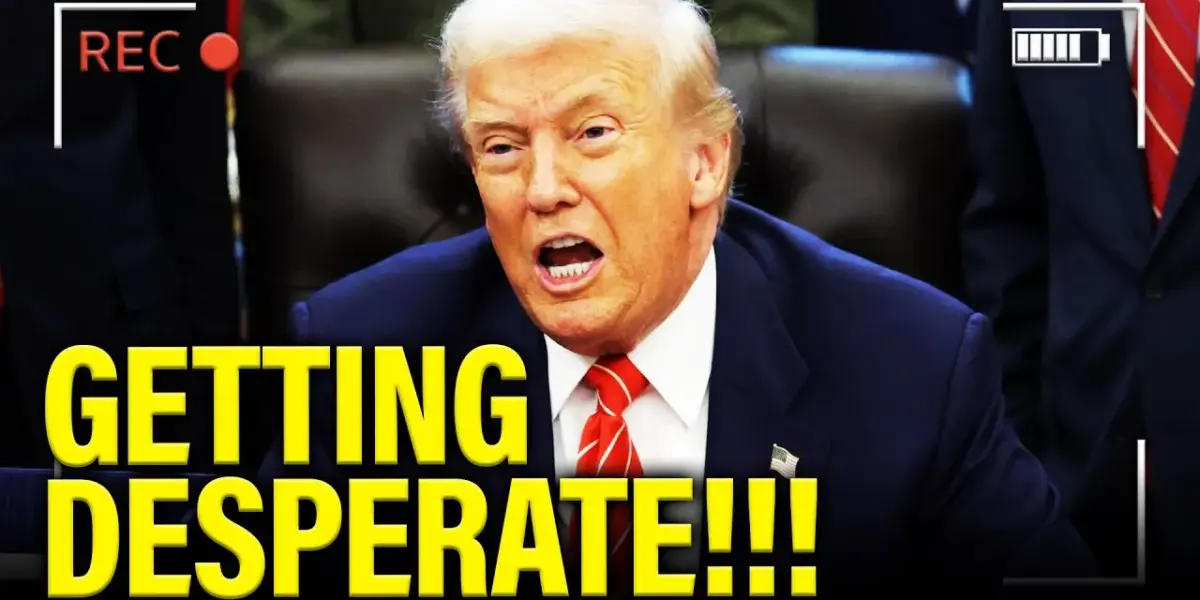
In a move that has intensified the already fraught political landscape, Donald Trump has declared he will refuse to sign any new legislation until Congress passes the “Save America Act.” This proposal, an updated version of the “Safeguard American Voter Eligibility Act,” aims to impose stringent voter identification and proof-of-citizenship requirements while significantly curtailing mail-in voting. Trump’s strategy, which includes leveraging unrelated provisions such as bans affecting transgender individuals, transforms a voting rights debate into a broader cultural and political battleground. This confrontation is not an isolated incident but a stark illustration of a persistent theme in American history: the struggle over who gets to vote and under what conditions has always been central to the nation’s complex and often contested relationship with democracy.
The Myth of an Unblemished Democratic Past
For generations, the United States has often been presented as a paragon of democracy, with textbooks and political discourse frequently narrating a story of continuous progress towards freedom and representation. However, a more critical examination reveals a more complicated reality. American democracy has rarely been fully realized, with its institutions historically limiting participation and excluding significant portions of the population, particularly people of color and other minorities, from political power. The notion that democracy once functioned well and is now under threat overlooks the deeply embedded structural barriers to political participation that have existed since the nation’s inception.
Foundational Flaws: The Electoral College and Systemic Exclusion
One of the most enduring examples of these structural barriers is the presidential election system itself. The U.S. does not elect its president through a direct popular vote. This design stems from the founders’ distrust of direct democracy, fearing that popular opinion could be unstable or easily manipulated. Consequently, they established a system that filters the public’s vote through political intermediaries – the Electoral College. This system not only gives smaller, less populated states disproportionate influence but also leads presidential campaigns to focus on a handful of swing states, effectively diminishing the influence of most voters. Historians also point to the compromises made with slaveholding states during the nation’s founding, such as the Three-Fifths Compromise, which counted enslaved people for representation while denying them rights, thereby increasing the political power of slave states in presidential elections.
Beyond the structure of elections, the historical exclusion of various groups from voting is a well-documented reality. At the nation’s founding, suffrage was typically restricted to white male property owners. Women, enslaved people, indigenous nations, and most free Black citizens were denied a political voice. The expansion of voting rights has been a slow and arduous process, often achieved only after sustained political struggle. While the 19th Amendment granted women the right to vote nationwide in 1920, many women of color continued to face significant barriers, particularly in the South. Following the Civil War, constitutional amendments promised citizenship and voting rights to formerly enslaved people, leading to a brief period of Black political participation during Reconstruction. However, by the late 19th century, Southern states implemented poll taxes, literacy tests, and intimidation tactics to disenfranchise Black voters, effectively silencing their political voice for decades. It wasn’t until the Voting Rights Act of 1965 that the federal government decisively intervened to outlaw discriminatory practices and provide oversight in areas with histories of suppression.
Modern Barriers and the Erosion of Trust
Even after the passage of landmark legislation, new barriers to voting have continued to emerge. Practices such as gerrymandering, restrictive voter ID laws, and voter roll purges disproportionately affect marginalized communities. These contemporary challenges highlight that democracy depends not only on formal voting rights but also on the capacity of citizens to participate meaningfully in political life. Economic inequality plays a significant role in limiting this participation. In recent decades, wealth and political influence have become increasingly concentrated in the U.S. The heavy reliance on private fundraising for political campaigns grants wealthy donors and corporations substantial sway over policy agendas, while lobbyists and political action committees shape legislation in ways that ordinary voters cannot match. This concentration of influence can lead to a sense of disconnection from the political process, particularly when major decisions appear driven by financial interests, eroding trust in democratic institutions.
Communities facing poverty, unstable housing, or limited access to healthcare often possess fewer resources to engage politically. When substantial segments of society are effectively excluded from decision-making processes, democratic participation weakens. The gap between democratic ideals and lived experiences is also starkly visible in the criminal justice system. Decades of policies like the war on drugs and aggressive policing strategies have disproportionately targeted communities of color. Mass incarceration has had profound political consequences, with millions of Americans, disproportionately Black and Latino, imprisoned, often for nonviolent offenses. In many states, individuals with felony convictions lose their voting rights, sometimes permanently, thus removing large numbers of citizens from the electorate. Furthermore, repeated incidents of police violence and killings have sparked nationwide protests and calls for reform, raising critical questions about accountability and the relationship between citizens and state power. When communities experience persistent abuses without meaningful reform, faith in democratic institutions erodes.
The Social Condition of Democracy
Despite these long-standing issues, political rhetoric often frames threats to democracy as recent or unprecedented, frequently invoking a romanticized past where democratic norms supposedly functioned flawlessly. This narrative, however, conveniently overlooks the historical exclusions embedded within the country’s fabric. For much of its existence, even large groups were denied basic political rights. Even when legal barriers were dismantled, economic and social inequalities continued to impede participation. Recognizing this historical context does not diminish the progress that has been made. Civil rights movements, labor organizing, and activism for gender equality have indeed expanded political participation and strengthened democratic protections. Yet, these gains were largely the result of sustained pressure from social movements, not the automatic functioning of institutions.
Democracy, therefore, is not solely a constitutional structure but also a social condition. Its strength is intrinsically linked to the stability and resources available to citizens for civic engagement. Access to education, healthcare, housing, and fair wages can empower citizens to participate politically. Across the U.S., grassroots organizing has increasingly stepped in to fill the gaps left by formal institutions. Community groups, mutual aid networks, and local advocacy organizations work to support vulnerable populations and challenge unjust policies, demonstrating that democratic participation can flourish through community solidarity and collective action, not just through elections or government bodies.
Why This Matters
Donald Trump’s current strategy of using the “Save America Act” as a legislative linchpin underscores the enduring nature of struggles over democratic participation. By threatening to withhold support for all other legislation until his voting reform bill is prioritized, Trump is weaponizing the basic functioning of government to advance his agenda on election law. This tactic takes us back to a historical pattern where access to voting becomes a tool in political conflict, reflecting a persistent reality: from the founding era to the Civil Rights Movement and today’s debates, the central battle in American democracy has revolved around who is allowed to participate and how easily they can do so. The fight over the “Save Act” is thus more than just an administrative dispute; it is a contemporary manifestation of a historical dynamic where power, historically concentrated among white, wealthy, and male elites, has been used to shape and limit participation in the democratic process.
Implications and Future Outlook
The implications of Trump’s current stance are far-reaching. It highlights the vulnerability of democratic processes to political leverage and the ongoing efforts to reshape electoral rules in ways that may benefit specific political factions. The emphasis on restrictive voting measures risks further disenfranchising already marginalized communities, exacerbating existing inequalities and potentially leading to decreased civic engagement. This trend suggests a future where the definition and accessibility of voting rights remain a central and contentious issue. The increasing reliance on grassroots organizing and community-led initiatives as a counter-balance to institutional shortcomings indicates a potential shift in how democratic participation is conceived and enacted. As formal institutions grapple with trust deficits and structural barriers, the strength and resilience of democratic society may increasingly depend on the vitality of these non-governmental efforts. The ongoing tension between these forces will likely shape the future trajectory of American democracy, determining whether it moves towards greater inclusivity or faces further fragmentation.
Source: Trump GROWS Completely DESPERATE as ELECTIONS NEAR (YouTube)

Related Articles

Protesters Challenge Presidential Power, Ignite Debate
Millions are protesting nationwide under the "No Kings" banner, challenging presidential authority and policies they deem unconstitutional. Organizers emphasize First Amendment rights while debating foreign policy, immigration, and the balance of power.

Voter ID: Common Sense or Suppression?
A growing debate surrounds voter ID laws, with proponents calling them a common-sense measure against fraud and opponents fearing voter suppression. Many countries and U.S. states already require ID to vote.
Senate Rejects Voter ID Bill: A Deep Dive into the Divide
The U.S. Senate recently voted down a proposed amendment requiring photo ID to vote, splitting strictly along party lines. Republicans argued for election security, while Democrats raised concerns about voter suppression. This failure highlights deep divisions on election laws.