Trump’s Visible Decay: A Nation’s Unanswered Health Questions
Donald Trump's recent public appearance, marked by a prominent neck lesion and persistent hand bruising, has sparked widespread speculation about his health. While the White House offers a vague explanation, the lack of transparency fuels concerns about underlying issues.

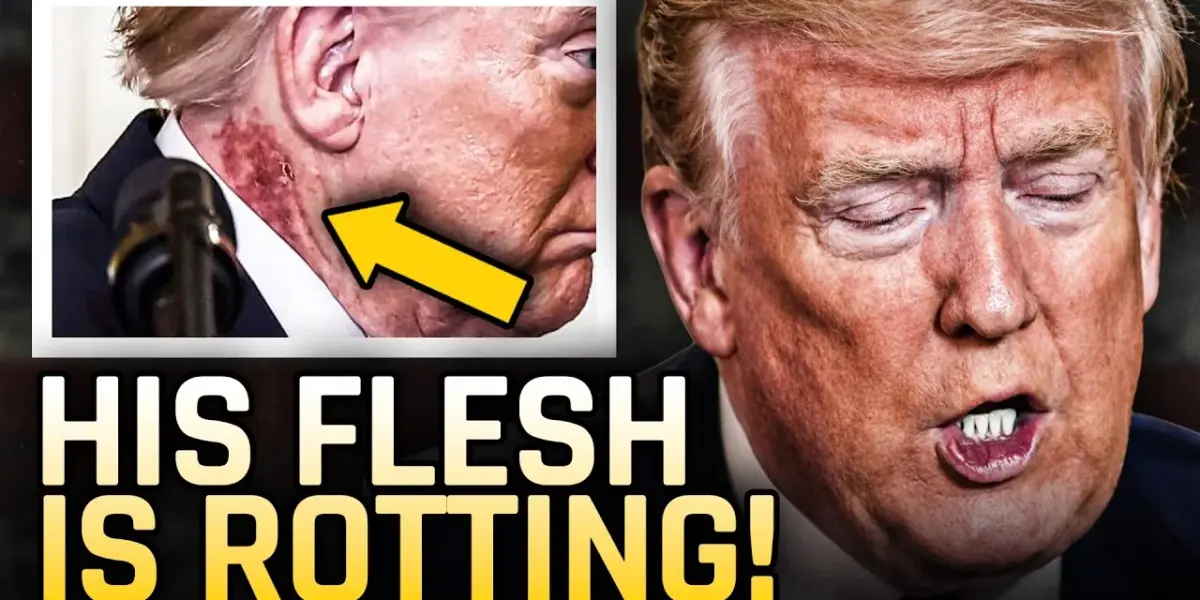
Trump’s Visible Decay: A Nation’s Unanswered Health Questions
The recent public appearance of Donald Trump, marked by a prominent, discolored lesion on the back of his neck, has ignited a firestorm of speculation. This visible physical anomaly, coupled with previously observed bruising on his hands, has shifted public discourse from political discourse to a more unnerving examination of the former president’s physical well-being. While the White House has offered a cursory explanation involving a topical cream, the lack of transparency and the persistent nature of these physical signs raise profound questions about what might be occurring beneath the surface.
A Macabre Spectacle of Speculation
The immediate reaction to the neck lesion was, predictably, a surge of theories from both medical professionals and armchair diagnosticians across social media. The sheer prominence of the mark, described as a “gigantic red spot” and a “disgusting looking red spot,” made it impossible to ignore. This has led to widespread conjecture, ranging from the benign to the deeply concerning. Some medical experts have posited that the lesion could be a precancerous growth, while others have suggested it might already be a manifestation of skin cancer. The speed at which such a lesion might develop is a point of debate, with some suggesting it’s unlikely to appear overnight, while others acknowledge that skin conditions can indeed present rapidly.
Adding to the mystery are the persistent, unexplained bruises on Trump’s hands. Initially attributed to frequent handshaking, this explanation was quickly debunked when similar bruising appeared on hands not typically involved in extensive public interaction. The combination of these physical markers – the hand bruises and the neck lesion – fuels a narrative of underlying health issues that are manifesting externally.
The White House’s Evasive Maneuvers
In typical fashion, the White House issued a statement attempting to quell the speculation. The official explanation pointed to a topical cream being applied to the lesion, with a duration of treatment extending beyond the initial prescription period. However, this explanation, while offered, has done little to satisfy public curiosity. The core of the concern is not the specific cream being used, but rather the underlying cause of the ailment. The public’s interest lies in understanding what condition necessitates such treatment and, more broadly, what these visible symptoms might signify about Trump’s overall health.
The argument presented is that if these surface-level issues are apparent, it raises questions about the health of his internal systems. The implication is that such visible decay on the skin could be a symptom of more significant, unseen problems within the body. This line of reasoning suggests that any physical ailment manifesting so prominently on the exterior likely originates from deeper, internal issues.
Potential Diagnoses and Historical Context
Beyond the official statement, two primary theories have gained traction in public discourse: skin cancer and shingles. Skin cancer is considered a plausible explanation, particularly given Donald Trump’s lifelong passion for golf. The sport requires prolonged exposure to intense sunlight, often with significant portions of the head and neck unprotected. Years of such exposure, without adequate sun protection, can dramatically increase the risk of developing skin cancer. The location of the lesion, on the back of the neck, is a common area for sun-induced skin damage.
Shingles, a viral infection, has also been suggested. While typically not fatal, it is known to be a very painful condition. However, the consensus among many observers leans towards skin cancer due to the historical context of Trump’s activities and the nature of the visible symptoms.
The transcript also touches upon the quality of medical care Trump has received, referencing a “Barbarella crap” or “quack” White House doctor. This alludes to a broader skepticism regarding the thoroughness and perhaps the independence of medical evaluations provided to high-profile political figures, especially when transparency is lacking.
Why This Matters
The health of a former president, particularly one who remains a significant force in national politics and is a leading contender for future office, is a matter of public interest. While individuals are entitled to medical privacy, the visibility of these ailments and the potential implications for leadership capacity cannot be entirely dismissed. The lack of clear, consistent information from official sources fosters an environment where speculation can thrive, potentially impacting public perception and political narratives.
Furthermore, the discourse surrounding Trump’s physical condition often intersects with broader conversations about aging, health, and the demands of public life. The aging process, coupled with potential chronic or acute health issues, can affect cognitive function and physical stamina, factors that are undeniably relevant to anyone seeking or holding positions of power.
Implications, Trends, and Future Outlook
The persistent lack of transparency regarding Trump’s health suggests a continuation of a trend where political figures selectively disclose medical information, often through carefully managed statements or leaks. This approach can be strategic, intended to control narratives and project an image of strength and vitality. However, it also breeds distrust and invites speculation, especially when physical evidence to the contrary is publicly visible.
The future outlook remains uncertain. It is likely that definitive answers regarding the cause of Trump’s visible physical ailments will remain elusive, buried under layers of political strategy and privacy concerns. The public may continue to observe any further physical changes with keen interest, fueling ongoing speculation. The broader implication is a continued tension between the public’s right to know, particularly concerning the health of those who seek to lead, and an individual’s right to medical privacy. As political campaigns intensify, and as Trump remains a central figure, his physical condition will likely continue to be a subject of intense scrutiny and commentary, irrespective of the medical facts.
The historical context of presidential health reveals a mixed record of transparency. While some presidents, like Franklin D. Roosevelt, managed to conceal the full extent of their debilitating illnesses, others, like John F. Kennedy, were more open about their struggles. In the age of social media and 24/7 news cycles, such concealment becomes increasingly difficult, yet the desire to project an image of perfect health persists.
Ultimately, the visible decay, as described, serves as a potent symbol for many. It is interpreted not just as a personal health issue, but as a potential metaphor for deeper societal or political concerns. The unanswered questions surrounding Trump’s physical well-being underscore a broader public desire for clarity and truth in an era often characterized by ambiguity and misinformation.
Source: Trump Appears With Visibly Rotting Flesh During Speech (YouTube)

Related Articles


Trump’s Mideast Gamble: War, Evacuation Chaos, and Market Meltdown
Reports indicate escalating conflict in the Middle East, with the U.S. struggling to evacuate its citizens and facing severe market repercussions. The rationale behind recent military actions and their unintended consequences are under scrutiny, highlighting a complex and volatile geopolitical situation.

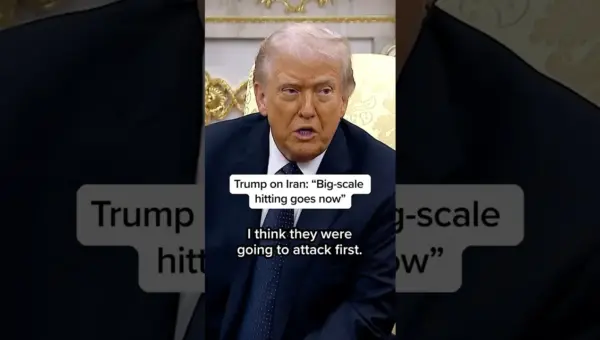
Trump Warns of ‘Big Scale Hitting’ Against Iran
President Donald Trump stated that "big scale hitting goes now" against Iran, signaling a significant escalation amid rising regional tensions. The remarks were made while meeting with German Chancellor Friedrich Merz in the Oval Office, with Trump believing Iran was preparing to attack.


Germany Backs US on Iran Regime Change Amidst Tensions
German Chancellor Olaf Scholz met with President Donald Trump, aligning on the goal of removing the Iranian regime while not endorsing recent military actions. The visit also touched upon trade and the war in Ukraine, highlighting complex diplomatic challenges.