Trump’s Venezuela Oil Gambit: A Risky Bet?
Following a military operation to capture President Nicolás Maduro, Donald Trump has outlined a plan to seize Venezuelan oil, the world's largest reserves. The strategy involves $100 billion in U.S. oil company investment and the immediate export of 50 million barrels of crude. However, major oil firms express deep skepticism due to Venezuela's unstable political and legal environment, raising questions about the initiative's long-term viability and potential geopolitical fallout.

Trump’s Venezuela Oil Gambit: A Risky Bet?
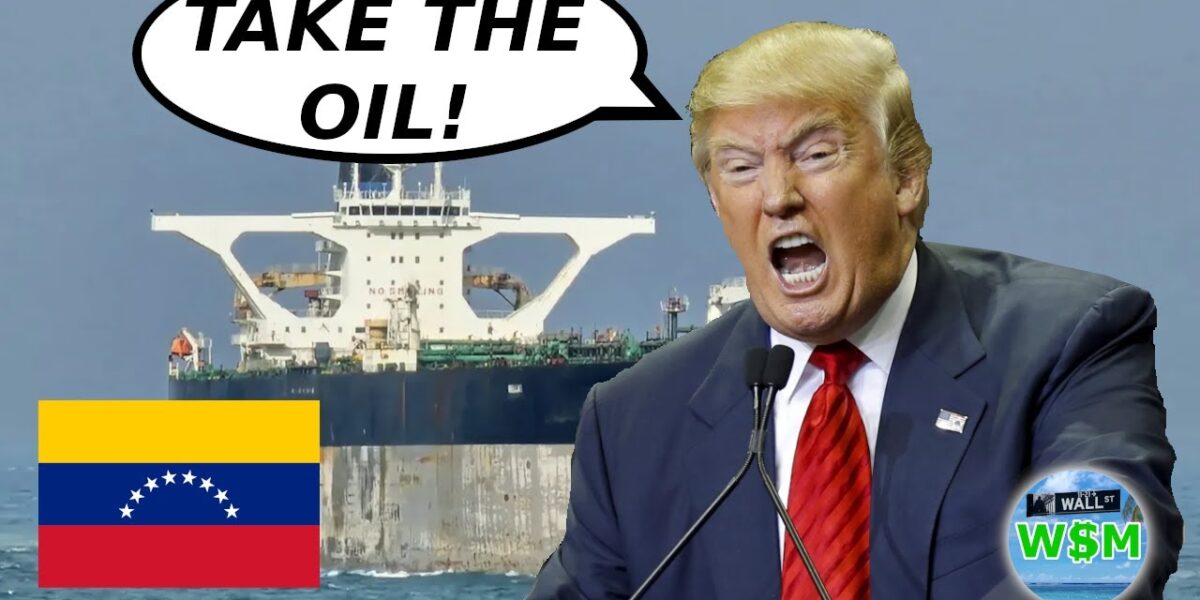
In a dramatic geopolitical and economic maneuver, former President Donald Trump has announced a plan to leverage Venezuela’s immense oil reserves to compensate for assets allegedly expropriated by the Venezuelan government. Following a US operation on January 3rd, 2025, that captured Venezuelan President Nicolás Maduro, Trump shifted the narrative from combating drug trafficking to securing Venezuelan oil, the largest known reserves globally. The cornerstone of this initiative is a proposed $100 billion investment by U.S. oil companies to rebuild Venezuela’s dilapidated oil infrastructure, coupled with an agreement for the U.S. to refine and sell up to 50 million barrels of Venezuelan crude oil, a deal described as continuing indefinitely.
The Venezuelan Oil Landscape: From Riches to Ruin
Venezuela possesses the world’s largest oil reserves, estimated by OPEC to be 41 billion tons, surpassing Saudi Arabia. Historically, its oil industry, pioneered by companies like Standard Oil (ancestor to ExxonMobil, Chevron, and ConocoPhillips), boomed in the early 20th century. Production peaked in 1970, reaching approximately 3.8 million barrels per day, about 8% of global output. For decades, Venezuela benefited significantly from oil revenues, funding extensive social welfare and economic development programs, which led to its status as one of Latin America’s wealthiest nations.
The landscape shifted dramatically in 1976 when President Rafael Caldera nationalized the oil industry, creating the state-owned Petróleos de Venezuela S.A. (PDVSA). While foreign companies initially participated in joint ventures, the situation deteriorated under President Hugo Chávez, who came to power in 1999. Seeking to fund ambitious, costly welfare programs, Chávez restructured joint ventures in 2006, significantly increasing PDVSA’s ownership and imposing additional taxes. This effectively expropriated profits, leading most foreign oil companies to depart. ConocoPhillips notably sued the Venezuelan government and was awarded $8.7 billion, a judgment that has never been enforced.
Under President Nicolás Maduro, Chávez’s successor, the decline accelerated. PDVSA, lacking the technological prowess of the departed international majors, struggled to maintain the aging infrastructure. Compounding these issues, U.S. sanctions imposed during Trump’s first administration in 2017 hindered PDVSA’s ability to procure essential American-made equipment. Despite the challenges, Chevron maintained a joint venture, now responsible for approximately 25% of Venezuela’s oil production, a symbiotic yet precarious relationship driven by Venezuela’s need for foreign technology and Chevron’s minimal profit margins.
The Current Crisis and Trump’s Proposed Solution
The consequences of underinvestment and mismanagement have been devastating. Venezuela’s oil production has plummeted, falling from a peak of 3.8 million barrels per day to about 1 million barrels per day in 2024—a 70% decline since Chávez took office. This economic collapse has plunged the nation into poverty, with the UN estimating that 82% of Venezuelans live in poverty and 53% in extreme poverty. Hyperinflation, exacerbated by the government printing money to offset falling revenues, reached a staggering 1 million percent in 2018. While hyperinflation has subsided, inflation remains high, projected at 200% in 2025.
Trump’s plan, announced on January 9th, involves U.S. oil companies investing at least $100 billion to restore the industry’s capacity and infrastructure. The government’s role, according to Trump, is to provide security and protection for these investments, ensuring companies can recoup their expenditures and generate profits. Furthermore, Venezuela has reportedly agreed to provide the U.S. with 50 million barrels of oil, valued at $4.2 billion, with proceeds to be managed by U.S.-controlled accounts for the benefit of both American and Venezuelan people, at the U.S. government’s discretion. Sales of 30 to 50 million barrels are expected to commence immediately and continue indefinitely.
Market Impact and Investor Considerations
The feasibility and long-term implications of Trump’s strategy are subjects of intense scrutiny. While Maduro was captured, his socialist government remains in power, with Vice President Delcy Rodríguez declaring herself acting president. Rodríguez has publicly denounced the U.S. operation and affirmed Maduro’s legitimacy, though Trump claims he is working effectively with her, suggesting the oil agreement was made under duress, possibly linked to the cancellation of further military actions.
However, major U.S. oil companies have expressed significant skepticism. ExxonMobil CEO Darren Woods stated that Venezuela’s current legal and commercial frameworks make the country “uninvestable,” highlighting concerns about investment durability, returns, and regulatory certainty. Developing new oil fields requires billions of dollars in upfront capital and decades to achieve profitability, making the political instability and uncertain legal environment a major deterrent.
The strategy also faces practical and logistical hurdles. The U.S. Navy maintains a significant presence off Venezuela’s coast, reportedly seizing oil tankers to enforce a blockade. The operational costs of such a sustained naval presence, including the deployment of assets like the USS Gerald R. Ford (costing an estimated $9 million per day), are substantial and could divert resources from other strategic needs. Moreover, stripping Venezuela of its oil revenue, even under these terms, could cripple PDVSA’s ability to fund essential maintenance, further degrading production capacity.
Analysts question the sustainability of the arrangement. While Rodríguez might be cooperating out of fear, such an agreement could foment internal dissent and instability within the Venezuelan government, potentially leading to her overthrow by hardliners who view the U.S. as an adversary. The situation echoes Trump’s earlier demands for rare earth elements from Ukraine, a deal that ultimately yielded little tangible resource extraction. The long-term success of this initiative hinges on navigating complex political realities, securing genuine private investment, and addressing the fundamental issues that have plagued Venezuela’s oil sector for decades. The current approach, perceived by some as extortion, may prove to be a short-term gain with significant long-term geopolitical and economic repercussions.
Source: Can Trump Really Take Venezuela's Oil? (YouTube)

Related Articles

Trump: Iran Strikes Ahead of Schedule, Expects ‘Great Deal for World’
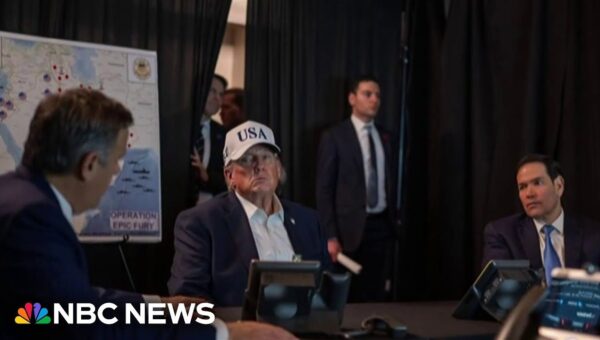
Three U.S. service members have been killed amid escalating conflict with Iran, President Trump confirmed. He stated that strikes are ahead of schedule, with senior Iranian leaders killed, and expressed optimism for a "great deal for the world" despite ongoing talks with Iranian officials.
Trump Agrees to Talks with Iran After Major Strikes
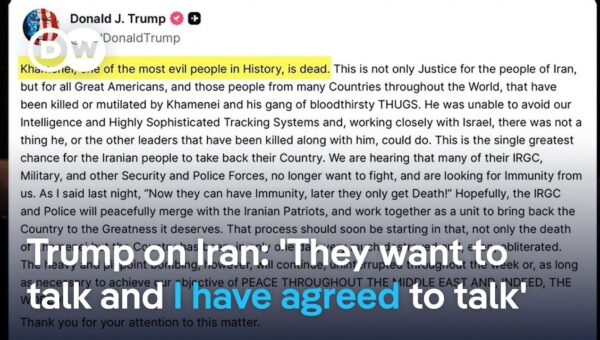
President Donald Trump has agreed to talks with Iran's leadership following coordinated strikes that reportedly killed key figures, including the Supreme Leader. While Trump claims significant military successes, U.S. strategy remains unclear, and public opinion shows limited support for the actions amid rising American casualties.

Trump’s Putin Stance: US Strategy and Global Implications
Analysis suggests Donald Trump's approach to the Ukraine war involves pressuring Kyiv, but US involvement is crucial for resolution. China's influence and the 'MAGA' agenda's geopolitical implications are key factors.