Trump’s UK Frustration Linked to Immigration, Analyst Claims
Analyst Hal Lambert suggests former President Donald Trump's frustration with the UK is tied to its immigration policies and demographic shifts. Lambert claims these changes influence British foreign policy and strain the "special relationship" between the U.S. and UK.

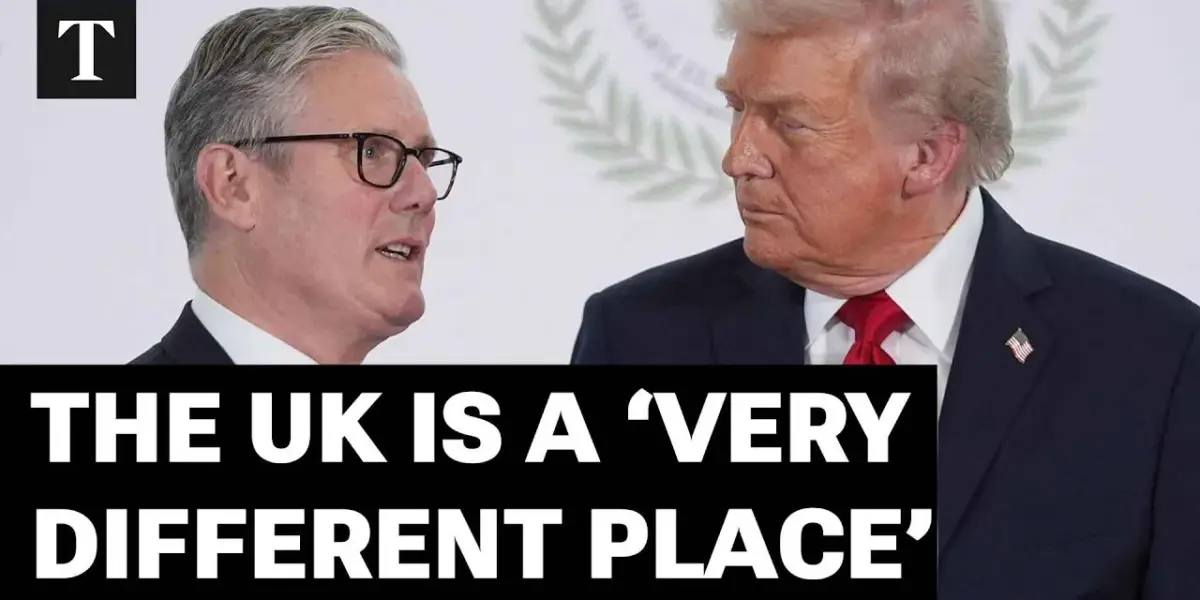
Trump’s UK Ire Fueled by Immigration, Special Relationship Strain
Former President Donald Trump has publicly expressed significant frustration with the United Kingdom, specifically citing immigration policies as a key driver of his discontent and a source of tension within the “special relationship” between the U.S. and the UK. According to analyst Hal Lambert, Trump’s recent remarks about the UK being “uncooperative” are deeply intertwined with the significant demographic shifts occurring within Britain, particularly the large-scale immigration from “third world” countries and the growing Muslim population.
Demographic Shifts and Political Influence
Lambert asserts that the UK of today is fundamentally different from its past, pointing to millions of immigrants who have settled in the country, resulting in a Muslim population now exceeding four million. He detailed how this demographic segment can represent a substantial voting bloc, particularly in districts held by the Labour Party, where it can constitute 20-30% of the electorate. This, Lambert suggests, influences political decisions, including the Labour government’s approach to foreign policy, such as its stance on Iran.
“I think underlying all this is, you know, the UK is not the same UK it was 40 years ago. Uh it’s not even the same UK it was 25 years ago. Uh there’s millions of third world people that have immigrated into the UK um by design. And you now have over 4 million Muslims in the UK right now.” – Hal Lambert
Lambert posited that the Labour Party, under Prime Minister Keir Starmer, is concerned about alienating this voting block, especially after losing Muslim votes over the Gaza conflict. He believes this fear is prompting a “scrambling around” on foreign policy, with a significant focus on issues related to Islam. While acknowledging that the government would likely dispute this as the primary driver of policy, Lambert maintained that Starmer’s shifting positions on various issues reflect this pressure.
Trump’s Perspective on Iran and International Law
The conversation also touched upon Trump’s stance on Iran and his administration’s approach to international affairs. Lambert suggested that Trump’s decision-making, particularly regarding Iran, was based on intelligence indicating the country was positioning for a first strike and possessed the capability to produce nuclear weapons within a week. He characterized Trump’s approach as decisive, aimed at preventing conflict and ensuring global safety by confronting perceived threats from Iranian leadership.
Lambert noted that while some within the MAGA base in America might view Middle Eastern conflicts as “never-ending wars,” Trump’s actions were framed as adherence to the U.S. Constitution and a response to specific threats. He contrasted this with the UK’s position, implying that a lack of direct involvement in classified briefings might lead to different interpretations of international law and geopolitical risks.
“Special Relationship” Under Strain
The analyst expressed concern about the “special relationship,” describing Trump’s current stance as “damaging.” He indicated that Trump’s anger stems from the UK’s perceived lack of cooperation, linking it directly to the immigration issue and broader demographic changes. Lambert warned that the demographic trajectory of the UK, with differing birth rates between Muslim and native-born populations, could fundamentally alter the nation’s identity and its Western orientation within the next 25-30 years.
Lambert’s comments drew a counterpoint regarding the integration of British Muslims and the idea of a “native” population. The interviewer questioned the premise of excluding citizens based on faith, emphasizing that many British Muslims identify strongly with their nationality. However, Lambert reiterated his view, drawing a parallel to historical shifts within the UK, such as the dominance of the Church of England, to argue that significant demographic changes inevitably lead to a transformation of national identity.
“The way the demographics are going, these are you guys are not going to be a western country in 25 30 years.” – Hal Lambert
Future of U.S.-UK Relations
Despite the current tensions, Lambert expressed optimism that the strain on the “special relationship” might not be permanent. He suggested that Donald Trump is “transactional” and that his anger with the current UK Prime Minister could dissipate. A potential meeting or a shift in policy direction could see Trump willing to “move back to wanting to work with the prime minister again,” indicating that the former president does not necessarily hold grudges and could readily return to a cooperative stance if circumstances align.
The future of the relationship, therefore, remains contingent on evolving political dynamics and policy decisions on both sides of the Atlantic. Lambert’s analysis underscores the complex interplay of domestic politics, immigration, and international relations in shaping the future of alliances and geopolitical landscapes.
Source: Maga Ally: UK Migration Behind Trump's Frustration With Starmer (YouTube)

Related Articles


US War in Iran Escalates Amidst Domestic Economic Woes
As the war in Iran intensifies, the Trump administration faces mounting domestic economic challenges, including job losses and depleted retirement savings. Officials downplay the conflict's severity while critics highlight the human and financial costs.

Rep. Garcia Blasts Commerce Sec. Lutnick Over Epstein Ties
Rep. Robert Garcia has sharply criticized Commerce Secretary Howard Lutnick over his Epstein ties, stating the committee was prepared to subpoena him. Garcia also called for Donald Trump's testimony and criticized Republican priorities in the House Oversight Committee's investigation.
Trump’s War Declaration Sparks Impeachment Storm
Recent military actions in Iran, explicitly called a "war" by the Trump administration, have reignited calls for impeachment. The debate centers on the constitutional authority to declare war, traditionally vested in Congress, and the implications of the AUMF.