Trump’s Texas Gambit Backfires, Igniting GOP Civil War
Donald Trump's strategic indecision in the Texas Republican Senate primary has backfired, igniting a costly internal battle and creating an unexpected advantage for Democrats. The fractured GOP faces a united Democratic front, potentially altering the political landscape of a key state.

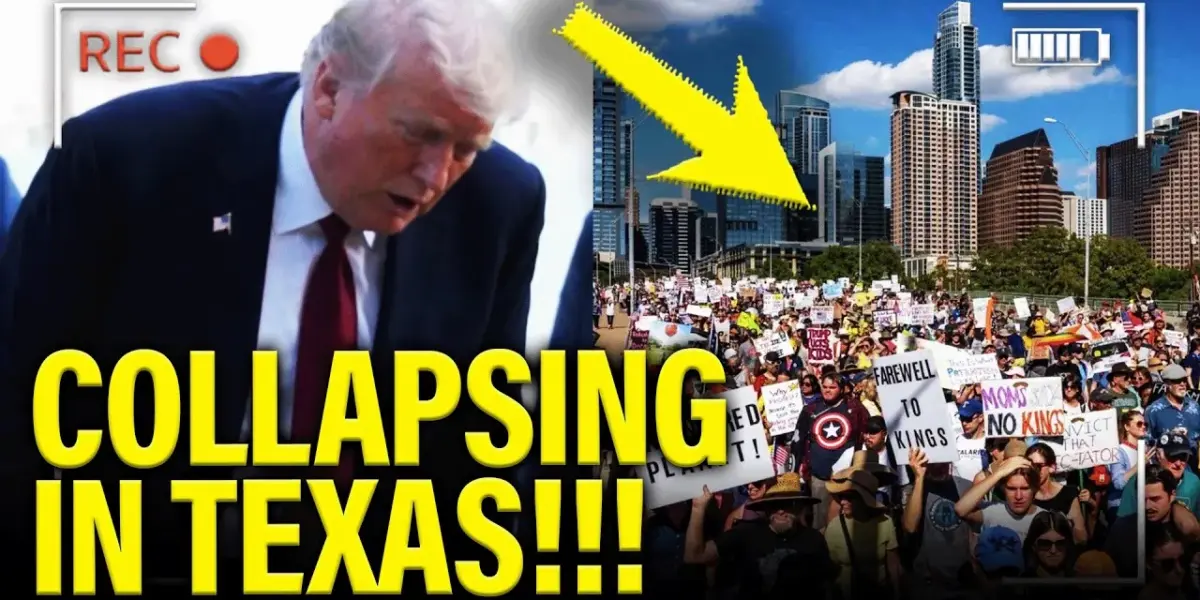
Trump’s Texas Gambit Backfires, Igniting GOP Civil War
In a stunning display of political miscalculation, Donald Trump’s decision to withhold endorsements in Texas’s high-stakes Republican Senate primary has not only fractured the party but also created an unexpected opening for Democrats. The costly intra-party battles, fueled by Trump’s strategic ambiguity, have devolved into a spectacle of infighting, potentially jeopardizing a key Senate seat and exposing deep fissures within the MAGA movement.
A Million-Dollar Misfire
The Texas Republican Senate primary, a hundred-million-dollar affair, was intended to solidify GOP dominance. Instead, it became a cautionary tale of indecision. Donald Trump, known for his strategic endorsements, notably abstained from backing any of the leading candidates: Congressman Wesley Hunt, Attorney General Ken Paxton, and Senator John Cornyn. This calculated move, aimed at ensuring his chosen candidates’ victories and thus his own perceived influence, backfired spectacularly. The candidates, all vying for the MAGA mantle, split the vote, forcing a runoff and incurring massive expenditures.
Ken Paxton, the apparent MAGA favorite despite facing impeachment for alleged improprieties, and John Cornyn, a more established but controversial figure, now find themselves locked in a runoff that is projected to cost the Republican party an additional $200 million. Trump’s initial reluctance to pick a side has been directly linked to this financial drain. As Congressman Wesley Hunt himself admitted, had Trump asked him not to run or to withdraw, he would have complied. Trump’s inaction, therefore, directly contributed to the protracted and expensive primary battle.
The Democratic Silver Lining
While Republicans were consumed by their internal conflict, Democrats capitalized on the open lane. James Talerico emerged victorious in the Democratic primary, defeating Jasmine Crockett. Crockett, in a display of remarkable grace and political acumen, publicly supported Talerico, calling for unity within the party. Her magnanimous concession speech, emphasizing the larger goal of turning Texas blue and the future of the state’s 30 million residents, set a stark contrast to the GOP’s acrimonious contest.
Talerico, in his post-victory remarks, articulated a sharp critique of both Paxton and Cornyn, labeling them as products of “legalized corruption.” He highlighted Paxton’s impeachment for illegal corruption and Cornyn’s role in legislation that allegedly harmed Texans, such as cutting healthcare and food assistance while benefiting donors. Talerico positioned himself as ready to prosecute the case against either Republican, framing the election as a fight against a broken system and powerful individuals who have enriched themselves at the public’s expense.
Furthermore, Talerico’s campaign has shown promising signs of broadening the Democratic coalition. He attracted a record number of Latino voters, a demographic that Republicans had hoped to sway. The fact that more Democrats voted in this primary than Republicans is a historical anomaly, last seen in the 2008 Obama wave. This surge in Democratic turnout, particularly among Latino voters in gerrymandered districts, suggests that Republican efforts to solidify their hold on Texas may be faltering.
Trump’s Panicked Pivot
As the runoff loomed and the financial toll mounted, Donald Trump appeared to panic. He took to social media, declaring that the primary “cannot be allowed to go on any longer” and must “stop now.” He announced his intention to make an endorsement soon and demanded that the candidate who does not receive his backing immediately drop out. This abrupt shift, however, has only intensified the internal GOP turmoil.
The MAGA base is divided. Many see Ken Paxton as the true MAGA champion, while John Cornyn is viewed with suspicion, particularly for his past criticisms of Trump. Endorsing Cornin over Paxton, some influencers argue, would be a profound betrayal of the MAGA movement. Marjorie Taylor Greene, a prominent MAGA figure, has voiced strong opposition to Trump dictating the outcome, arguing that it undermines democratic principles and could alienate voters, potentially flipping the Senate seat blue.
The situation is further complicated by Ken Paxton’s defiant stance. He has declared he will not drop out, regardless of Trump’s endorsement. Paxton argues that he owes it to the people of Texas and has actively campaigned against Cornyn, portraying him as out of touch with the state’s Republican base and aligned with policies that Trump opposes. This refusal to yield sets the stage for a potential direct clash between Trump’s authority and the will of a significant portion of his base.
Why This Matters
Trump’s handling of the Texas Senate primary highlights a critical dynamic within the Republican party: the tension between Trump’s personal brand of politics and the party’s broader electoral strategy. His initial indecision, driven by a desire to control outcomes and claim credit, has instead led to costly internal strife and strategic disadvantages. The unprecedented Democratic turnout in a Republican primary, coupled with the surge in Latino voter engagement for the Democratic candidate, signals a potential realignment in Texas, a state long considered a Republican stronghold.
The immense financial expenditure on a primary that has yet to yield a clear winner is not merely a waste of resources; it represents a diversion of funds and attention from the general election. As Talerico prepares to challenge the eventual Republican nominee, he benefits from a fractured GOP and a potentially energized Democratic base. This situation could have significant implications not only for the Texas Senate race but also for the broader political landscape, potentially influencing control of the Senate and challenging long-held assumptions about the state’s political leanings.
Implications, Trends, and Future Outlook
The Texas primary serves as a microcosm of broader trends. The MAGA movement, while powerful, is not monolithic, and Trump’s direct intervention, even when intended to unify, can exacerbate divisions. The increasing engagement of Latino voters with the Democratic party, as evidenced in Texas, challenges the Republican narrative of guaranteed support from this demographic. Furthermore, the Democratic party’s focus on systemic corruption and economic inequality, as articulated by Talerico, may resonate with a broader electorate disillusioned with traditional politics.
The future outlook suggests a highly competitive Texas Senate race. Democrats are emboldened by the internal GOP chaos and the potential for a significant voter turnout. Republicans, if they cannot quickly resolve their internal disputes and present a united front, risk losing a seat they have long considered secure. Trump’s continued attempts to exert control over party nominations, particularly when they lead to such divisive outcomes, may ultimately prove to be a liability rather than an asset.
Historical Context
Texas has historically been a red state, with Democrats struggling to win statewide elections since the mid-1990s. The Republican party’s dominance has been built on a combination of conservative ideology and effective mobilization of its base. However, demographic shifts and evolving political landscapes have created opportunities for Democrats. The 2008 election, which saw a significant increase in Democratic turnout, offered a glimpse of this potential. The current situation in Texas, with its costly GOP primary and a unified Democratic response, suggests that the state’s political future may be more fluid than previously assumed.
The current Republican infighting echoes past primary battles where party factions clashed. However, the central role of Donald Trump’s endorsement strategy, or lack thereof, adds a unique dimension to this Texas drama. His influence is a double-edged sword: it can galvanize a base but also alienate factions and create strategic vulnerabilities. The outcome in Texas will likely serve as a critical test case for Trump’s ability to manage and direct the Republican party in the upcoming electoral cycles.
“We cannot defeat the politics of division with more division. We can’t win their game. We have to change the game.” – James Talerico
Talerico’s words encapsulate the Democratic strategy: to offer an alternative to the divisive politics that have characterized recent elections. The success of this strategy, in the face of Republican turmoil and Trump’s continued influence, will be a key narrative to watch in the lead-up to November.
Source: Trump COLLAPSES in Texas with FATAL MISTAKE!! (YouTube)

Related Articles
House Votes on Trump’s War Powers Amid Iran Tensions
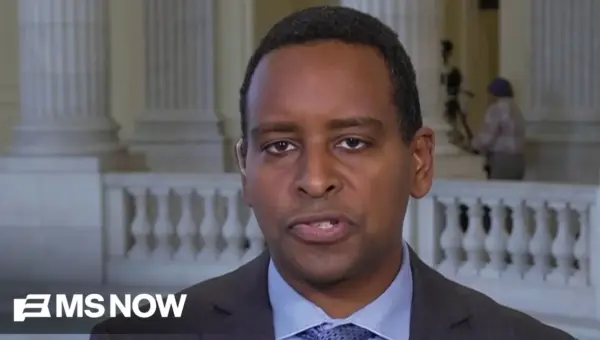
The House of Representatives is poised to vote on a resolution limiting President Trump's war powers concerning Iran. Congressman Joe Neguse highlighted constitutional concerns and contrasted current actions with past presidential military engagements. The interview also addressed allegations of misused taxpayer funds in a DHS contract.

DOJ Withholds Trump’s Epstein Files, Citing ‘False’ Claims
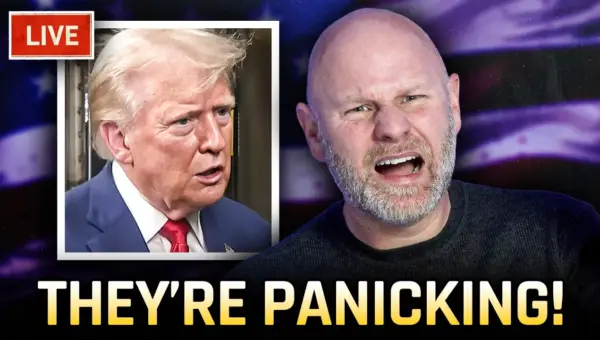
The DOJ admits to withholding over 47,000 files from the Epstein investigation, citing 'false' accusations against Donald Trump. However, prior FBI interviews with a witness raise questions about the swift dismissal of these serious claims.

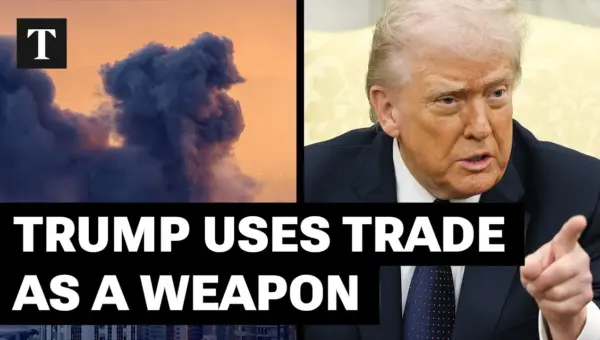
Trump Uses Trade Threats as ‘Play Money’ Against Allies
President Trump's use of trade threats as 'play money' against allies, exemplified by a recent ultimatum to Spain over defense spending, is raising concerns. Experts warn this tactic, while characteristic of Trump's approach, undermines global confidence and can have unintended negative consequences for U.S. businesses and consumers.