Trump’s Tariff Shift Fuels Market Uncertainty
Donald Trump's pivot to a broad 10% flat tariff, following a Supreme Court ruling, is injecting market uncertainty. This move complicates inflation control and interest rate policy, potentially leading to a 'higher for longer' rate environment and impacting global trade dynamics.


Trump’s Tariff Reversal Creates New Market Headwinds
Former President Donald Trump’s recent shift in tariff policy, moving from a strategic negotiation tool to a broad 10% flat tariff, has introduced significant uncertainty into the market, potentially hindering the Federal Reserve’s ability to cut interest rates and impacting global trade dynamics. While the removal of tariffs could be seen as a net positive for consumers, the method and implications of this policy change are causing concern among analysts.
The Mechanics of Tariffs and Their Economic Impact
Historically, the United States maintained an average trade-weighted tariff rate of around 1.8% to 2.2% before the Trump administration. During his tenure, these tariffs escalated, reaching an average of approximately 18% after initial negotiations and settling around 12% after exceptions. A key point highlighted is that American consumers, rather than foreign entities, bear the brunt of these tariffs, estimated at 85% to 95% of the total cost. This means that revenue generated from tariffs often comes from domestic pockets, a point of contention regarding its effectiveness in reducing the national debt, which historically tends to expand regardless of such policies.
“The fact is that Americans pay 85 to 95% of the tariffs imposed by Donald Trump. So, he’s robbing out of one of your pockets to give a little bit back to the other pocket for the sake or the idea that we’re going to pay down the national debt, which frankly, if a politician tells you they’re going to pay down debt, you should immediately call them a liar because the reality is they’re going to expand the debt.”
Supreme Court Ruling and Trump’s Response
A significant development that precipitated this policy shift was the Supreme Court’s ruling against the Avoidance of Importation of Certain Goods from Countries of Concern (AIPA) tariffs. The court determined that such tariffs, enacted via executive order, overstepped presidential authority, as the power to levy tariffs constitutionally resides with Congress. This decision effectively invalidated a key negotiation lever for the former president.
In response, Trump has adopted a new strategy, proposing a flat 10% tariff across the board, a move that analysts suggest diminishes his ability to engage in targeted negotiations with specific countries. This broad-stroke approach is seen by some as a misstep, potentially benefiting countries like China, which previously faced much higher tariffs, while disadvantaging allies like the United Kingdom. Trump’s reaction to the ruling was notably aggressive, questioning the court’s integrity and suggesting foreign influence and political motivations, a stance that critics argue undermines respect for the rule of law.
Market Impact and Investor Considerations
What Investors Should Know
- Inflationary Pressures: The reintroduction and expansion of tariffs are expected to contribute to inflationary pressures. By increasing the cost of imported goods, these tariffs can lead to higher consumer prices and potentially complicate the Federal Reserve’s efforts to manage inflation.
- Interest Rate Outlook: The persistent inflationary impact of tariffs makes it more challenging for the Federal Reserve to justify interest rate cuts. This suggests a scenario of “higher for longer” interest rates, which can dampen economic growth and affect asset valuations.
- Geopolitical and Trade Uncertainty: The unpredictable nature of tariff policies creates a climate of uncertainty for businesses and investors. This can lead to reduced investment, supply chain disruptions, and a general slowdown in economic activity.
- Sectoral Impacts: Certain sectors will be more affected than others. Industries reliant on imports or exports, such as manufacturing, retail, and technology, may face increased costs or reduced demand. Conversely, domestic producers competing with imports might see some benefit.
- Safe Haven Assets: In times of heightened uncertainty and potential stagflation, investors often seek refuge in safe-haven assets. Gold has historically performed well in such environments, and this trend may continue.
Short-Term and Long-Term Implications
In the short term, the market is likely to experience increased volatility as investors digest the implications of the new tariff regime. The immediate aftermath saw bond yields rise and gold prices increase, reflecting concerns about inflation and economic stability. The 10% flat tariff is set to expire around July 20th, coinciding with the midterm campaign season, potentially making it a significant political talking point.
Long-term, the sustainability of these tariffs will depend on political developments and their actual economic consequences. If they lead to sustained inflation and slower growth, it could foster a stagflationary environment. The loss of targeted negotiation power through tariffs means that future trade relationships might be shaped by broader, less flexible policies. This could alter global trade flows and affect the competitiveness of various economies.
Economic Data and Analyst Sentiment
Recent economic data, including inflation figures and GDP estimates, suggest a challenging economic landscape. While some temporary employment figures show minor upticks, the overall picture is one of caution. The potential for stagflation – a combination of stagnant economic growth and high inflation – is a growing concern.
Analysts’ sentiment has shifted towards a more cautious outlook. The “bare bull scale,” a measure of bullishness, is currently at a moderate level, reflecting a balanced view rather than strong optimism. The geopolitical risks associated with Iran were previously seen as a potential “buy the dip” opportunity, but the domestic policy shifts now present a more immediate concern.
A Note on Specific Company Valuations
While the broader market faces uncertainty, some analysts point to potential opportunities in specific sectors. For instance, one software company, previously trading at a high valuation, has seen its stock price fall significantly. With a current PEG ratio of 0.95, it is being re-evaluated. The integration of artificial intelligence with human review is seen as a key competitive advantage, potentially leading to substantial price appreciation. This highlights that even amidst macroeconomic headwinds, individual stock analysis remains crucial for identifying potential long-term value.
The overarching sentiment is that while the removal of specific tariffs was a positive step, the subsequent policy shift introduces new complexities. The market must now contend with the inflationary impact of broad tariffs, the Federal Reserve’s constrained ability to ease monetary policy, and the general uncertainty surrounding future trade relations. Investors are advised to proceed with caution, focusing on risk management and a balanced portfolio approach.
Source: F**K | Trump LASHES OUT (YouTube)

Related Articles


Trump Open to Iran Talks After Attacks, Shifts on Regime Change
President Trump has agreed to negotiate with Iran's new leadership following recent U.S. and Israeli attacks, signaling a potential shift from his regime change objective. The move has drawn scrutiny from former officials who question the strategic coherence of U.S. policy.

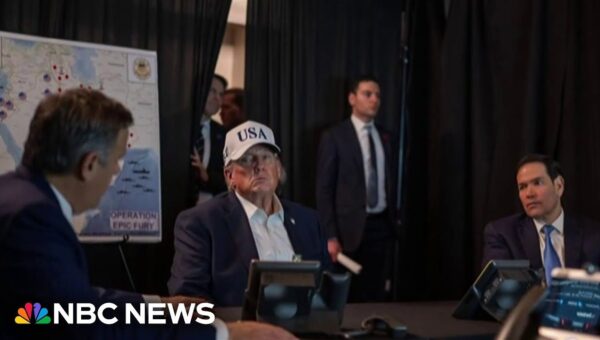
Trump: Iran Strikes Ahead of Schedule, Expects ‘Great Deal for World’
Three U.S. service members have been killed amid escalating conflict with Iran, President Trump confirmed. He stated that strikes are ahead of schedule, with senior Iranian leaders killed, and expressed optimism for a "great deal for the world" despite ongoing talks with Iranian officials.

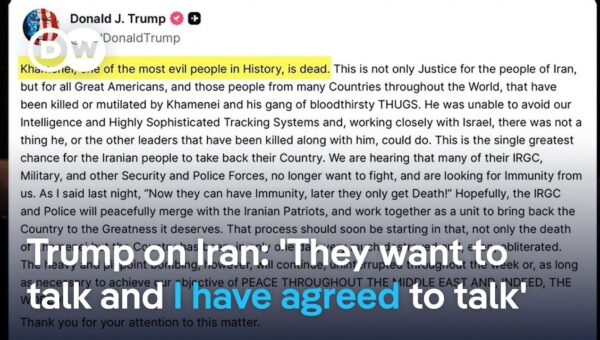
Trump Agrees to Talks with Iran After Major Strikes
President Donald Trump has agreed to talks with Iran's leadership following coordinated strikes that reportedly killed key figures, including the Supreme Leader. While Trump claims significant military successes, U.S. strategy remains unclear, and public opinion shows limited support for the actions amid rising American casualties.