Trump’s State of the Union Highlights Deep US Divisions
Former President Donald Trump's recent State of the Union address highlighted deep divisions within the U.S., with critics arguing he used national polarization as a political weapon. The speech focused on economic claims and immigration, but a notable disconnect emerged between official economic data and the everyday financial experiences of many Americans.

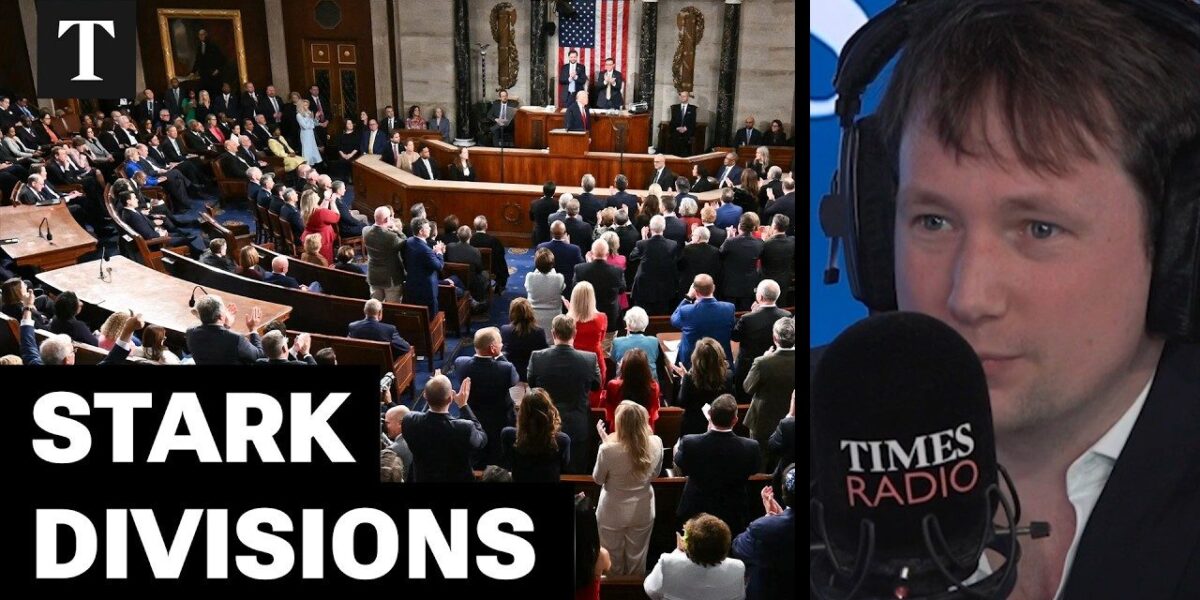
Trump Leverages Division in Fiery State of the Union Address
In a highly anticipated address that underscored the profound political schisms within the United States, former President Donald Trump delivered a fiery State of the Union speech that critics argue weaponized national division. The event, marked by significant Democratic boycotts and sharp partisan exchanges, painted a stark picture of a nation deeply fractured, with Trump strategically employing these divisions to rally his base and challenge his opponents.
A Stark Visual of American Polarization
The atmosphere during Trump’s address was a far cry from the more subdued and reverential tone typically associated with such high-profile political statements. Describing the scene, one commentator noted the stark contrast with the more sedate proceedings of the UK’s House of Commons, stating, “The overwhelming sort of visual and audio sense of last night is just how incredibly divided America is.” This division was not merely observed but actively amplified by Trump himself, who reportedly encouraged Republican supporters to stand and applaud while Democrats remained seated, a visual that was widely disseminated.
The deep ideological chasm was further evidenced by the significant number of Democratic representatives who chose to boycott the event. While some suggested this was a strategic decision to avoid validating a divisive speech, others speculated that Trump may have even welcomed the absence of his opponents, viewing it as a potential tactic to further alienate and galvanize his own supporters. “I mean, that’s maybe what he wanted them to do,” one observer mused.
Key Themes and Economic Disconnect
Trump’s speech centered on themes of economic prosperity and national resurgence, with the former president claiming, “After just one year, I can say with dignity and pride that we have achieved a transformation like no one has ever seen before and a turnaround for the ages.” He touted a revitalized economy, asserting that “the roaring economy is roaring like never before, and our enemies are scared. Our military and police are stacked, and America is respected again, perhaps like never before.”
However, a significant disconnect was highlighted between Trump’s pronouncements of economic success and the lived experiences of many Americans. Despite claims of falling prices and robust economic growth, reports indicate that in many sectors, prices have actually risen. This disparity, where official economic indicators may not align with public perception, is a critical vulnerability. As one analysis pointed out, “There is this disconnect between the experience of the voters, many of whom returned Trump a year and a half ago, who are experiencing high prices and are not, you know, they want prices to come down.” This disconnect mirrors strategies seen in previous political campaigns, where leaders emphasized positive economic data that resonated less with the electorate’s everyday financial realities.
Immigration: A Familiar Battleground
Immigration emerged as another central pillar of Trump’s address, a consistent and potent issue in his political discourse. He strongly advocated for prioritizing citizens over undocumented immigrants, stating, “The first duty of the American government is to protect American citizens, not illegal aliens.” While immigration remains a significant concern for many voters, polling data suggests that the urgency of illegal immigration as a voting issue has somewhat diminished compared to previous periods.
Interestingly, the transcript notes that even when governments successfully reduce immigration figures, the credit may not always translate into electoral advantage, as voters often shift their focus to other pressing concerns. This dynamic presents a challenge for any administration seeking to leverage immigration policy for political gain.
The Specter of a Re-election Campaign
Perhaps the most striking observation from the event was its palpable sense of being part of a re-election campaign, even with significant time remaining before the next presidential cycle. The tone and content of the speech, according to observers, strongly suggested a campaign for “Trumpism” itself, if not directly for Trump’s return to office. This has fueled speculation about potential future political maneuvers and the enduring influence of his political movement.
The analysis also touched upon the potential risks of such rhetoric, particularly if voters do not feel that the claimed successes align with their personal circumstances. The article references a piece by The Times’ Washington editor, Katy Balls, which questions whether Trump might be repeating a playbook similar to that of President Biden, who faced skepticism when promoting a positive economic outlook that did not fully resonate with the public’s financial concerns.
Looking Ahead: The Lingering Impact of Division
As the political landscape continues to be shaped by these deep-seated divisions, the implications of Trump’s State of the Union address are likely to reverberate. The strategic use of polarization, coupled with a potential disconnect between economic messaging and voter experience, sets the stage for future political battles. Observers will be closely watching how these themes play out in upcoming elections and whether the strategies employed by Trump will continue to define the American political discourse.
Source: Trump Weaponises Divided America As Democrats Snub State Of The Union (YouTube)

Related Articles
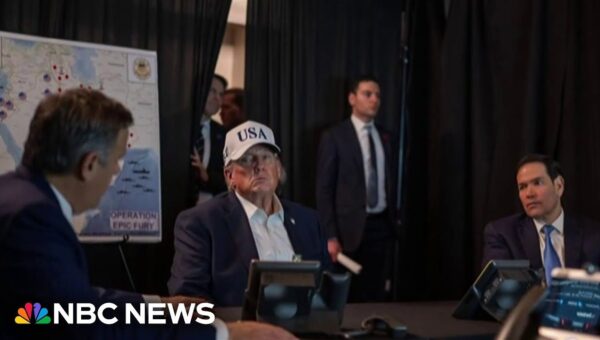
Trump: Iran Strikes Ahead of Schedule, Expects ‘Great Deal for World’
Three U.S. service members have been killed amid escalating conflict with Iran, President Trump confirmed. He stated that strikes are ahead of schedule, with senior Iranian leaders killed, and expressed optimism for a "great deal for the world" despite ongoing talks with Iranian officials.
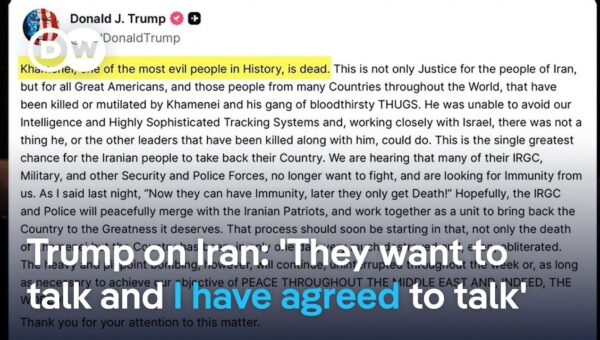
Trump Agrees to Talks with Iran After Major Strikes
President Donald Trump has agreed to talks with Iran's leadership following coordinated strikes that reportedly killed key figures, including the Supreme Leader. While Trump claims significant military successes, U.S. strategy remains unclear, and public opinion shows limited support for the actions amid rising American casualties.

Trump’s Putin Stance: US Strategy and Global Implications
Analysis suggests Donald Trump's approach to the Ukraine war involves pressuring Kyiv, but US involvement is crucial for resolution. China's influence and the 'MAGA' agenda's geopolitical implications are key factors.