Trump’s Stance on Russia Sanctions Shocks Kremlin, Kyiv Reacts
Recent statements from Donald Trump's team regarding the potential lifting of sanctions against Russia in exchange for a Ukraine peace deal have drawn sharp criticism and concern. Experts suggest this signals a significant departure from established U.S. foreign policy, potentially impacting global alliances and Ukraine's ongoing defense efforts. The situation is further complicated by internal political divisions within the U.S. government regarding aid and sanctions.

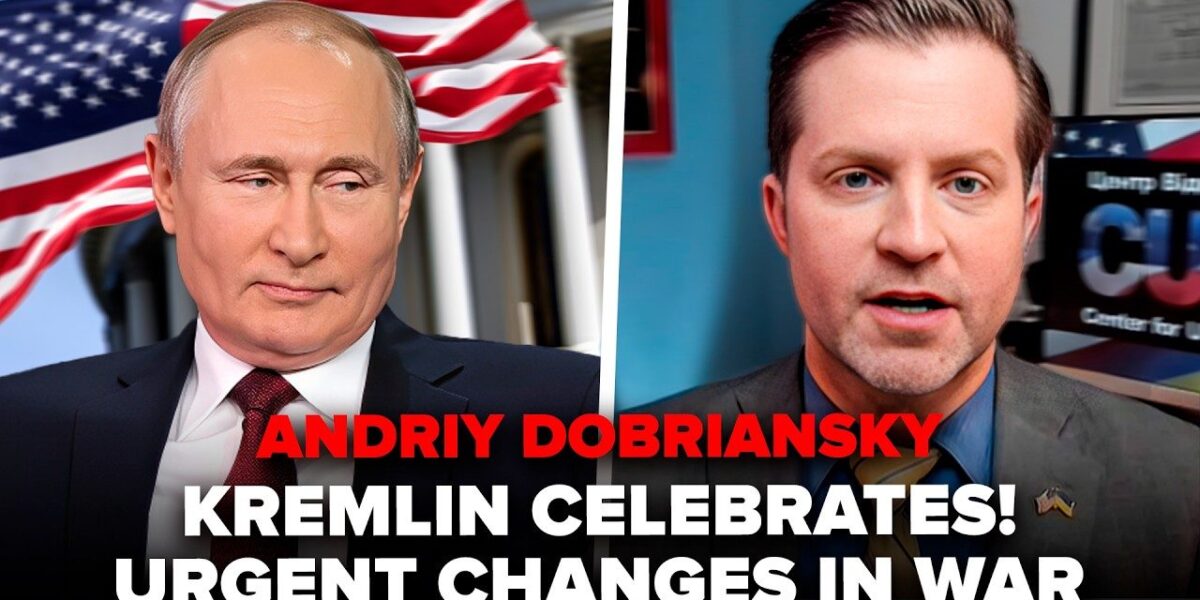
Trump Team Signals Shift on Russia Sanctions, Raising Concerns
Recent statements from Donald Trump’s inner circle and the former president himself have sent ripples through international diplomacy, particularly concerning the future of Ukraine and the ongoing conflict with Russia. A significant point of contention is the reported demand from Trump’s camp to lift sanctions against Russia in exchange for an agreement on Ukraine. This stance, according to experts, represents a departure from established U.S. foreign policy and security strategies, potentially signaling a seismic shift in global alliances and the approach to geopolitical adversaries.
Expert Analysis: A Counter to NATO and U.S. Security Narratives
Andre Debransky, an expert at the Center of US Ukrainian Relations, has offered a critical assessment of these developments. He notes that the sentiment to re-evaluate the relationship with Russia has been brewing within Trump’s orbit, with figures like JD Vance and Elbridge Colby advocating for a worldview that sees Russia as a potential ally against other global adversaries. This perspective directly challenges the long-standing NATO narrative and previous U.S. security strategies, which viewed Russia as a significant threat. Debransky points to the Trump administration’s 2025 security strategy, which indeed sought a better accord with Russia, as evidence of this underlying policy direction. However, he argues that this approach disregards fundamental realities about Russia’s trustworthiness as a partner, both politically and economically.
“This has been something that has been coming out of this administration and even prior to the election of Donald Trump in 2024. Uh a sentiment from his team especially people the likes of JD Vance uh Elbridge KBY… establishing that they in their worldview see Russia as a potential ally against other adversaries. This is of course uh a counter to established NATO narrative uh a counter to previous US uh security strategies…”
Pressure on Ukraine: A Pattern of Withheld Aid and Intelligence
The reported demand for Ukrainian President Zelenskyy to end the war swiftly is not seen as an isolated incident but rather a continuation of pressure exerted since the current administration took office. Debransky highlights instances of public pressure in February 2025 and subsequent cutoffs of aid and intelligence sharing. He asserts that this pullback in support directly impacted Ukraine’s military operations, forcing them to withdraw from forward positions within the Russian Federation. The transcript details multiple stoppages of aid throughout 2025, underscoring a consistent pattern of reduced support. Furthermore, it is revealed that the Secretary of the Army was dispatched to Ukraine in late November 2025 with a directive for a deal to be signed by Thanksgiving, a deadline that passed without resolution, followed by subsequent, unfulfilled deadlines.
Trump’s Strategic Calculation: Pre-Election Political Gains
The timing of these pronouncements, particularly the push for a resolution in Ukraine, is intrinsically linked to the upcoming elections. Experts suggest that Donald Trump’s personal involvement in Ukraine negotiations has waned since October 2025, with the responsibility largely delegated to key figures like Steve Bannon and Jared Kushner. Debransky posits that Trump is not dictating the pace of peace talks but rather responding to assurances from his representatives that a swift resolution is achievable. This perceived ability to secure peace in Ukraine could then be leveraged as a significant political talking point during his election campaign. The strategy appears to be less about direct presidential engagement and more about showcasing delegated successes.
Limited Direct Engagement, Delegated Diplomacy
While Trump has had in-person and telephone meetings with President Zelenskyy, and less publicized conversations with President Putin, his direct, day-to-day involvement in shaping the conflict’s resolution is described as limited. Instead, he has entrusted deputies with the primary responsibility for negotiations. This delegation allows him to maintain a degree of detachment while still being positioned to claim credit for any breakthroughs. The dynamic suggests a reliance on his team to deliver outcomes that can bolster his political standing.
Pressure on Allies, Not Adversaries?
A critical observation regarding Trump’s foreign policy approach is his tendency to apply pressure on allies rather than stronger adversaries. Debransky draws parallels to his dealings with Canada and other NATO members, suggesting that Trump prioritizes demonstrating political victories for the U.S. over confronting more formidable opponents. This approach, he argues, comes at the potential detriment of long-standing alliances and could be seen in the significant reduction of aid to Ukraine since Trump took office. This has even prompted bipartisan action within the U.S. Congress, with legislation passed to increase aid, though its delivery has reportedly been hampered by the executive branch.
Internal U.S. Political Conflict: Congress vs. White House
A significant internal conflict within the U.S. government is highlighted, pitting Congress against the White House. Despite legislative efforts by Congress to bolster aid to Ukraine, the executive branch’s actions, or lack thereof, are creating a bottleneck. The transcript points to a situation where the Department of Defense has not provided required testimony to Congress regarding aid allocation, indicating a potential defiance of legislative mandates. This internal friction raises questions about the future delivery of crucial support to Ukraine.
Sanctions on Russia: A Lever Untapped?
While Trump possesses the authority to impose sanctions on Russia, the narrative suggests he has opted to delay or selectively apply them. The transcript mentions the possibility of secondary sanctions, targeted sectoral sanctions, and updating the existing sanctions regime. However, it also notes an increase in carveouts and exceptions since Trump took office. A particularly striking anecdote involves Gentry Beach, an associate of Donald Trump Jr., investing in a Russian energy company in a manner that would have been previously restricted, raising questions about potential conflicts of interest and the enforcement of sanctions.
A Critical Juncture: Political Breakthroughs and Obstacles
The current political climate in the United States is described as critical. Recent events indicate a growing willingness within Trump’s own party to oppose his directives, as seen in votes against blocking the release of the Epstein files and criticism of his use of tariffs. These developments suggest a potential shift where Congress, including members of the Republican party, might assert greater independence and potentially override presidential blocks on aid to Ukraine. However, the transcript also acknowledges Trump’s significant ‘vertical control’ over Congress, where he can influence legislative agendas through the Speaker of the House and Senate leadership.
The Likelihood of a Trilateral Summit: Zelenskyy’s Readiness vs. Putin’s Hesitation
The prospect of a trilateral meeting involving Presidents Trump, Zelenskyy, and Putin is discussed, with President Zelenskyy’s willingness to engage at the highest levels emphasized. Debransky recounts Zelenskyy’s past readiness to meet with Putin, even in challenging circumstances, and his consistent willingness to participate in peace talks whenever initiated by the U.S. Examples include his travel to Istanbul at Trump’s request, only for Putin to decline, and his prompt attendance at Davos when Trump indicated a potential meeting. The expert concludes that while Zelenskyy and Ukraine are demonstrably ready for such high-level discussions, the onus remains on the Russian side to engage seriously, noting that Russian attacks have escalated since Trump’s presidency, not decreased.
“It is clear that the Russian side is the one that is not serious about these negotiations. Uh President Zalinski has uh crossed the border, jumped on a plane whenever the United States thinks there’s a possibility that a peace talk can develop.”
Security Guarantees and International Summits
The mention of security guarantees by Steve Bannon is met with a degree of surprise, given Ukraine’s proactive efforts since 2022 to establish peace roadmaps and international security summits. Debransky points out that Bannon’s late entry into the process and his apparent lack of direct engagement with the realities on the ground in Ukraine, such as visiting Kyiv, might limit the practical impact of his statements. He stresses the importance of U.S. Senate ratification of any security agreements to ensure their long-term validity as federal legislation.
The Role of China and Trade with Russia
Regarding statements from figures like Senator Rubio about pressure on Russia, the expert clarifies that the primary focus of U.S. concern regarding aid to Russia has been directed at China. China has been called out for supplying weapons and bolstering Russia’s economy. Debransky suggests that any discussion of trade deals with Russia by the U.S. is misguided, as Russia lacks valuable exports that would benefit the American economy, with its production heavily geared towards war efforts. He implies that such discussions should be directed towards President Trump, given his administration’s approach.
Future U.S. Support: Awaiting Electoral and Political Shifts
The future of U.S. support for Ukraine hinges significantly on the upcoming elections and potential shifts in congressional control. With a substantial number of Republicans choosing not to run for re-election, partly due to unfavorable polling for Trump, there is a possibility of Democrats regaining a majority. Such a change could lead to increased oversight hearings, similar to those championed by Senator John McCain, to ensure that approved aid reaches Ukraine effectively. The hope is for a move away from the current ‘vertical control’ by the White House towards a more responsive legislative environment where support for Ukraine can be prioritized.
Source: 😱Kremlin is shocked by Trump’s statements! Putin already made decisions. Zelensky’s sharp reaction (YouTube)

Related Articles
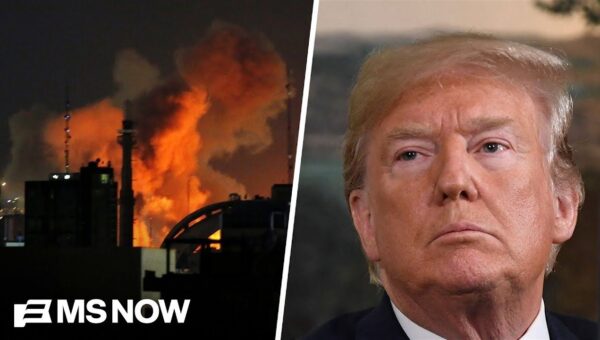
Congressman Swalwell Slams Trump’s Iran Strikes, Cites ‘No Plan’
Congressman Eric Swalwell has strongly condemned the recent U.S. military strikes in Iran, deeming them illegal and lacking a clear strategic plan. He joins Democrats in demanding a War Powers vote, asserting that the administration has failed to present evidence of provocation or a post-strike strategy. Swalwell criticizes the move as a distraction from domestic issues and a departure from campaign promises.

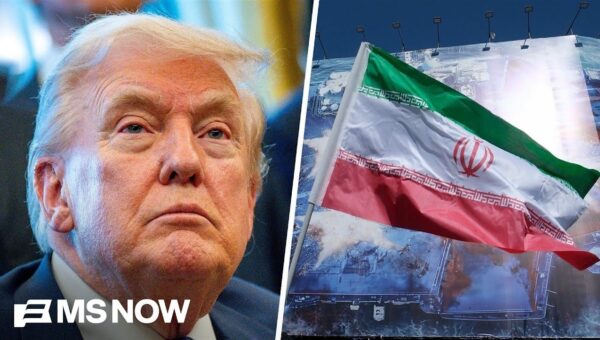
Trump Open to Iran Talks After Attacks, Shifts on Regime Change
President Trump has agreed to negotiate with Iran's new leadership following recent U.S. and Israeli attacks, signaling a potential shift from his regime change objective. The move has drawn scrutiny from former officials who question the strategic coherence of U.S. policy.

Trump: Iran Strikes Ahead of Schedule, Expects ‘Great Deal for World’
Three U.S. service members have been killed amid escalating conflict with Iran, President Trump confirmed. He stated that strikes are ahead of schedule, with senior Iranian leaders killed, and expressed optimism for a "great deal for the world" despite ongoing talks with Iranian officials.