Trump’s SOTU: Low Energy, Slurred Speech, and Weak Ratings
Donald Trump's recent State of the Union address was marked by a low-energy, slurred delivery and concerning physical signs, including bruises and intense squinting. Despite a Republican-leaning audience, the speech received its weakest ratings to date, with nearly half of viewers feeling key economic issues were neglected. Observers described the event as "boring" and even likened it to "sundowning in real time."

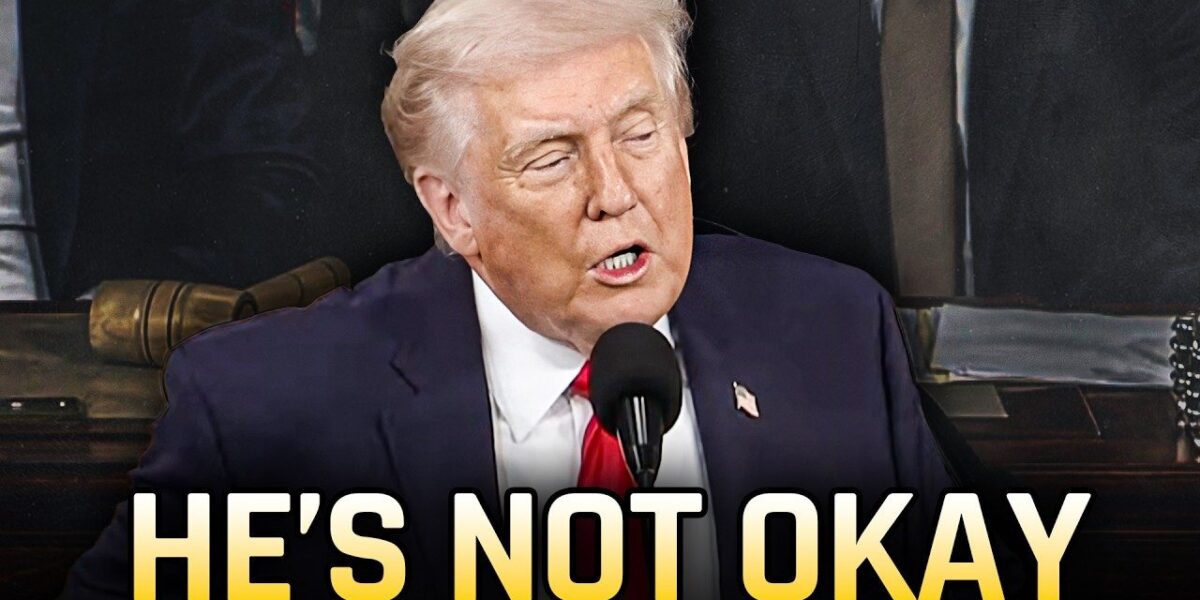
During his recent State of the Union address, former President Donald Trump delivered a speech characterized by low energy, slurred speech, and a surprisingly lukewarm reception, even among a Republican-leaning audience. The address, which lasted for approximately two hours, drew criticism for its perceived lack of substance and concerning physical indicators from the former president.
Physical Manifestations and Delivery Concerns
Eyewitness accounts and analysis of the broadcast highlighted several physical aspects of Trump’s delivery that raised questions. Observers noted significant bruises on his hands, a detail that, combined with a general low-energy presentation, suggested a taxing performance. The former president’s voice was described as slurred, particularly during moments when he admonished Democrats for not applauding. One particularly striking moment, captured and shared on social media, showed Trump squinting intensely, which some interpreted as a sign of declining vision or physical strain. The transcript notes, “But the squinting is new. They’re squinting like his body is failing now. His eyes are going.” This was contrasted with his introduction of the U.S. men’s hockey team early in the event, which reportedly consumed a significant portion of his apparent energy, leaving little for the remainder of the speech.
“It looks like he’s having a stroke. But it was so bad. But the squinting is new. They’re squinting like his body is failing now. His eyes are going.”
The speech’s opening was marred by a technical issue with the microphone, which Trump reportedly blew out, further contributing to the impression of a disjointed and low-energy start. These physical observations led some commentators to describe the overall presentation as a man “sundowning in real time,” a term often used to describe increased confusion and disorientation in older adults.
Polling Data Reveals Weakest Reception Yet
Despite the common trend of State of the Union addresses receiving positive immediate reactions, Trump’s latest address showed a decline in approval ratings compared to his previous addresses. Polling data indicated that while a majority of viewers (nearly 66%) reported a somewhat positive reaction, this figure was lower than the reception for his previous addresses, including his 2023 address to Congress and all his first-term State of the Union speeches. This occurred even though the audience for this particular speech was more Republican-leaning (13% more than the general public) than usual.
The transcript highlights the surprising nature of this reception: “So, even with a solid Republican audience, this was still his worst received State of the Union ever. Yes, a majority approved, but that majority got smaller than it was even a year ago. Smaller than it was all four times during his first term. So even his own Republican base is like, ‘Yeah, it was okay, but not great.'”
Disconnect on Key Issues
Further analysis of the polling revealed a significant disconnect between what viewers wanted to hear and what was delivered, particularly concerning the economy. A pre-speech survey found that a majority of viewers prioritized hearing about the economy and the cost of living. However, nearly half of the audience (45%) felt that Trump focused too little on these issues during his address. This suggests that even among those who viewed the speech positively, there was a sentiment that their most pressing concerns were not adequately addressed.
The transcript elaborates on this paradox: “So not quite a majority, but almost a majority say we wanted to hear about the economy. He doesn’t care. So even among the people, and this is where polls get really stupid to me, even among the people who are like, ‘Oh, I really liked his speech. Oh, well, did he talk about things that matter to you? Oh, oh, God, no. No, he doesn’t care about those things at all.” This highlights a potential disconnect where audience members may have appreciated the delivery or rhetoric but recognized a lack of focus on their personal economic challenges.
Broader Context and Reactions
The speech was also criticized for its length and content, with some comparing it to the lengthy addresses often given by dictators. The transcript quotes a viewer observation: “It’s a funny observation that dictators often hold the longest speeches with the least amount of actual and factual content.” Another comment succinctly described the address as simply “boring,” a sentiment echoed by others who had hoped for a more combative or engaging performance. Instead, the prevailing impression was one of listlessness and a lack of impactful substance.
Reactions from public figures also varied. Robert F. Kennedy Jr. drew criticism for seemingly aligning with the sentiment that Democrats should have applauded more, a stance perceived as contradictory given his past political positions. The overall discourse surrounding the event suggests a complex mix of audience engagement, physical observation, and critical analysis of the former president’s message and presentation.
Looking Ahead
The reception of Donald Trump’s latest State of the Union address provides a notable data point in the ongoing political discourse. The combination of physical indicators, a lengthy and low-energy delivery, and a lukewarm reception, even from a friendly audience, raises questions about his current political stamina and the effectiveness of his messaging. As the political landscape continues to evolve, attention will be on whether these trends in public perception and audience reaction persist and how they might influence future campaign strategies and voter engagement.
Source: What Was Wrong with Trump During the SOTU? (YouTube)

Related Articles
Trump: Iran Strikes Ahead of Schedule, Expects ‘Great Deal for World’
Three U.S. service members have been killed amid escalating conflict with Iran, President Trump confirmed. He stated that strikes are ahead of schedule, with senior Iranian leaders killed, and expressed optimism for a "great deal for the world" despite ongoing talks with Iranian officials.
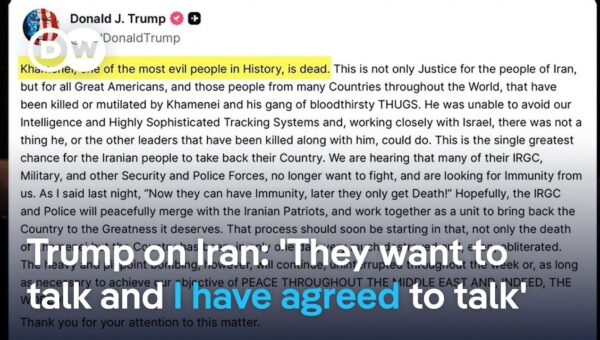
Trump Agrees to Talks with Iran After Major Strikes
President Donald Trump has agreed to talks with Iran's leadership following coordinated strikes that reportedly killed key figures, including the Supreme Leader. While Trump claims significant military successes, U.S. strategy remains unclear, and public opinion shows limited support for the actions amid rising American casualties.

Trump’s Putin Stance: US Strategy and Global Implications
Analysis suggests Donald Trump's approach to the Ukraine war involves pressuring Kyiv, but US involvement is crucial for resolution. China's influence and the 'MAGA' agenda's geopolitical implications are key factors.