Trump’s SOTU: A Disastrous and Divisive Address
Donald Trump's recent State of the Union address has been widely criticized as a "disastrous" and "fascist performative mess," lasting over an hour and 45 minutes. The speech was marked by controversial remarks on immigration, foreign policy, and his own legal standing, drawing significant opposition and a reported boycott by over 70 members of Congress.

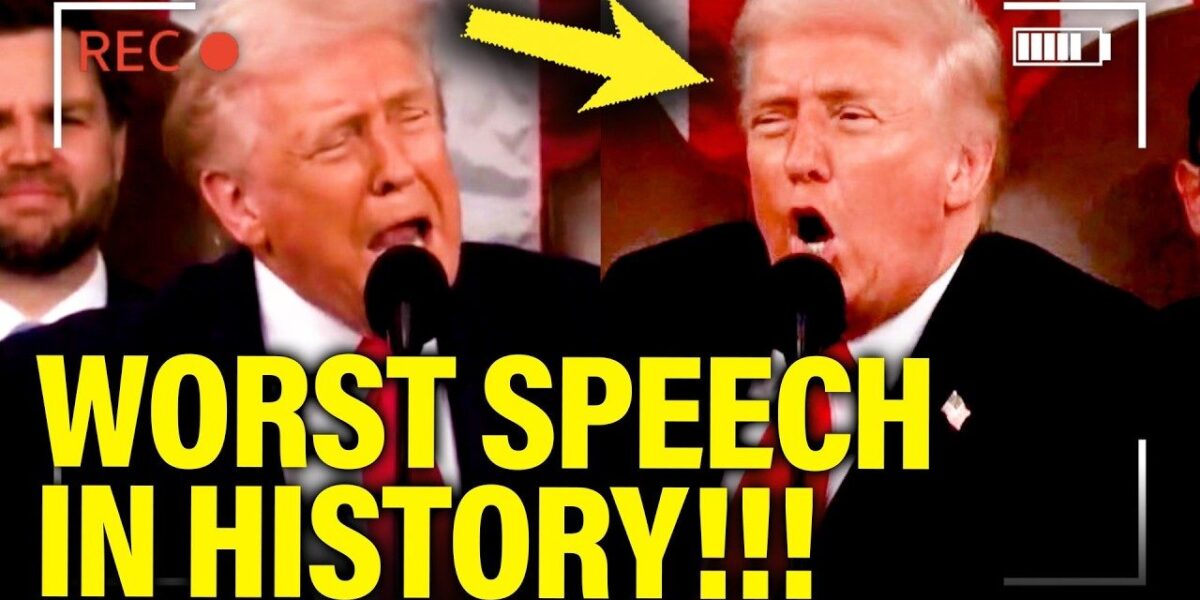
Trump Delivers Lengthy, Contentious State of the Union Address
In a State of the Union address that stretched over an hour and 45 minutes, former President Donald Trump delivered a speech described by critics as a “fascist performative mess” that “put people to sleep.” The lengthy address, which concluded recently, was met with significant opposition, with over 70 members of Congress reportedly boycotting the event to attend a counter-programming “People’s State of the Union” hosted by the Midas Touch Network. This alternative event garnered over two million views, highlighting a stark division in public and political reception.
Key Moments and Criticisms of the Address
The speech was marked by several controversial statements and moments that drew sharp criticism. One notable point of contention was the presence of Howard Lutnik, CEO of Cantor Fitzgerald, who was seen attending the address despite past associations with Jeffrey Epstein. His appearance, described as “without shame and all smiles,” contrasted with the reported empty seats in the chamber.
Trump’s claims regarding tax cuts for the wealthy were met with a peculiar reaction: Democrats reportedly cheered his statement that they had voted against his “tax cuts for the rich,” which critics argue have “crushed regular Americans.” This moment, alongside the singular applause from Pam Bondi when the Dow Jones’s performance was mentioned, underscored the often unconventional dynamics of the address.
“All Democrats, every single one of them voted against these really important and very necessary massive tax cuts.”
Donald Trump
The former president repeatedly emphasized a narrative of unprecedented national success, declaring, “We’re the hottest country anywhere in the world. The hottest.” He continued this theme by stating, “We’re winning so much, you don’t know what to do with all of the winning.” This rhetoric was met with skepticism, with real-time polling data suggesting that approval ratings for Trump throughout the speech remained in the 20s and 30s, indicating widespread disapproval.
Controversial Remarks and Policy Proposals
The address also featured several remarks that ignited significant controversy. Trump’s suggestion that his “first year of the second term should be my third term,” coupled with a statement about being a “dictator for life,” drew immediate condemnation and concern.
In a segment discussing identification requirements, Trump drew a parallel between the need for original forms of ID to shovel snow in New York City and the debate over voter identification. He stated:
“Yet they don’t want identification for the greatest privilege of all, voting in America. No, it’s no good.”
Donald Trump
Furthermore, Trump announced the formation of a “war on fraud” to be led by Vice President JD Vance. This announcement was met with criticism given Trump’s own legal challenges, including findings of civil liability for fraud and numerous felony counts, as well as his past pardons of individuals convicted of fraud.
A moment intended to rally support saw Trump asking attendees to stand if they agreed with the statement, “The first duty of the American government is to protect American citizens, not illegal aliens.” This was followed by a segment featuring Erica Kirk, whose emotional reaction was noted.
The address took a sharp turn when Trump commented on the Somali community in Minnesota, referring to them as “Somali pirates” and linking unrestricted immigration to cultural problems and increased costs for Americans. This rhetoric was labeled by critics as “Nazi fascist” language.
Regarding foreign policy, Trump made aggressive statements about Iran, vowing to “obliterate him again” if they pursued nuclear weapons, despite claiming to have “wiped it out” previously. He also asserted that he had ended eight wars during his presidency, including mentioning Cambodia and Pakistan, and claimed to have prevented a nuclear war between India and Pakistan. These claims were met with disbelief by some observers.
Trump’s assertion that the Supreme Court had “fully approved” his tariffs was also challenged, as the court had previously ruled against his tariffs as unlawful. He then suggested that tariffs were working so well that income taxes might become obsolete.
In a peculiar request, Trump expressed his desire for the Congressional Medal of Honor, acknowledging that he was not permitted to award it to himself.
Broader Implications and Future Outlook
The State of the Union address, typically a platform for a president to outline their agenda and rally support, became a focal point for political division and intense scrutiny. The criticisms leveled against Trump’s speech, ranging from its length and tone to specific policy proposals and remarks, highlight the ongoing polarization within the American political landscape. The counter-programming event and the low approval ratings reported during the address suggest a significant segment of the population remains critical of Trump’s political platform and communication style.
As the political cycle progresses, the impact of this address and the reactions it provoked will likely continue to shape public discourse and influence voter sentiment. The focus will remain on how these divisive moments are perceived and whether they galvanize or alienate different segments of the electorate in future political contests.
Source: 🚨Trump’s AWFUL SOTU Speech Was WORST IN HISTORY!! (YouTube)
