Trump’s Shifting Iran Stance Fuels War Confusion
President Trump's shifting justifications for the ongoing conflict with Iran have drawn criticism, with the President now claiming a role in selecting the nation's next leader. Iranian officials have responded with defiance, signaling no intention to negotiate. Experts express concern over the lack of a clear strategy and the potential for regional instability.

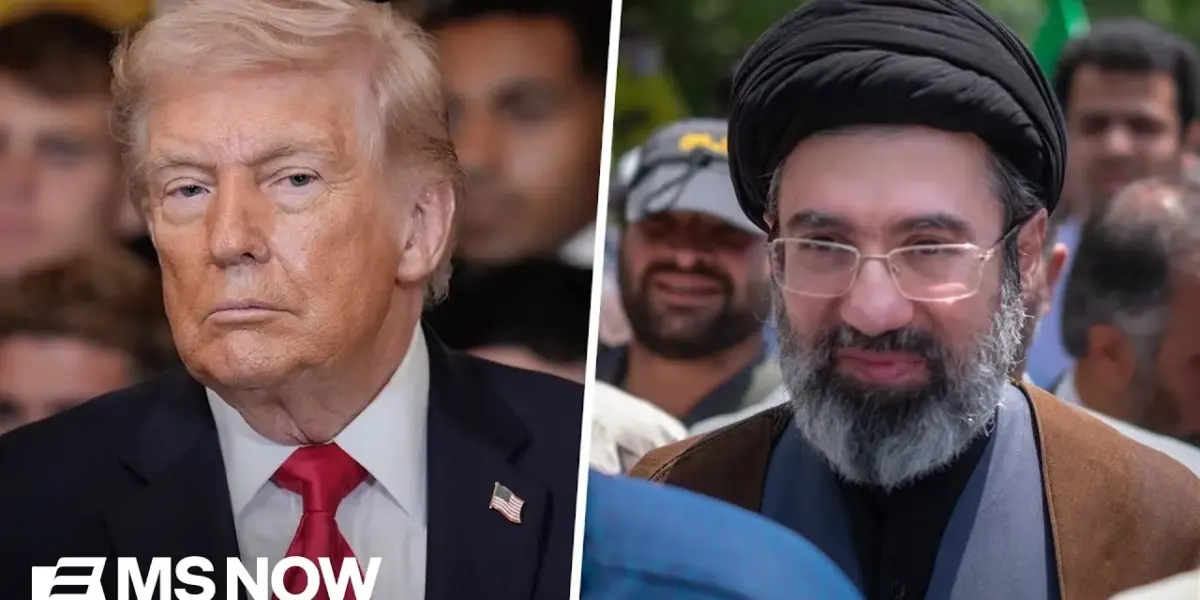
Mixed Messages Emerge as President Intervenes in Iran’s Leadership
Washington D.C. – President Donald Trump’s administration is facing scrutiny over a series of contradictory statements regarding the ongoing conflict with Iran, with the President himself now asserting a role in selecting the nation’s future leadership. This evolving narrative has sparked concerns about the clarity and strategic direction of U.S. policy in the volatile Middle East.
President Trump’s Direct Involvement in Iran’s Future
Speaking from the White House, President Trump declared his intention to be involved in choosing Iran’s next leader, drawing parallels to the situation in Venezuela. He explicitly stated that the current frontrunner, the son of the late Ayatollah, was unacceptable. “We also urge Iranian diplomats around the world to request asylum and to help us shape a new and better Iran with great potential,” Trump stated. He further emphasized the U.S. commitment to ensuring Iran would not threaten America or its neighbors, asserting, “And the United States will ensure that whoever leads the country next, Iran will not threaten America or its neighbors, Israel, anybody?”
Iranian Officials Respond with Defiance
In contrast to the U.S. pronouncements, Iranian officials have escalated their rhetoric, signaling no immediate desire for de-escalation. Iran’s Foreign Minister told NBC News, “Right now you’re saying Iran does not want to cease fire. We are not asking for a ceasefire. And we don’t see any reason why we should negotiate with the U.S. When we negotiated with them twice, we negotiated with them and every time they attacked us at the middle of negotiations.” When questioned about the possibility of a U.S. invasion, the Foreign Minister responded with confidence, stating, “No, we are waiting for them. You are waiting for the U.S. military to invade the ground troops? Yes, because we are confident that we can confront them and that would be a big disaster for them.”
Widening Conflict and International Reactions
The conflict appears to be expanding, with Lebanon emerging as a significant front as Israel targets Hezbollah fighters. The U.S. and Israel continue their strikes on Iran, while Iran retaliates against several Gulf nations. European countries have deployed naval and air assets to the region, however, they maintain these deployments are solely for the protection of their citizens and interests, not to join offensive operations against Iran.
Congressional Action on War Powers
In parallel, Congress has narrowly voted down resolutions that could have limited the President’s war-making authority concerning Iran. The House rejected such a resolution today, following a similar vote in the Senate yesterday. This outcome places significant responsibility on both President Trump and Republican members of Congress for the future course of the conflict.
Analysis from Experts
Conflicting Messaging and Strategic Ambiguity
Peter Baker, Chief White House Correspondent for The New York Times, described the situation as “all over the map.” He highlighted the progression of White House messaging, from encouraging the Iranian people to overthrow their government, to suggesting preferred leaders within the regime, and now to the President’s direct involvement in selecting a new regime. “Unless you have boots on the ground, it’s hard to see how on earth you make that happen,” Baker commented, questioning the feasibility of the U.S. dictating Iran’s leadership without direct control.
A Politically Fraught National Security Strategy
Retired four-star U.S. Army General Barry McCaffrey characterized the situation as a significant political and national security mess. “Mr. Trump made no effort to consult with Congress to gain support of the American people,” McCaffrey stated, adding that there was also a failure to engage allies. Despite this lack of broad support, McCaffrey acknowledged the military’s effectiveness in decapitating Iran’s leadership and damaging its military capabilities. However, he warned that the U.S. could run out of targets within a month, necessitating a diplomatic approach, and cautioned against public statements that could prolong the conflict.
The Challenge of Selling the War to the Public
David Drucker, a senior writer at The Dispatch, noted the administration’s failure to build a case for the war, a departure from previous presidential initiatives. “President George W. Bush made a case for going into Afghanistan, made a case for going into Iraq,” Drucker recalled, emphasizing the importance of public and congressional support. He pointed out that initial polling shows broad disapproval, with strong support only among Republican voters, and that the public’s reaction will depend on how the conflict unfolds. Drucker also highlighted that President Trump campaigned against the type of prolonged intervention now occurring, making his current actions potentially at odds with his past positions.
Potential for a Failed State and Internal Chaos
General McCaffrey expressed concern that the most likely outcome of the conflict could be a failed Iranian state, potentially leading to chaos. He suggested that the Iranian armed forces might split, and that the ideologues’ grip on the country could be challenged. “The only option the Iranians got left, in my view, are terrorism, international,” he stated, underscoring the unpredictable nature of the situation.
Looking Ahead
As the conflict intensifies and U.S. policy statements remain in flux, the coming weeks will be critical in determining the trajectory of the war and its impact on regional stability. The lack of a clear public mandate and the President’s evolving justifications present significant challenges for the administration as it navigates this complex geopolitical landscape. The world watches to see if a coherent strategy will emerge and how the American public and international community will respond.
Source: 'All over the map': Is Trump SABOTAGING his own war with constantly shifting justifications? (YouTube)

Related Articles

Russia Blames US for Ukraine Peace Talk Failure
Russia is reportedly using Middle East conflicts to deflect blame for potential Ukraine peace talk failures, according to the Institute for the Study of War. Meanwhile, Ukraine is assisting the U.S. with drone defense, and controversy has arisen over the misrepresentation of Ukrainian drone technology on U.S. television.
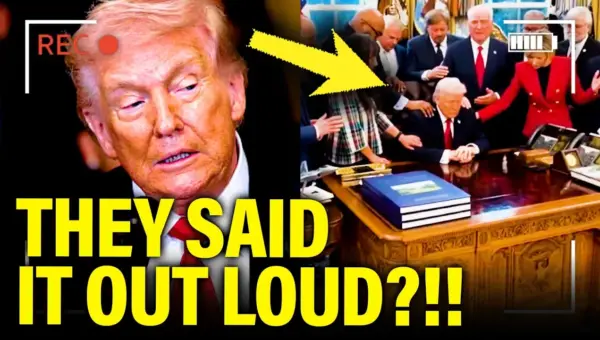
Holy War Justification: GOP Allies Reveal Disturbing Iran War Rationale
Republican allies of the Trump administration are reportedly framing the conflict with Iran as a 'holy war.' This disturbing justification, moving beyond previous explanations, raises serious concerns about the role of religious nationalism in foreign policy and its potential to undermine diplomatic solutions and the separation of church and state.

Trump’s Iran Policy Under Fire: Vietor Questions Regime Change Strategy
Tommy Vietor of Crooked Media warns that the Trump administration may be underestimating the challenges of confronting Iran. He questions the feasibility of regime change operations against an "ideologically driven" regime and expresses concern over the lack of a clear strategy for what comes next.