Trump’s SAVE America Act: Citizenship Proof for Voting
Former President Donald Trump is pushing the SAVE America Act, a federal bill that would require voters to prove U.S. citizenship to register and show photo ID at the polls. Critics warn the stringent measures could disenfranchise millions of Americans, particularly minority groups and young people.

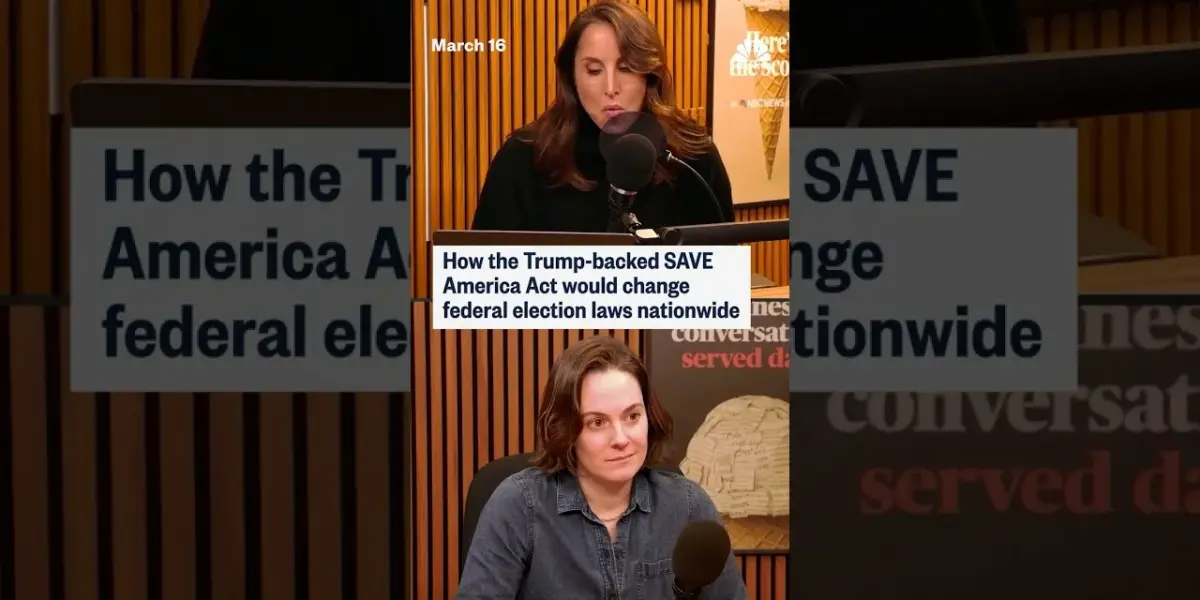
Trump Pushes Sweeping Election Reform Bill Requiring Citizenship Proof
Former President Donald Trump is heavily advocating for the SAVE America Act, a proposed federal election law that would mandate stringent new requirements for American voters, including proof of citizenship to register and photo identification to cast a ballot. The legislation, if enacted, could significantly alter the landscape of federal elections nationwide, raising concerns about voter access and potential disenfranchisement.
Key Provisions of the SAVE America Act
At its core, the SAVE America Act focuses on two primary requirements designed to verify voter eligibility:
- Proof of Citizenship for Registration: The bill proposes that individuals must provide documentation proving their U.S. citizenship before they can register to vote. This could include birth certificates or naturalization papers.
- Photo Identification at the Polls: Once registered, voters would be required to present a photo ID when casting their ballot on election day.
These measures, proponents argue, are intended to enhance election security and prevent fraud. However, critics contend that they create significant barriers for eligible voters.
Potential Impact on Voters
The implications of the SAVE America Act for the electorate are substantial, particularly for certain demographic groups. An estimated 9% of Americans may not readily possess the necessary documentation to prove their citizenship, according to information discussed regarding the bill. This figure encompasses a diverse range of individuals, including:
- Those who have misplaced or lost documents: Many citizens may have their vital records stored away and not immediately accessible.
- Individuals born at home: Historically, home births were more common, and in some cases, birth certificates may not have been registered or are difficult to obtain. This disproportionately affects some Black voters who were more likely to be born at home in the past.
- College students: Students attending university away from their hometown may not have their identification documents with them, as they are often kept by parents or guardians.
The requirement to present these documents before registering and then a photo ID at the polls could pose a significant hurdle for millions of eligible Americans, potentially leading to a reduction in voter turnout.
Debate Over Election Integrity and Access
The push for stricter voting laws like the SAVE America Act is often framed by its supporters as a necessary step to safeguard election integrity. The emphasis is on ensuring that only eligible citizens vote and that the process is free from fraudulent activity. The demand for proof of citizenship and photo ID is presented as a common-sense measure to bolster confidence in election outcomes.
However, voting rights advocates and many Democrats argue that such measures are not only unnecessary but actively harmful. They point to the fact that widespread voter fraud is exceedingly rare and that these requirements disproportionately affect minority voters, low-income individuals, young people, and the elderly – groups that may face greater challenges in obtaining the required identification.
“I don’t think we can overstate how big this would be for voters because a lot of voters don’t have this kind of documentation,” one analysis stated, highlighting the potential disenfranchisement. “An estimated 9% of Americans don’t have the documents they’d need to prove their citizenship handy.”
The debate highlights a fundamental tension in election law: balancing the desire for security with the imperative of ensuring broad access to the ballot box. Critics of the SAVE America Act argue that the potential for disenfranchisement far outweighs any marginal gains in preventing voter fraud, especially given the low incidence of such fraud.
Broader Implications and Future Outlook
The SAVE America Act, if it were to advance, would represent a significant federal intervention in state-controlled election administration. Currently, states have considerable autonomy in setting their own voting rules, including registration procedures and ID requirements. A federal law mandating these specific measures would create a uniform, and potentially more restrictive, set of rules across the country.
The political context surrounding the bill is also crucial. Driven by former President Trump, it reflects ongoing efforts by some Republicans to reshape election laws following the 2020 election. The outcome of such legislative efforts will likely depend on the political climate, the outcomes of future elections, and the ongoing legal and public debates surrounding voter access and election security.
Moving forward, attention will be on whether the SAVE America Act gains further traction in Congress, the public’s reaction to its proposed requirements, and how these debates influence state-level election law changes. The potential for legal challenges, should such a bill become law, is also a significant factor to monitor.
Source: How the Trump-backed SAVE America Act would change federal election laws nationwide (YouTube)

Related Articles

Voter ID: Common Sense or Suppression?
A growing debate surrounds voter ID laws, with proponents calling them a common-sense measure against fraud and opponents fearing voter suppression. Many countries and U.S. states already require ID to vote.

Election Battles Erupt: Citizens Fight Back Against Gerrymandering
Citizens are fighting back against what they see as unfair election practices and gerrymandering. In Missouri, a grassroots movement is using a citizen initiative process to challenge new district maps and ensure voters have the final say. This struggle for fair representation highlights a growing trend of civic engagement.
Trump Leveraged Airport Chaos for Voter ID Push
Donald Trump's decision to pay TSA agents was revealed to be a tactic to leverage airport chaos for his voter ID agenda. Despite having the authority to act sooner, he allegedly prolonged travel disruptions to pressure for the "Save America Act," a measure critics argue is voter suppression.