Trump’s “SAVE Act” Push: A Power Grab in Disguise?
Donald Trump's recent push for the "SAVE Act" is being scrutinized as a power play rather than a genuine legislative effort. Critics argue the evolving bill aims to suppress votes and could lead to executive overreach, posing a threat to democratic processes.

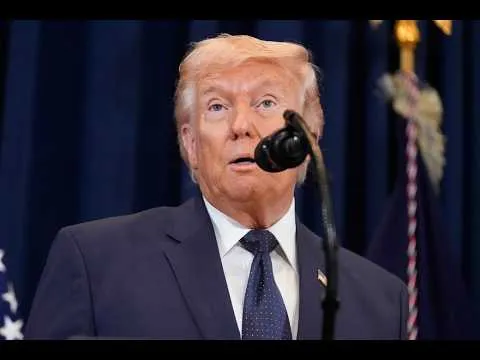
Trump’s “SAVE Act” Push: A Power Grab in Disguise?
In a recent announcement that has sent ripples through the political landscape, former President Donald Trump has declared a new legislative priority: the “SAVE Act.” This declaration, framed as a response to public demand and a bulwark against alleged election fraud, has sparked intense debate about its true intentions and potential consequences for American democracy. While Trump presents the SAVE Act as a straightforward measure for election integrity, critics argue it represents a strategic maneuver to consolidate power and undermine the very foundations of free and fair elections.
The SAVE Act: A Shifting Definition
The SAVE Act, as presented by Trump, is not a static piece of legislation but a concept that has evolved over time. Initially introduced in the House of Representatives in 2024, the original SAVE Act focused on voter registration, imposing a proof-of-citizenship requirement. This version, as described, could have disenfranchised millions, particularly married women who had changed their surnames, leading to its early dismissal.
However, the narrative shifted in January of this year with the introduction of the “Save America Act.” This iteration added a photo ID requirement to the existing proof-of-citizenship mandate, along with provisions that could make election officials criminally liable for mistakes. Most recently, following the State of the Union address, Trump has further refined his stance, advocating for a version that would ban most mail-in voting and, in a concerning development, target the transgender community with provisions seemingly unrelated to voting itself. This chameleon-like nature of the SAVE Act raises questions about its ultimate goals, with critics suggesting it’s being molded to serve a broader political agenda.
The Core Motivation: Power, Not Policy
At the heart of the discussion lies the fundamental question: why is the SAVE Act so critically important to Donald Trump that he is willing to prioritize it above all other legislative efforts? According to analysis, Trump’s primary driver is not policy but power. Issues like immigration, tariffs, or foreign policy are viewed not on their merits but as tools to exert influence and project strength. The ultimate threat to this power, it is argued, comes from free and fair elections. This perspective explains Trump’s consistent skepticism and attacks on electoral processes, dating back to 2016, regardless of the outcome.
By elevating the SAVE Act, Trump is seen as prioritizing voter suppression and election subversion. The argument is that he recognizes the limitations of Republican leadership in Congress to deliver on his agenda, particularly in the Senate where a filibuster could derail legislation. Therefore, he is leveraging the SAVE Act as a linchpin, a condition for his support, and a potential justification for unilateral action.
Congressional Hurdles and Unilateral Ambitions
Despite Trump’s strong advocacy, the SAVE Act faces significant legislative hurdles. Even the “watered-down” versions have struggled to gain traction. In the Senate, a clear lack of votes, coupled with Republican opposition to altering or eliminating the filibuster, makes its passage highly unlikely. Senator John Thune has reiterated that there are insufficient votes for any version of the SAVE Act in the Senate.
This legislative impasse, however, appears to be part of Trump’s strategy. By declaring he will not sign any other legislation if the SAVE Act does not pass, he is creating a showdown. This stance is interpreted not as a genuine legislative push but as a means to grant himself permission to pursue a more drastic path. The fear is that if Congress fails to act, Trump will resort to executive orders to implement his desired changes, despite lacking the constitutional authority to do so.
The Escalation Pathway: Rhetoric to Executive Action
The potential for executive action is a central concern. Drawing parallels to Trump’s past behavior, a pattern emerges: rhetoric escalates, followed by legal challenges, and potentially culminating in violence or extra-constitutional measures. This progression was observed in 2020, where rhetoric around voting evolved into extreme claims post-election, leading to numerous failed court cases and culminating in the January 6th Capitol attack. A similar cycle is noted with immigration policy, moving from rhetoric to court battles and, in some instances, the deployment of paramilitary forces.
The current phase, according to analysts, is the rhetoric and court challenge stage. The next step, they warn, could be an executive order attempting to enact the SAVE Act’s provisions. Such an order would undoubtedly face immediate legal challenges, which proponents of election integrity are prepared to mount. However, the ultimate concern is that these legal battles and the perceived failure of legislative action will create a permissive environment for Trump to incite actions such as the seizure of ballot boxes or the surrounding of polling locations, echoing past calls for ICE to monitor polling sites.
Defending Democracy: The Role of Independent Media and Legal Action
The question of whether the United States possesses sufficient defenses to prevent such a scenario from unfolding is critical. While legal challenges are a robust defense, the broader fight involves countering Trump’s information war. The warning about these potential actions is not a prediction of inevitable success but a call to action to ensure failure.
The strategy involves a multi-pronged approach: vigorous legal defense in the courts, as exemplified by legal teams prepared to challenge executive orders. Equally important is the role of independent media in calling out and exposing these tactics. Unlike legacy media, which may present Trump’s statements in a normalized fashion, independent outlets are seen as crucial for highlighting the dangerous implications of his rhetoric and actions. Subscribing to and sharing content from these sources is presented as a vital act of civic engagement.
Why This Matters
The push for the SAVE Act, regardless of its specific provisions at any given moment, signifies a critical juncture for American democracy. It underscores a persistent pattern of challenging electoral processes when they do not yield desired outcomes. The evolution of the SAVE Act from a registration requirement to a broader set of measures, including mail-in voting bans and targeting specific communities, suggests a strategy to suppress votes and consolidate power under the guise of election integrity. The potential for executive overreach and the subsequent incitement of further actions highlight the fragility of democratic norms and institutions when faced with determined challenges. The ability of independent media and legal systems to counter these challenges, coupled with an informed and engaged citizenry, will be paramount in safeguarding the future of elections.
Implications, Trends, and Future Outlook
The SAVE Act saga is emblematic of a broader trend in contemporary politics: the weaponization of election integrity concerns to advance partisan agendas. The tactic of questioning election outcomes, particularly when unfavorable, has become a recurring theme. The focus on mail-in voting, amplified by the pandemic, has become a particular target. Furthermore, the inclusion of culture war elements, such as targeting the transgender community, demonstrates an attempt to broaden appeal and energize a base through divisive social issues, even when tangential to the core legislative proposal.
The future outlook suggests continued legal battles, legislative maneuvering, and an ongoing information war. The success of these efforts will depend on the resilience of legal checks and balances, the commitment of election officials, and the vigilance of citizens. The reliance on executive action as a fallback position indicates a willingness to bypass democratic processes when they prove inconvenient, posing a significant threat to the rule of law.
Historical Context and Background
The current debates surrounding election integrity echo historical struggles to define and regulate the voting process in the United States. From poll taxes and literacy tests designed to disenfranchise minority voters in the post-Reconstruction era to contemporary debates over voter ID laws and registration purges, the tension between ensuring secure elections and expanding access has been a constant. The post-2020 era has seen a heightened focus on these issues, with claims of widespread fraud fueling efforts to reform or restrict voting methods. Donald Trump’s consistent attacks on election integrity, dating back to his 2016 campaign, place him within a lineage of political actors who have sought to leverage electoral rules for political gain, albeit with unprecedented intensity and rhetoric.
Source: Trump drops SHOCKING election announcement we’ve FEARED (YouTube)

Related Articles

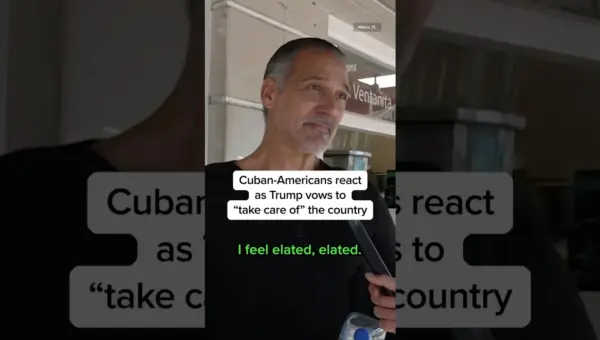
Cuban-Americans Gauge Trump’s “Take Care” Promise
Cuban-Americans in Miami are reacting to Donald Trump's pledge to "take care" of the country. Residents shared a mix of hope and skepticism, emphasizing the need for specific policies that benefit both the U.S. and their homeland.
Trump Addresses Iran Tensions Amid School Strike Controversy
President Donald Trump addressed the escalating conflict in Iran and a controversial school attack that reportedly killed 175 people during a press conference. The event coincided with oil prices surging past $100 a barrel, placing the administration under significant scrutiny.
Trump Rallies GOP at Florida Retreat Amid Multiple Crises
President Donald Trump addressed House Republicans at their annual policy retreat in Doral, Florida. The gathering focused on key issues including Iran tensions, immigration, and the Epstein investigation.