Trump’s Reality Distortion Field: Does He Believe the Chaos He Wreaks?
Donald Trump's claims of widespread approval for current events are starkly contrasted with public sentiment and observable realities. This analysis explores the implications of this perceived disconnect, examining the psychological and political dimensions of his assertions and their impact on democratic discourse.

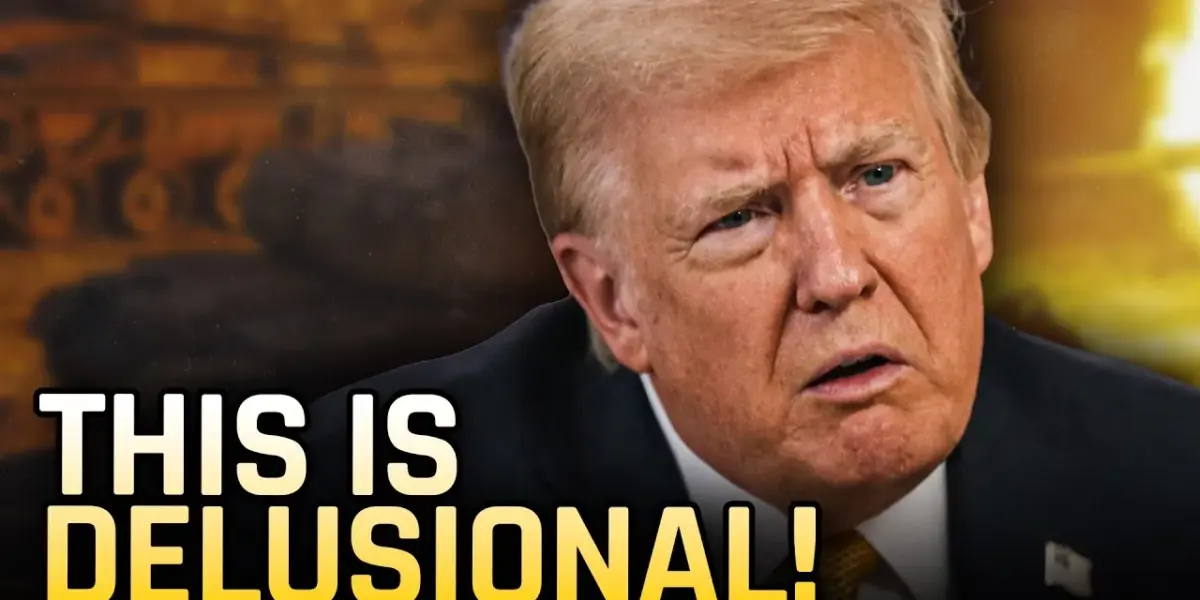
Trump’s Unwavering Confidence Amidst Widespread Discontent
In a political landscape often defined by its volatility, Donald Trump’s recent assertion that “Everybody loves everything that’s happening” stands out as a particularly jarring statement. This declaration, made in the face of what many perceive as widespread chaos, economic hardship, and international instability, raises profound questions about perception versus reality in the highest echelons of power. The speaker in the provided transcript argues that Trump’s actions since returning to office have resulted in “nothing but chaos, bloodshed, price hikes, economic calamity, and international embarrassments,” painting a grim picture of the current state of affairs. This stark contrast between Trump’s pronouncements and the observable conditions forms the crux of a compelling narrative about the former president’s unique brand of leadership and its impact.
The transcript directly confronts Trump’s claim by citing polls that allegedly show “majorities hate everything that’s happening.” This discrepancy suggests that Trump is operating within an “alternative reality” where his perception diverges sharply from public opinion and empirical evidence. His exact quote, “People are loving what’s happening. We’re taking out a threat to the United States of America, major threat, and doing it like nobody’s ever seen before,” is presented as an example of this disconnect. The repeated phrase “like nobody’s ever seen before” is deconstructed, with the speaker sarcastically suggesting that a war based on lies in the Middle East, with no clear goals and a prohibitive daily cost, is indeed something novel and unprecedented for the United States.
Historical Echoes and Economic Realities
The argument is made that the issues Trump claims are unique and beloved – gas price hikes, inflation, economic collapse – are not entirely new phenomena. The transcript points out that “millennials have seen economic collapse through most of their lives,” implying a historical context that belies the idea that current difficulties are unprecedented or universally embraced. This historical perspective suggests that the current challenges, while significant, are part of a recurring pattern rather than a novel catastrophe. The speaker concludes that, “no, Donald, we have seen this all before. And no, Donald, nobody other than maybe Lindsey Graham loves what is happening. It is chaos. It is turmoil.” This directly refutes Trump’s assertion and attributes the current state of affairs to his direct influence.
The Psychological Dimension
Beyond the political and economic critique, the transcript delves into a more personal and psychological analysis of Donald Trump. The speaker suggests that Trump’s detachment from reality might stem from “dementia” and a “rotting” body, citing visible “rot on this man’s skin” that “no amount of makeup can cover up.” This is framed as a reason for his increasing irrationality and chaotic behavior. The assertion that “even a majority of Republicans say that he is becoming more untethered as he gets older” is presented as evidence that even within his own party, there is a growing awareness of his declining cognitive state and its impact on his judgment. Trump’s perceived inability to accept criticism or contradictory evidence is likened to possessing a “super Wakandan shield,” rendering him impervious to facts. This is characterized as a “mental disorder” and a “psychological problem,” with the sarcastic suggestion that therapy could lead to a “better world.”
The ‘Big Brother’ Analogy and Emerging Awareness
The transcript draws a chilling parallel between Trump’s perceived reality distortion and George Orwell’s dystopian novel *Nineteen Eighty-Four*, suggesting he has become “big brother.” In this analogy, Trump’s “therapy” is seen as “bombing the rest of the world” and sending “brown shirt thugs to murder us in the street.” This is a highly charged metaphor intended to convey the destructive consequences of his actions and his perceived mental state. However, the piece concludes on a note of cautious optimism. It suggests that “more and more people are starting to understand that with each passing day,” implying a growing public awareness of the issues raised. The call to action for viewers to subscribe, like, comment, and share is a direct appeal to foster this growing understanding and engagement.
Why This Matters
The core of this analysis lies in the profound disconnect between a leader’s perception and the lived reality of the populace. When a political figure, particularly one with significant influence, claims widespread approval for policies or situations that are demonstrably causing hardship and discontent, it signals a breakdown in communication and trust. This disconnect can have several critical implications:
- Erosion of Democratic Norms: A leader who dismisses objective data and public opinion as “fake” undermines the very foundations of democratic discourse, which rely on shared facts and accountability.
- Policy Paralysis and Ineffectiveness: If a leader operates in an echo chamber, insulated from reality, it becomes difficult to address genuine problems effectively. Policies may be implemented based on flawed assumptions, leading to unintended negative consequences.
- Public Cynicism and Disengagement: When citizens feel their concerns are ignored or dismissed, it can breed cynicism towards the political process, leading to apathy and reduced participation.
- The Danger of Unchecked Power: The transcript’s portrayal of Trump’s “alternative reality” raises concerns about the potential for unchecked power to become detached from the needs and will of the people.
Implications, Trends, and Future Outlook
The phenomenon described – a leader seemingly at odds with reality – is not entirely new in politics, but its manifestation in the digital age, amplified by social media and partisan news cycles, presents unique challenges. The trend of political figures cultivating their own narratives, often at odds with established facts, suggests a growing polarization where objective truth becomes increasingly contested. This can lead to a future where political discourse is less about policy debate and more about competing realities.
The future outlook hinges on the public’s ability to discern between genuine leadership and manufactured narratives. As the transcript suggests, there is a growing awareness. The challenge lies in sustaining this awareness and translating it into informed decision-making. The “therapy” analogy, however dark, points to a potential societal need for leaders to be grounded in reality, capable of introspection, and responsive to the consequences of their actions. The ultimate outcome will likely depend on the electorate’s capacity to critically evaluate leadership, demand accountability, and reject narratives that actively obscure or distort the truth.
Source: Trump Declares Everyone ‘Loves’ Chaos He’s Causing (YouTube)

Related Articles
House Republicans Reject Senate Deal, Sparking Government Funding Clash
House Republicans have rejected a Senate bill to end the government shutdown, citing insufficient border security measures. Congressman Randy Fine called the Senate deal a "disgrace" and highlighted the ongoing fight for full government funding. President Trump's executive order to pay TSA agents offers temporary relief, but the core disagreement over border security continues to paralyze Washington.
Voter ID: Common Sense or Suppression?
A growing debate surrounds voter ID laws, with proponents calling them a common-sense measure against fraud and opponents fearing voter suppression. Many countries and U.S. states already require ID to vote.
Trump’s Name Everywhere: A ‘Stain’ on GOP Legacy?
Former President Donald Trump's efforts to brand national symbols, including a proposed signature on dollar bills, spark debate. Critics view this as an authoritarian attempt to embed his legacy, potentially staining the Republican Party's history and contrasting with democratic ideals of public ownership.