Trump’s Nuclear Threats Spark GOP Exodus, Critics Warn of War Crimes
Former President Donald Trump's extreme threats against Iran have sparked widespread condemnation, even from his usual allies. Commentators and politicians are warning of potential war crimes and calling for his removal from office. This situation highlights concerns about unchecked executive power and the GOP's role in enabling it.

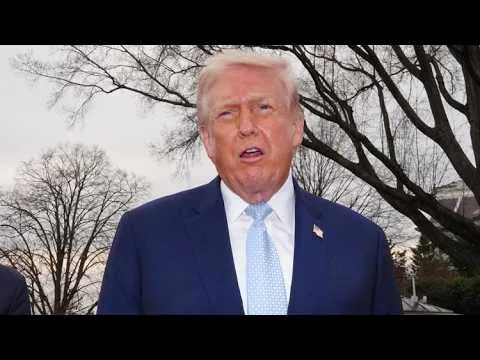
Trump’s Grave Nuclear Threats Shock Nation
Former President Donald Trump recently issued a series of alarming statements regarding Iran, threatening the annihilation of its civilization. In a social media post, he wrote that an entire civilization would die, never to be brought back. He suggested this might happen tonight, but hoped for a different outcome if “smarter, and less radicalized minds” prevailed. Trump described this potential event as one of the most important moments in world history, claiming it would end “47 years of extortion, corruption, and death.”
These words have been widely interpreted as an explicit threat to eradicate the entire Iranian population. Critics argue that such rhetoric goes beyond typical political statements, labeling it as genocidal and a clear indication of a willingness to drag the United States and the world into a major conflict. This is particularly concerning given Trump’s past campaign promises of avoiding new wars.
Legal and Ethical Alarms Sounded
The implications of Trump’s threats extend beyond political commentary into serious legal and ethical territory. Experts and commentators point out that eradicating an entire civilization would constitute a war crime under international law. Ted Lieu, a member of Congress, highlighted this, stating that the Uniform Code of Military Justice (UCMJ) and federal law prohibit war crimes.
“The joint staff, the UCMJ and federal law prohibits war crimes. Obviously, eradicating a whole civilization constitutes a war crime. You must disobey that order. If you commit war crimes, the next administration will prosecute you.”
This warning suggests that military personnel could face prosecution if they carry out illegal orders. The sentiment is that obedience does not extend to actions that violate fundamental laws of warfare and human decency.
Unlikely Allies Condemn Trump’s Stance
Remarkably, Trump’s extreme rhetoric has alienated even some of his most staunch supporters and conservative commentators. Figures usually aligned with Trump have voiced strong opposition, signaling a significant break in support.
Tucker Carlson’s Plea
Journalist Tucker Carlson urged those within the White House and the U.S. military to refuse any order involving the use of weapons of mass destruction against the Iranian population. He implored them to directly tell the President, “no.” Carlson suggested that if faced with such an order, individuals should consider resigning or taking other legal actions to prevent it, calling the idea “insane.” He advised military personnel to “figure out the codes on the football yourself” rather than comply with an unlawful command.
Alex Jones and Marjorie Taylor Greene Call for 25th Amendment
Conspiracy theorist Alex Jones and Representative Marjorie Taylor Greene have both called for invoking the 25th Amendment to remove Trump from office. Jones expressed frustration over the difficulty of this process, noting it requires supermajorities in both the House and Senate. Greene tweeted that the situation is “evil and madness” and that the U.S. cannot “kill an entire civilization.”
Candace Owens and Joe Kent Express Grave Concerns
Commentator Candace Owens echoed these sentiments, calling Trump a “genocidal lunatic” and urging Congress and the military to intervene. Former Director of the National Counterterrorism Center, Joe Kent, provided a more strategic critique. He tweeted that while Trump may believe he is threatening Iran, it is America that is truly endangered.
“Trump believes he is threatening Iran with destruction, but it is America that now stands in danger. If he attempts to eradicate Iranian civilization, the United States will no longer be viewed as a stabilizing force in the world, but as an agent of chaos, effectively ending our status as the world’s greatest superpower. This would upend our economy and shatter the global order.”
Kent believes that Trump’s actions risk America’s global standing and economic stability, warning that the process is already underway but can still be averted through serious negotiations instead of “reckless rage and destruction.”
Why This Matters
The widespread condemnation from across the political spectrum, including figures on the far-right, underscores the severity of Trump’s statements. When individuals like Alex Jones and Tucker Carlson, often seen as Trump loyalists, are calling for his removal or defiance, it suggests a significant loss of faith in his judgment and leadership. This moment highlights a critical juncture where the rhetoric of a former president could have catastrophic global consequences. It also raises profound questions about accountability, the role of military personnel in obeying potentially illegal orders, and the stability of international relations.
Historical Context and Future Outlook
The history of U.S. foreign policy is marked by periods of both interventionism and isolationism. Trump’s presidency often oscillated between these poles, though his “America First” approach frequently led to strained international alliances and a questioning of established diplomatic norms. His campaign promise to end “endless wars” contrasted sharply with his escalating rhetoric towards Iran, a nation with which the U.S. has had a complex and often adversarial relationship for decades.
The current situation evokes concerns about a potential military escalation, reminiscent of past conflicts where rhetoric preceded action. The discussion around the 25th Amendment and the potential for military leaders to defy orders points to a deep-seated anxiety about unchecked executive power. The founders of the U.S. Constitution intentionally placed significant power with Congress, particularly the power to declare war and control funding. However, modern presidencies have often expanded their authority in foreign policy matters.
Looking ahead, this event could have lasting implications for how presidential rhetoric is perceived and policed, both domestically and internationally. It also puts a spotlight on the responsibility of Congress and the military to act as checks on executive power. The author of the transcript suggests that Trump’s actions are driven by a desire to cement his legacy, regardless of the cost to the nation or the world. This perspective suggests that his motivations are personal rather than strategic, aiming for historical recognition even if it means ushering in global chaos.
The GOP’s Role and the Future of Power
The analysis presented suggests that Trump’s capacity for such extreme actions is amplified by the Republican Party’s willingness to grant him immense power. The author argues that Trump cannot dismantle democracy alone; he requires the “obedience of an almost entirely spineless Congress.” This points to a broader trend of Republican leaders ceding authority to the former president, even when his actions appear to contradict constitutional principles.
The power to declare war, set budgets, and regulate commerce are all legislative powers explicitly granted to Congress by Article 1, Section 8 of the Constitution. The argument is that Congress has allowed these powers to be usurped by the presidency, a scenario the founders did not anticipate. This abdication of responsibility, according to the analysis, is what enables Trump’s “lunacy.”
The author’s upcoming book, “The Day After: How to Wield Power in a Post-Trump World,” aims to explore this theme of power. It seeks to understand how Republicans have abused it and how Democrats have sometimes failed to wield it effectively. The book proposes a blueprint for progressives to not just restore the status quo but to fundamentally change how power is used moving forward. The current moment, therefore, serves as a stark reminder of the importance of vigilance and the need for a robust system of checks and balances to prevent such potentially catastrophic outcomes.
Source: Republicans ABANDON Trump after BOMBSHELL threat against Iranian civilization (YouTube)

Related Articles
Trump’s Iran Threat: War Crimes or Diplomacy?
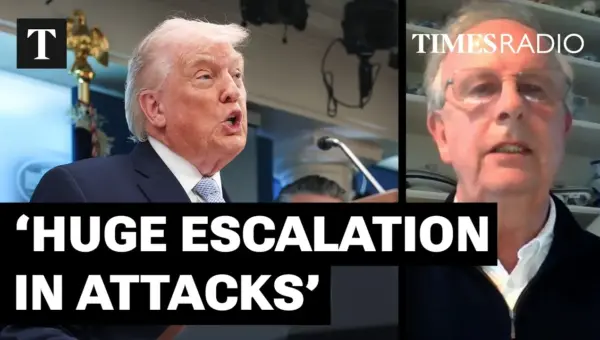
President Trump's threats to 'decimate' Iranian infrastructure have raised alarms about war crimes and a major escalation in the Middle East. With civilians reportedly forming human shields, international law experts and analysts debate the president's motives and the potential consequences.


Trump’s Iran Deadline Backfires, Exposing Global Humiliation
Then-President Trump's extreme threats against Iran, including a "civilization ending deadline," backfired by undermining US credibility. His shifting ultimatums and the disbelief from his own supporters exposed a loss of global standing, creating long-term damage to America's reputation.


Middle East Tensions Flare as Trump Issues Iran Deadline
President Trump has issued an ultimatum to Iran, demanding the reopening of the Strait of Hormuz by tonight or face severe consequences, including targeting critical infrastructure. Meanwhile, the Artemis 2 crew is returning home after a historic journey around the far side of the Moon. In sports, the Michigan Wolverines have won their first national basketball championship in 37 years.