Trump’s New Tariff Plan: A Strategic Shift or Echo of the Past?
Former President Trump has launched a new two-part tariff strategy aimed at re-establishing significant trade leverage following a Supreme Court ruling. The plan includes a temporary 10% tariff and new Section 301 investigations, with experts debating its potential impact on inflation and domestic investment.

Trump Unveils Post-Supreme Court Tariff Strategy
Washington D.C. – Following a significant Supreme Court ruling that curtailed his previous tariff powers, former President Donald Trump has initiated a new strategy to re-establish a robust tariff regime. The plan, detailed in a recent announcement and currently being analyzed by experts, aims to replicate the economic leverage previously wielded through a two-part approach. While the immediate impact is not fully realized, the framework is designed to empower the U.S. with significant tariff-setting capabilities once again.
The Two-Part Tariff Re-establishment Plan
The core of the new strategy involves a two-pronged approach. The first component is a temporary 10 percent universal tariff, which is currently in effect. However, this initial tariff is slated to expire in July, serving as a placeholder period. This interim phase is crucial as it allows for the initiation of new Section 301 investigations. These investigations, launched yesterday, are expected to take several months to complete.
Upon the conclusion of these investigations, the President is anticipated to regain very similar tariff powers to those he possessed before the Supreme Court’s intervention. This process, therefore, represents the beginning of a new era for U.S. trade policy, with the potential for significant adjustments to tariffs on goods from major trading partners. Analysts suggest that while the initial 10 percent rate may decrease, the overall objective is to re-establish a strong negotiating position.
Economic Impact: Tariffs and Inflation Re-examined
A key point of discussion surrounding previous tariff policies was the potential for inflation. However, the transcript highlights that widespread tariff-driven inflation did not materialize as widely predicted. The argument presented is that inflation is primarily a function of increased money supply, rather than the imposition of tariffs. This perspective suggests that the economic disruptions from tariffs were less severe than feared, and in some instances, may have even offered a net benefit to U.S. consumers through adjusted rates and potential refunds.
“You are absolutely right in inflation is caused by the money supply increased not by tariffs. And the money supply is not going to impact this right.”
The current economic landscape, marked by global supply chain disruptions and geopolitical events such as the Iran war impacting oil prices, is being viewed by policymakers through a lens that sometimes conflates supply shocks with tariff impacts. The analysis suggests a potential misdiagnosis of prior economic events, with an overemphasis on tariffs as an inflationary driver. The prevailing view within this framework is that tariffs, when managed strategically, do not inherently lead to significant price hikes and could, in fact, have positive secondary effects.
Investment, Employment, and Economic Resilience
The new tariff framework is also being linked to potential boosts in domestic investment and employment. The transcript indicates that companies are leveraging current economic conditions, possibly influenced by the tariff structure, to make investments. Data from yesterday’s budget figures reportedly reflect this trend, with corporate spending showing an increase as businesses adapt to a changing economic environment. The expectation is that increased orders and a need to manage production will necessitate hiring, thereby stimulating job growth.
Furthermore, the argument is made that the U.S. economy possesses a substantial underlying resilience. The combination of tariff adjustments, potential refunds, and the stimulus provided by increased corporate activity suggests a robust economic foundation. This perspective counters concerns about significant economic contraction, positing instead a scenario where businesses are actively working to fulfill orders and expand operations, supported by the evolving trade policy landscape.
Looking Ahead: The Evolving Tariff Landscape
As the new Section 301 investigations progress and the initial 10 percent tariff period concludes, the full implications of this renewed tariff strategy will become clearer. The focus will be on how these policies interact with ongoing global economic challenges and whether they achieve the intended goals of bolstering domestic industry and providing leverage in international trade negotiations. The coming months will be critical in assessing the long-term economic consequences and the strategic effectiveness of this evolving approach to trade policy.
Source: Breaking down Trump's tariff replacement plan (YouTube)

Related Articles

Markets Wobble as Geopolitics Shift Dramatically
Global markets are showing volatility as geopolitical tensions rise, with the Nasdaq nearing correction territory. Concerns over consumer spending, rising costs, and the nation's fiscal health are intensifying. Analysts debate whether current events represent short-term market noise or a fundamental "reinvention of geopolitics" with long-term implications.


US Holds 8,000 Tons of Gold: A History Lesson
Discover how the U.S. amassed over 8,000 tons of gold, a journey that began with President Roosevelt's 1933 order and the Bretton Woods Agreement. Learn how this historical gold hoard shaped the dollar's global dominance and its eventual decline.
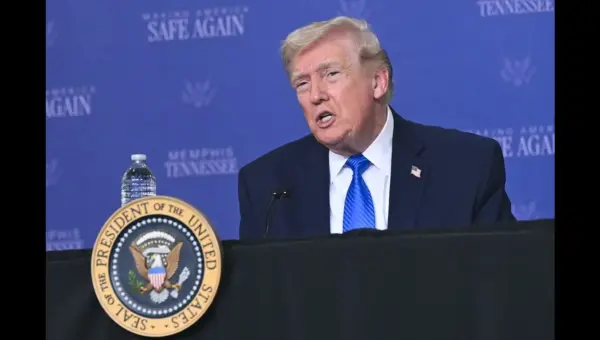
Trump Makes Bold Promises at Investment Summit
Former President Donald Trump addressed the FII PRIORITY Summit, outlining his economic vision. He promised deregulation, tax cuts, and protectionist trade policies aimed at boosting American jobs and competitiveness. These remarks signal potential future economic directions.