Trump’s New 15% Global Tariff Sparks Trade Chaos and Global Economic Uncertainty
The U.S. faces significant trade disruption as former President Trump imposes a new 15% global tariff following a Supreme Court ruling. This move invalidates existing trade deals, impacts major partners like Mexico, Canada, and China, and raises questions about refunds for previously collected tariffs.

Supreme Court Ruling Triggers Dramatic Tariff Reversal and New Global Levy
In a significant shift in U.S. trade policy, former President Donald Trump has announced a new 15% global tariff on imported goods, just hours after the Supreme Court deemed his previous tariffs illegal. The unexpected move, communicated via a post on Truth Social, signals a tumultuous period for international trade and U.S. economic relations.
The Legal Battle Over Tariffs
The original tariffs, announced by Trump in April 2025, faced immediate legal challenges. The Supreme Court’s ruling declared them unlawful, leading federal customs to cease their collection. This decision was met with strong disapproval from Trump, who characterized it as an “embarrassment.” In response, he leveraged a separate executive power that permits the imposition of global tariffs for a maximum of 150 days. This new 15% tariff is set to remain in effect for this limited period, during which the Trump administration aims to establish more permanent tariff structures.
Economic Fallout: Who Pays the Tariffs?
A critical aspect of these tariffs, as highlighted by economic analyses, is their impact on U.S. consumers and businesses. Contrary to Trump’s initial claims that exporting countries would bear the cost, evidence suggests that 94% of all collected tariffs have been paid by American entities. This means that the increased cost of imported goods is ultimately absorbed by U.S. businesses and consumers, leading to higher prices and reduced purchasing power.
Impact on Major Trading Partners
The newly announced 15% tariff has the potential to dismantle existing trade agreements and create widespread disruption. The top U.S. trading partners, including Mexico, Canada, and China, are expected to face significant adjustments.
North American Neighbors Under Pressure
Mexico and Canada, the two largest exporters to the U.S. by a considerable margin, are particularly vulnerable. Their close geographical proximity and integrated supply chains, often governed by the USMCA (United States-Mexico-Canada Agreement) which previously allowed for 0% tariffs on many goods, are now under threat. The previous administration had imposed a 25% tariff on certain goods from these countries, citing concerns over fentanyl trafficking. While the new 15% tariff is lower than the 25%, its across-the-board application technically invalidates the USMCA’s zero-tariff provisions. This could result in an estimated additional cost of $80 billion for Mexican imports and $57 billion for Canadian imports, significantly impacting businesses reliant on these supply chains, particularly for essential goods like oil, lumber, and electricity from Canada.
China’s Shifting Trade Landscape
China, the third-largest trading partner, previously faced a 34% tariff, a figure that had been reduced from earlier, more aggressive rates during a trade war. The new 15% tariff represents a substantial decrease, potentially reducing import costs by over $58 billion. This reduction could lead to a significant increase in the volume and value of goods imported from China, as Chinese companies become more competitive on price. This scenario reverses the trend seen in 2024, where imports from China had decreased due to increased costs.
Other Key Trading Relationships Affected
The impact extends to other major economies:
- Taiwan: Previously facing a 32% tariff, the new 15% rate offers significant relief.
- Vietnam: Moving from a 20% tariff to 15% is a positive development for Vietnamese exporters.
- European Union (EU): While many EU goods faced a 15% tariff previously, the EU also had zero-rated agreements in place. The new blanket 15% tariff could nullify these, potentially leading to retaliatory tariffs on U.S. imports into Europe if exemptions are not granted.
- South Korea: Previously at 25%, the new rate might offer better terms, though uncertainties remain regarding existing zero-rated products.
- Switzerland: A reduction from 31% to 15% is a significant benefit.
- India: This is a particularly interesting case. A recent deal had reduced tariffs on Indian goods to 18% from 50% in exchange for India stopping its purchase of Russian oil. The new 15% tariff removes this condition, potentially allowing India to resume buying Russian oil. This undermines a key objective of the previous administration’s foreign policy regarding Russia.
- United Kingdom (UK): The UK, which had a special 10% tariff deal, will now see its tariffs increase to 15%, a 50% rise.
Net Impact and Broader Implications
Overall, the changes are projected to result in an approximate $38 billion net increase in tariffs. This figure, however, belies the significant disruption caused by the overhaul of established trade relationships. The move creates uncertainty for businesses that rely on predictable trade policies and could lead to retaliatory measures from other countries against U.S. exports.
The Challenge of Negotiated Deals
The situation underscores a fundamental challenge in international negotiations: the assumption that counterparties possess the authority to finalize agreements. The Supreme Court’s ruling revealed that Trump lacked the necessary authorization for his previous tariff actions. This has created a complex situation where previously negotiated deals are now in question, potentially prompting other nations to reassess their own trade terms with the U.S.
A Call for Refunds and Future Uncertainty
With the Supreme Court’s decision invalidating past tariffs, there are growing calls for the refund of approximately $175 billion collected from U.S. businesses and consumers. The current 150-day tariff period adds another layer of unpredictability, as further policy changes or legal challenges could emerge. The geopolitical implications, particularly concerning India’s energy imports and the broader effort to isolate Russia, add further complexity to an already volatile global economic landscape.
This dynamic situation promises to keep global markets on edge as the U.S. navigates its revised trade stance and its implications for international economic stability.
Source: USA in Chaos (YouTube)

Related Articles

Trump Open to Iran Talks After Attacks, Shifts on Regime Change
President Trump has agreed to negotiate with Iran's new leadership following recent U.S. and Israeli attacks, signaling a potential shift from his regime change objective. The move has drawn scrutiny from former officials who question the strategic coherence of U.S. policy.

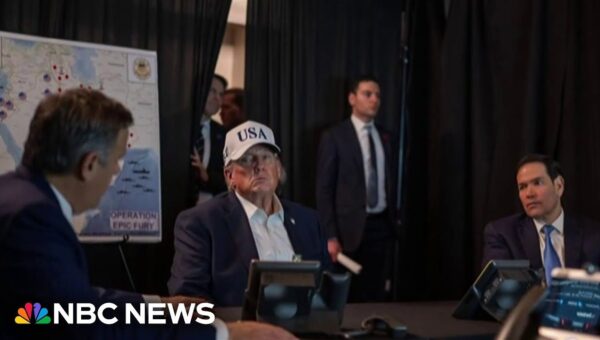
Trump: Iran Strikes Ahead of Schedule, Expects ‘Great Deal for World’
Three U.S. service members have been killed amid escalating conflict with Iran, President Trump confirmed. He stated that strikes are ahead of schedule, with senior Iranian leaders killed, and expressed optimism for a "great deal for the world" despite ongoing talks with Iranian officials.

Trump Agrees to Talks with Iran After Major Strikes
President Donald Trump has agreed to talks with Iran's leadership following coordinated strikes that reportedly killed key figures, including the Supreme Leader. While Trump claims significant military successes, U.S. strategy remains unclear, and public opinion shows limited support for the actions amid rising American casualties.