Trump’s NATO Insults Spark Global Outrage, Allies Push Back
Former U.S. President Donald Trump's leaked private remarks, filled with insults aimed at NATO allies, have sparked international outrage and calls for European self-reliance. The comments highlight growing concerns about U.S. reliability and the potential for a long-term split in transatlantic relations. The discussion also touched upon domestic UK issues, including NHS strikes and political shifts, alongside a unique debate on marmalade regulations.

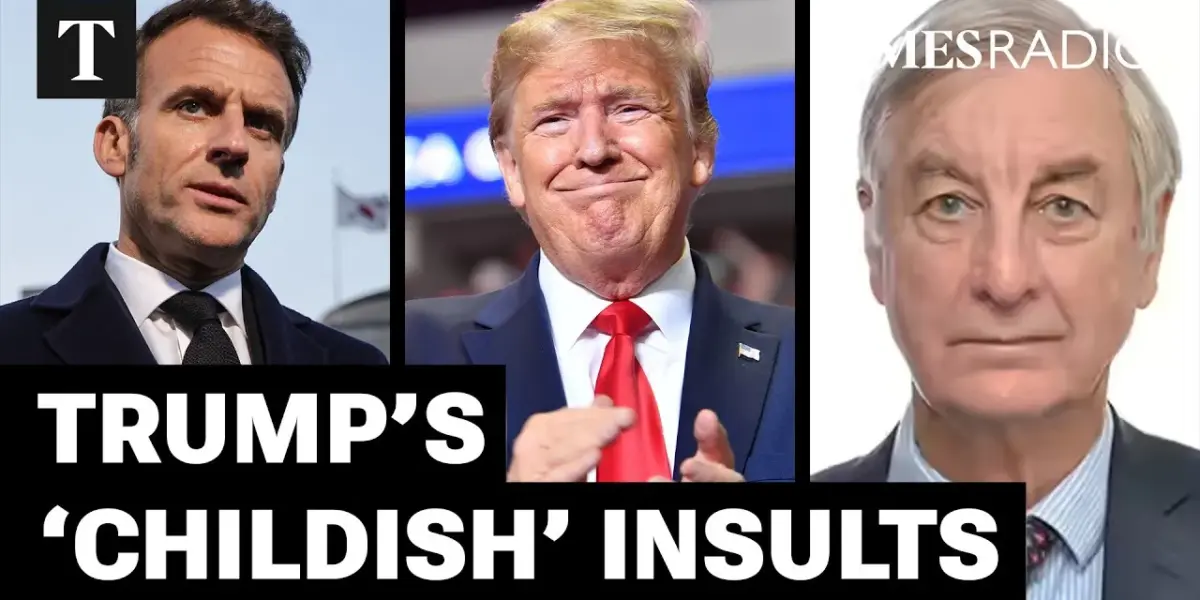
Trump’s Diplomatic Blunders Ignite International Backlash
Donald Trump’s recent private remarks, accidentally released online, have sent shockwaves through international diplomatic circles. In the leaked speech, the former U.S. president launched a barrage of insults against key NATO allies, questioning their military capabilities and criticizing their leadership. These comments, made during a supposed phone call with UK Prime Minister Keir Starmer, have been widely condemned as undiplomatic and childish, prompting a strong response from European leaders who are increasingly pushing back against such rhetoric.
Allies Question U.S. Reliability Amidst Trump’s Rhetoric
The leaked remarks reveal Trump’s dismissive attitude towards NATO allies, particularly his comments about the UK’s aircraft carriers and his criticism of French President Emmanuel Macron. Michael Binyon, former diplomatic editor for The Times, described Trump’s approach as “extraordinarily childish” and questioned its effectiveness as diplomacy. Binyon noted that insulting allies while seeking their support is a “very odd form of diplomacy,” if it can be called diplomacy at all.
Alice Denby, opinion and features editor at City A.M., suggested that European leaders are developing a stronger backbone in response to Trump’s behavior. She pointed out that Trump’s unpopularity in countries like France can actually benefit local leaders, allowing them to distance themselves from his controversial remarks. Denby argued that Trump has fundamentally disrupted the global order, as America is no longer seen as a reliable partner. She added that leaders of “Kanszer nations” need to unite, as the U.S. under Trump is “completely untrustworthy.”
Europe Rethinks Alliances Amid Shifting U.S. Priorities
The comments have fueled a broader discussion about the future of transatlantic relations. Binyon cautioned against a complete breakdown, emphasizing the deep historical ties between Europe and America. He suggested that it’s crucial to distinguish between the current administration and the broader American populace, millions of whom remain trustworthy allies. However, he acknowledged a growing sentiment that America’s strategic focus is shifting eastward, particularly towards Asia and China.
This sentiment is echoed by a joint defense committee report from the House of Lords and Commons. The committee recommended that European nations should not solely rely on the U.S. for their defense strategy. This suggests a long-term potential split between Europe and America, driven by diverging interests. The report implies that America’s focus on confronting China in the Pacific may reduce its commitment to European security.
Moral and Strategic Implications of Trump’s Stance
Beyond the strategic implications, the discussion touched upon the moral dimension of international relations. Denby argued that Trump’s actions undermine the West’s commitment to values and a rules-based order. She drew a parallel between Trump’s rhetoric and actions concerning Iran and Russia’s invasion of Ukraine, questioning the moral difference. This, she warned, could embolden other nations, like China, to pursue aggressive territorial ambitions, such as taking Taiwan.
Binyon agreed that Trump’s approach, characterized by a “might is right” mentality, has exposed a potential hypocrisy in the West’s promotion of a rules-based order. He noted that even under the Obama administration, there was a clear indication of America’s core interests lying in the Pacific. This reinforces the idea that European nations must increasingly prioritize self-reliance in their defense and foreign policy.
Concerns Over Trump’s Iran Policy
The conversation also addressed Donald Trump’s threats to target Iran’s power infrastructure. Denby raised concerns that attacking civilian infrastructure like power stations and desalination plants could be considered a war crime. She questioned the purpose behind such actions, suggesting that they aim to inflict maximum suffering without a clear objective like regime change. The potential economic fallout was also highlighted, with predictions of a global recession.
Binyon drew parallels to the bombing strategies during World War II, citing the example of Dresden. He argued that such tactics are often counterproductive, strengthening public resolve behind the current regime rather than breaking it. He emphasized that targeting essential infrastructure like water and energy is not only inhumane but also devastates a nation’s future, regardless of the conflict’s outcome. Both commentators agreed that such actions could provoke severe retaliation from Iran, potentially targeting desalination plants crucial for the survival of Gulf states.
UK Domestic Issues: NHS Strikes and Political Shifts
The discussion shifted to domestic issues within the UK, focusing on the ongoing strikes by junior doctors and the changing political landscape. The chief executive of the NHS warned that junior doctors could strike monthly through 2026, impacting patient care and exacerbating waiting lists. The health secretary expressed difficulty in reaching an agreement with the British Medical Association, despite previous pay rises for doctors.
Alice Denby voiced strong criticism of the strikes, calling them “disgraceful.” She argued that the doctors’ demands are based on flawed calculations and that they have already received substantial pay increases. Denby believes the strikes are damaging the doctors’ own cause and that the government is realizing the difficulty of negotiating with what she termed a “far-left militant trade union.”
Michael Binyon, while initially sympathetic to the doctors’ training and workload, agreed that their case has been undermined by their demands. He found the idea of prolonged strikes, particularly impacting patients needing urgent care, to be absurd. Binyon expressed more sympathy for the government’s firm stance, including the threat to cancel extra training places if a deal wasn’t reached. However, Denby questioned the logic of cutting training places, arguing for the need to train more doctors.
Rise of the Green Party and Pensioner Politics
The conversation also touched upon the growing influence of the Green Party, with reports suggesting a significant shift in teacher and voter allegiances away from Labour. The Green Party leader, Zach Paslansky, was invited to speak at the National Education Union’s conference, highlighting the party’s appeal to certain demographics.
The discussion then turned to pension policies, specifically the “triple lock” system. Reform UK’s Treasury spokesman defended the triple lock, proposing funding cuts to foreign aid and welfare for non-British citizens. However, both Denby and Binyon expressed skepticism about the sustainability of the triple lock, viewing it as an unfunded liability that politicians use to gain votes. Binyon, speaking as a pensioner himself, advocated for its removal, arguing that it places an unfair burden on younger generations.
The Jonathan Tortoise Crypto Scam
In a lighter segment, the discussion briefly touched on a crypto scam involving the alleged death of Jonathan, a 193-year-old tortoise. The scam involved spreading false news of the tortoise’s demise to lure unsuspecting individuals into clicking malicious links. Binyon, who has met Jonathan multiple times, shared anecdotes about the tortoise and a humorous story involving his companion, Frederrica, and the island’s debate on same-sex marriage.
Marmalade Regulations and Brexit Fallout
The final topic explored the complexities of food regulations, specifically concerning marmalade. The discussion highlighted how post-Brexit, the UK’s ability to label its products faces new challenges, with European countries potentially using the term “marmalade” for their own spreads. This led to a debate about the implications of aligning with European food standards and the perceived return of Brussels-dictated regulations, drawing parallels to past debates over sausage standards.
Source: Trump’s Insults Do Not Befit A Head Of State | Michael Binyon (YouTube)

Related Articles

Trump’s Impossible Demands Reshape Justice Department
President Trump's demand for loyalty and action outside legal norms has reshaped the Justice Department. Recent departures, like Pam Bondi's, highlight the difficulty of fulfilling the President's "impossible tasks." The search for a new Attorney General continues amidst concerns about the DOJ's independence.


Trump’s Leadership: A Moral Vacuum for Young Learners?
Young people seek moral guidance from leaders, but what lessons does Donald Trump offer? Some argue his approach teaches negative behaviors like bullying and isolation, contrasting with traits like patience and gratitude seen in others. This raises questions about leadership character and its impact on societal values.

Trump’s Transparency: A Press Secretary’s Bold Claim
President Trump's press secretary, Sarah Huckabee Sanders, claims his public persona is identical to his private one. She states his directness eliminates guesswork, making her job easier by providing clear, unspun messages.