Trump’s NATO Exit Threat Fuels Global Instability
Donald Trump's strong statements about potentially withdrawing the U.S. from NATO are raising global concerns amid an escalating conflict in Iran. His critiques of the alliance and its members, coupled with disputed claims about ceasefire negotiations with Iran, signal a period of significant geopolitical uncertainty. The implications for international security and economic stability are profound.

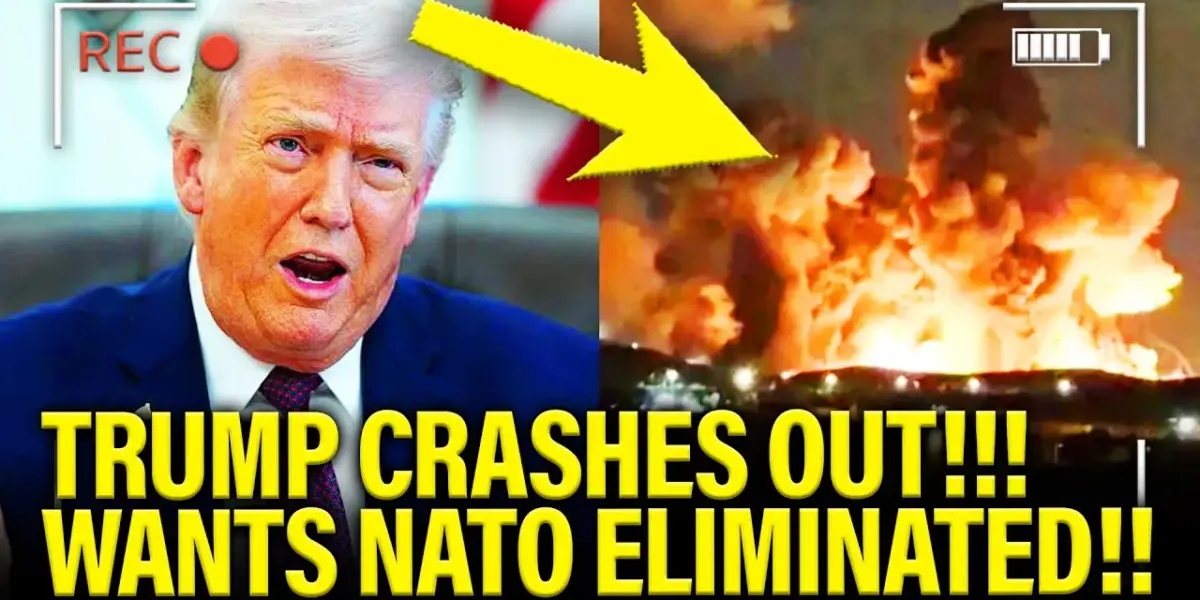
Trump’s NATO Exit Threat Fuels Global Instability
Former President Donald Trump has recently voiced strong intentions to withdraw the United States from the North Atlantic Treaty Organization (NATO), a move that could significantly reshape global security. This stance comes amid an escalating conflict in Iran, a situation Trump appears to believe NATO should have supported more directly.
NATO Under Fire
In interviews with The Telegraph and Reuters, Trump described NATO as a “paper tiger,” suggesting he has discussed this view with Russian President Vladimir Putin. He has also been critical of the UK’s navy, calling it “useless.” Trump indicated he might use a national address to argue for the U.S. leaving the alliance. However, a law signed by President Biden requires a two-thirds Senate vote for any president to unilaterally withdraw from NATO. This bill was originally sponsored by Senators Marco Rubio and Tim Kaine, highlighting a past bipartisan consensus on the importance of NATO.
The Iran Conflict and Diplomatic Fallout
The context for Trump’s NATO remarks appears to be his handling of a conflict with Iran. The transcript suggests this war was initiated without consulting allies, including NATO members or Middle Eastern partners. The conflict has reportedly led to Iran controlling the Strait of Hormuz and striking neighboring Arab nations with U.S. military bases. An Amazon data facility in Bahrain was among the targets, which the transcript claims aligns with Iran’s stated intentions to strike American corporate interests.
Claims made by Trump regarding Iran seeking a ceasefire have been disputed. The transcript states that Iran’s foreign ministry denied asking for a ceasefire, outlining instead conditions for ending the war. These include security guarantees, reparations, the ability to keep ballistic missiles, and the removal of U.S. military bases from the Middle East. Iran has also reportedly rejected a U.S. 15-point plan and insists on setting its own negotiation deadlines.
“Iran’s president has demanded that we enter into a ceasefire. They’re begging us for a ceasefire right now.”
– Claim attributed to Donald Trump on social media.
Iran’s foreign ministry responded directly to such claims, calling them “baseless and false.” The ongoing conflict has impacted global markets, with world leaders in Australia and the UK addressing their nations about potential shocks to oil and other supplies.
International Reactions and Shifting Alliances
British Prime Minister Keir Starmer has publicly stated that the UK will not be drawn into the conflict, pushing back against pressure to join the war and criticizing Trump’s tactics. Starmer’s focus appears to be on strengthening the UK’s relationship with the European Union, signaling a potential shift away from the traditional “special relationship” with the U.S. This aligns with a broader concern that NATO’s relevance may be diminishing.
The Economist, in a recent publication, suggested that the current geopolitical situation, including the war in Iran, represents a significant error by the U.S. that benefits China, Russia, and Iran. Meanwhile, the U.S. is reportedly seeking access to additional military sites in Greenland, raising further questions about its strategic priorities.
Historical Context and Future Outlook
The debate over NATO’s value and the U.S. role within it is not new. Historically, NATO was formed in 1949 as a collective defense against the Soviet Union. Its expansion and the evolving global threat landscape have often led to discussions about its purpose and effectiveness. Trump’s “America First” approach has consistently challenged long-standing international alliances, including NATO.
The transcript also touches upon domestic issues, mentioning a Supreme Court case regarding birthright citizenship, an executive order by Trump that is being challenged. Polling data cited in the transcript indicates low approval ratings for Trump’s handling of his presidency and the economy.
Why This Matters
Trump’s potential withdrawal from NATO, if it were to occur, would represent a fundamental shift in international security architecture. It could embolden adversaries, weaken collective defense, and create a more fragmented and unstable world. The conflict in Iran and its global economic ripple effects highlight the immediate consequences of unchecked regional aggression. The differing approaches to diplomacy and alliances between the U.S. and key allies like the UK underscore a growing divergence in foreign policy perspectives. As global powers navigate complex challenges, the stability and effectiveness of international alliances remain critical questions for the future.
Source: Trump PANICS in WAR and CALLS TO END NATO!!!! (YouTube)

Related Articles

Trump Ousts AG Bondi, Eyes Zeldin as Successor
Pam Bondi is out as Attorney General after one year, with Deputy AG Todd Blanche serving as Acting AG. President Trump confirmed the departure, praising Bondi and hinting at a new private sector role. Lee Zeldin is reportedly being considered as Bondi's permanent replacement, amid ongoing speculation about other cabinet changes.


US Pilot Feared Lost in Iran; Search Underway
The U.S. military is conducting a search operation inside Iran for an American pilot whose fighter jet may have been downed. Details are limited, with uncertainty over whether the plane was shot down or suffered mechanical failure. The operation highlights the complexities of rescue missions in hostile territory and occurs amid heightened regional tensions.

US Policy Shift Stuns Allies, Weakens Global Security
US policy shifts regarding Ukraine, the Strait of Hormuz, and NATO are raising concerns among allies and creating global instability. Critics point to a lack of strategic planning and diplomatic consultation, potentially emboldening adversaries and undermining international security.