Trump’s Name Everywhere: A ‘Stain’ on GOP Legacy?
Former President Donald Trump's efforts to brand national symbols, including a proposed signature on dollar bills, spark debate. Critics view this as an authoritarian attempt to embed his legacy, potentially staining the Republican Party's history and contrasting with democratic ideals of public ownership.

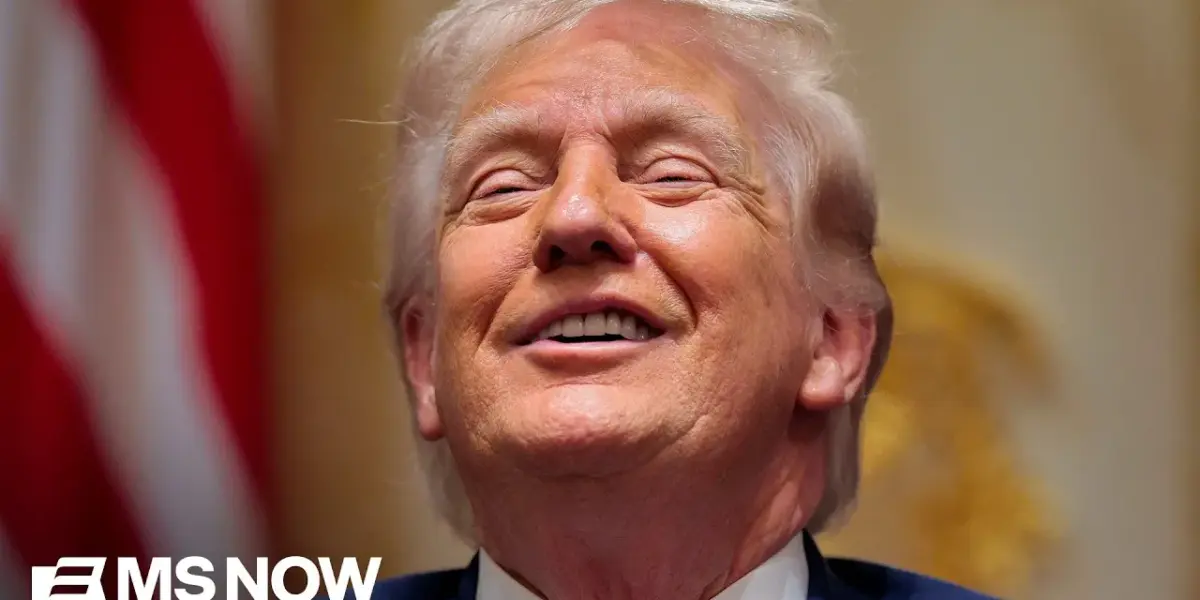
Trump’s Signature Scrawled Across American Institutions
Former President Donald Trump has a well-documented love for branding, extending his name and image onto everything from commercial products to government institutions. In recent times, this tendency has escalated, with Trump seeking to imprint his identity on significant national symbols. This includes proposals to feature his face on a commemorative gold coin and even his signature on the U.S. dollar bill, an unprecedented move for a sitting president tied to America’s 250th birthday.
A Pattern of Personal Branding
The push to place Trump’s likeness on official currency and coins follows a pattern seen throughout his public life and presidency. Previously, his name graced the Kennedy Center, and he established the Trump Institute of Peace. These actions suggest a broader strategy to embed his persona within the cultural and governmental fabric of the United States.
Concerns Over Authoritarianism and Legacy
Commentators have expressed concern that this pervasive self-branding goes beyond personal vanity. It is seen by some as an attempt to solidify his legacy and influence, especially in anticipation of a future where he might no longer be in the public eye. The fear is that Trump is trying to mold the nation’s culture around himself, an act described as “uniquely authoritarian.” This perspective argues that Trump views national assets—like currency, buildings, and the government itself—as personal property, reflecting a worldview where ownership and command are paramount.
“He is trying to literally embed and imbue himself in the culture and change it, frankly, oriented to himself. And that is uniquely authoritarian.”
A Stark Contrast to Democratic Ideals
This emphasis on personal ownership stands in sharp contrast to the democratic principles of shared governance and public ownership. The desire for a president who understands checks and balances and respects that national symbols belong to the people, not an individual, was highlighted. The timing of these branding efforts also drew attention, occurring as millions prepared to protest against the idea of a “king” rather than a president, underscoring a public desire for leadership that embodies democratic values.
The Republican Party’s Dilemma
The intense focus on Trump’s personal brand has raised questions about his lasting impact on the Republican Party. Some observers believe that Trump’s legacy is seen as a “stain” on the GOP’s history. The concern is that, without these efforts to embed himself, party members might eventually try to distance themselves from his influence. This perspective suggests that Trump’s actions are partly driven by a fear of being erased from history by a future Republican Party eager to redefine itself.
Ownership vs. Public Trust
The debate centers on the fundamental difference between personal branding for commercial gain and attempting to affix one’s name to national institutions. While commercial branding might be seen as a business tactic, applying it to government assets is viewed as a more serious issue. It raises questions about the role of the presidency and the perception of national symbols. The argument is made that, like a personal item, these branded elements can be rejected or removed by the public once the individual is no longer in power, signifying that true ownership rests with the nation.
What’s Next?
As these discussions continue, the focus will likely remain on how far these branding efforts will go and the public’s reaction. The upcoming 250th anniversary of the United States will be a key period to watch, potentially seeing further proposals or actions related to national symbols and historical commemoration. The broader question of how Donald Trump’s legacy will be integrated into, or contested within, American culture and the Republican Party’s future remains a significant point of discussion.
Source: Trump branding everything? Symone: he's a 'stain' on the GOP legacy (YouTube)

Related Articles

Trump’s War Talk Stuns Financial Crowd
Donald Trump's recent speech in Miami focused on his foreign policy, particularly his critical views on NATO and his vision for international relations. He declared the U.S. would no longer defend NATO allies, questioned the value of existing alliances, and suggested renaming the Strait of Hormuz. The speech also touched on his personal views of success, his allies, and his perceived role as a global peacemaker.
Trump’s Warpath: New Threats Signal Imperial Ambitions
Recent statements from Donald Trump reveal a potential embrace of increased military action and interventionist foreign policy. This approach, characterized by critics as "imperialism 2.0," contrasts with his past promises of peace and has even drawn criticism from parts of his own base. The implications for U.S. global engagement and domestic priorities are significant.
CPAC Divided: Trump’s Iran War Splits Conservative Base
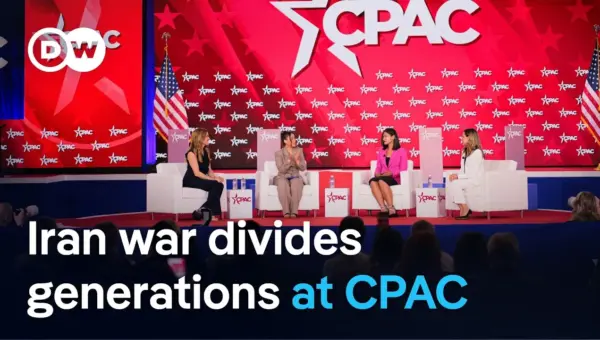
The annual CPAC gathering in Texas revealed deep divisions within President Trump's base over the U.S. war in Iran. While some supporters trust Trump's strategy, others, particularly younger conservatives, worry about the conflict's impact on the "America First" agenda. The conference also saw a notable absence of President Trump and other high-profile figures, contributing to a different energy compared to previous years.