Trump’s Muddled Iran Strategy Fuels War Crimes Fears
Recent actions and rhetoric surrounding the U.S. conflict with Iran, particularly from Donald Trump and Pete Hegseth, have drawn sharp criticism. The strategy appears muddled, with threats of war crimes and the use of a rescue mission as propaganda, all while Iran maintains control of the Strait of Hormuz.

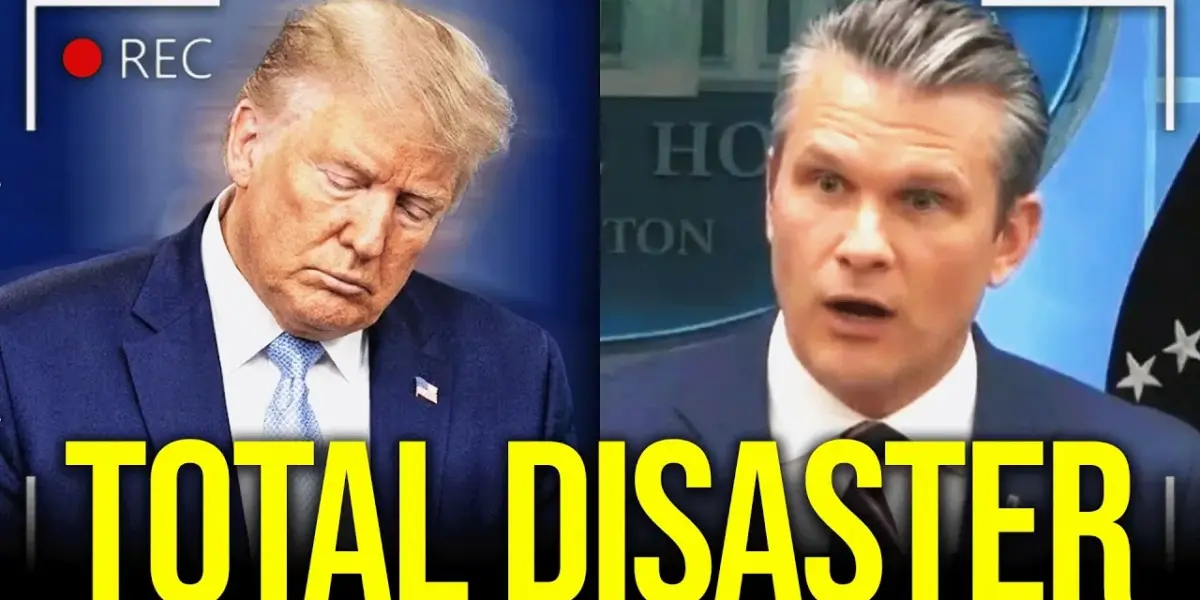
Trump’s Muddled Iran Strategy Fuels War Crimes Fears
Recent events involving Donald Trump and the ongoing situation with Iran raise serious questions about U.S. foreign policy and leadership. While officials like General Kaine speak at the podium, Donald Trump has been observed appearing to fall asleep during important press conferences. This behavior, coupled with a confusing and seemingly escalating conflict with Iran, has led to widespread criticism.
Conflicting Messages and Escalating Threats
Donald Trump and Pete Hegseth recently held a press conference attempting to portray a sense of victory in the ongoing conflict with Iran. However, this message clashes with rising gas and food prices, and the continued closure of the Strait of Hormuz. The fundamental question of why Iran still controls the strait, despite claims of winning, remains unanswered. Meanwhile, Iran appears to be gaining more regional influence, showing defiance by continuing to control vital shipping lanes.
A particularly troubling aspect of the situation is Donald Trump’s rhetoric. He has threatened actions that could be considered war crimes, targeting civilian infrastructure like bridges and water desalination plants. This approach mirrors past criticisms he leveled against former President Obama for lacking negotiation skills. It seems Trump is now in a similar position, threatening military action because a diplomatic solution is proving elusive. His threats against civilian targets are deeply concerning and widely seen as sickening.
The Rescue Operation: A Glimmer of Hope or a Propaganda Tool?
During this period, a U.S. service member was rescued from a dangerous situation in Iran. While the safe return of any service member is a cause for relief, the way this event has been framed is highly debated. Trump has used this rescue as supposed proof that the U.S. is winning the war. Critics argue this is a misleading and backward way to frame the situation.
It’s like if I crashed my friend’s car, completely totaled it, caused a disaster. His whole family’s mad. Then I said, “Well, I replaced the wiper fluid.” Dude, no. You can’t just cause a massive disaster and then brag about fixing 5% of that disaster, right?
The rescue operation itself is acknowledged by some as swift and precise, possibly because it was handled by military professionals without Trump’s direct involvement in the planning. However, the narrative that this single event signifies victory is strongly rejected. It’s seen as a risky mission that became necessary only because the initial goals were not met. This is not simply mission creep, where a mission expands over time; it’s described as mission inversion, where the original objective becomes so compromised that the new goal is merely to fix the mess.
Hegseth’s Narrative vs. Reality
Pete Hegseth has amplified Trump’s narrative, claiming Iran’s military is embarrassed and humiliated. This claim is challenged by the reality of Iran’s military structure. While Iran’s older, conventional navy might be outdated, its IRGC (Islamic Revolutionary Guard Corps) navy remains a significant threat. This force is equipped with ballistic missiles, mines, drones, and suicide vessels, giving them considerable leverage over the Strait of Hormuz.
Hegseth’s portrayal of Iran’s military as completely defeated is seen as a misrepresentation. The destruction of older military assets doesn’t negate the threat posed by the more modern and radicalized IRGC forces. The situation has led to a younger, more radical leadership in Iran, which is actively rebuilding and rearming. This strategic rebuilding allows Iran to continue controlling the Strait of Hormuz, impacting global trade and causing economic hardship for many.
A Cycle of Escalation and Contradiction
The rhetoric surrounding the conflict has been inconsistent. At one point, the U.S. claimed victory, then began winding down operations, only to ramp them up again. There have been claims of Iran begging for a deal, followed by assertions that Iran isn’t taking negotiations seriously. This cycle of contradictory messages suggests a lack of clear strategy and control.
Pete Hegseth has spoken of escalating strikes, stating that today will be the largest volume of strikes since the operation began, with even more planned for tomorrow. He warns Iran to “choose wisely” because the president “does not play around.” However, this tough talk comes after weeks of Trump setting and then missing deadlines for action against Iran. Iran has repeatedly called Trump’s bluff, seemingly unfazed by threats to bomb civilian infrastructure. The repeated extensions of deadlines and the lack of decisive action undermine the credibility of these threats.
Why This Matters
The situation highlights a concerning disconnect between the rhetoric of victory and the complex reality on the ground. The U.S. faces rising economic challenges at home, while its foreign policy appears to be creating more problems than it solves. The strategy of threatening civilian populations and engaging in escalating, poorly defined military actions risks further destabilizing the region and harming American interests. The lack of clear objectives and consistent messaging raises fears of a prolonged conflict with significant human and economic costs for the American people.
Historical Context
The tension between the U.S. and Iran has a long history, dating back to the 1979 Iranian Revolution. U.S. foreign policy has often oscillated between direct confrontation and attempts at diplomatic engagement. Criticisms of past administrations, like those leveled against Obama by Trump regarding negotiation, often resurface during times of heightened tension. This current situation echoes past patterns of escalation and the difficulty in achieving lasting diplomatic solutions in the region.
Future Outlook
The current trajectory suggests a prolonged period of conflict and instability. The strategy of inflicting maximum damage without a clear endgame, coupled with the ongoing control of the Strait of Hormuz by Iran, points towards continued economic hardship and potential further military engagement. The lack of confidence in diplomatic solutions and the reliance on military threats may lead to a quagmire, similar to past conflicts in the Middle East. The focus needs to shift from performative displays of strength to a coherent, sustainable strategy that prioritizes de-escalation and genuine diplomatic resolution to avoid further pain for the American people and greater instability in the region.
Source: Trump Falls Asleep as Hegseth SCREWS HIM (YouTube)

Related Articles
Iran Rejects Ceasefire; Trump’s Deadline Looms
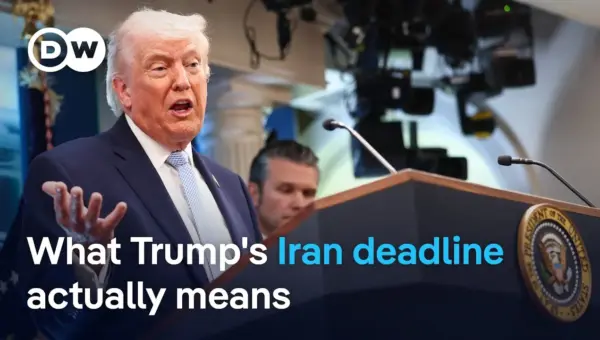
Iran has rejected a U.S. proposal for a temporary ceasefire, demanding a permanent end to hostilities instead. President Trump's Tuesday deadline for reopening the Strait of Hormuz nears amidst escalating military actions and ongoing diplomatic efforts by regional powers.


Ukraine Strikes Deep: Russia’s War Machine Buckles
Ukraine is launching deep strikes into Russia, targeting oil exports, refineries, and rail lines. These attacks aim to cripple Russia's war machine by disrupting its economy and supply chains. The coordinated pressure strains Russia's resources and military, potentially forcing a strategic shift.


Trump’s Easter Event: A Bizarre Mix of Confusion and Celebrity
A recent Easter event featuring Donald Trump has become a viral talking point after he appeared confused about the identity of the person beside him, referring to her as a "movie star." The clip has sparked online speculation and discussion about the former President's awareness and public persona.