Trump’s Mideast War: Market Panic, Global Chaos, and a World on Edge
Donald Trump's handling of the Iran conflict is sparking global economic chaos, market manipulation fears, and a dangerous geopolitical spiral. Escalating hostilities threaten oil supplies, food security, and international stability, while domestic needs are neglected.

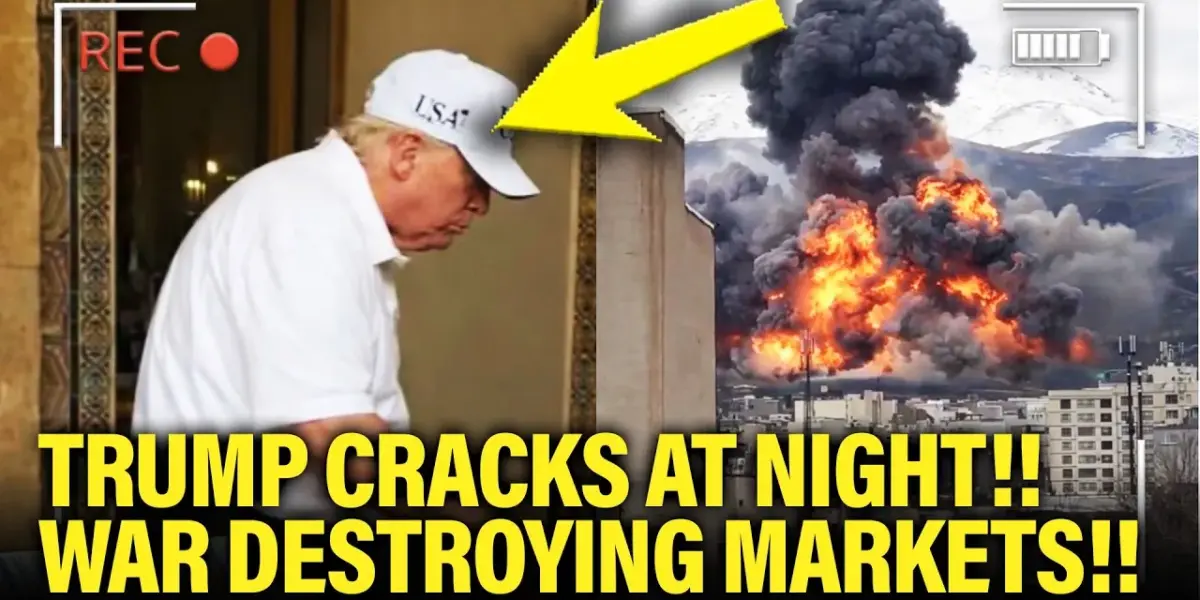
Trump’s Mideast Gamble: A Descent into Chaos and Economic Turmoil
The escalating conflict in Iran, initiated under Donald Trump’s administration, has plunged the Middle East into a deepening crisis, with significant repercussions rippling across global markets, food supplies, and international relations. Far from a swift victory, the war appears to be spiraling, marked by market manipulation attempts, questionable leadership, and a widening geopolitical instability that threatens to engulf the region and beyond.
Market Manipulation and Desperate Measures
As futures markets prepared to open on a Sunday, Donald Trump reportedly reached out to The Wall Street Journal, seeking to announce a coalition to escort ships through the Strait of Hormuz. This move, characterized by critics as a desperate attempt to manipulate markets and downplay the severity of the conflict, was met with skepticism. US officials questioned the existence of such a coalition, suggesting it was another instance of misleading statements from the Trump administration. The effectiveness of these tactics is debatable, as US oil prices initially surged above $102 a barrel in reaction to the unfolding events, indicating market anxiety rather than reassurance.
Escalating Hostilities and Unintended Consequences
The conflict has seen a dramatic escalation, with Iranian drone and missile strikes reported against Bahrain and other Gulf nations. Sirens wailed in Manama as residents reported explosions and interceptions in the sky, underscoring the immediate and tangible threat to regional stability. Iran’s foreign minister has explicitly rejected negotiations with the Trump administration, stating that any nation supporting the United States would be considered a fair target. This stance, coupled with reports of Israel preparing to mobilize a significant number of reservists for a potential invasion of Lebanon, paints a grim picture of a conflict with no clear end in sight.
A War Fueled by Contradictions and Extremism
Trump’s pronouncements have been a source of confusion and concern. While signaling that an operation to seize enriched uranium was not imminent, he also did not rule out sending US ground troops. This contradictory messaging, coupled with reports of him reportedly yelling at generals for not securing the Strait of Hormuz, suggests a leadership style characterized by impulsivity rather than strategic planning. The situation is further inflamed by extreme rhetoric from proxies, such as Newt Gingrich’s suggestion of using “thermonuclear detonations” to create a new waterway. This kind of discourse, amplified by surrogates, normalizes dangerous ideas and exacerbates regional tensions.
Global Economic Fallout: Oil, Food, and Inflation
The war’s impact extends far beyond the immediate battlefield. Oil prices have surged, and the conflict is causing significant disruptions in global food production due to interruptions in fertilizer supplies and raw materials. Experts warn that prolonged disruption of logistics chains could have severe consequences for agriculture and global food markets, leading to higher prices for consumers worldwide. The interconnectedness of energy and agriculture means that rising gas prices directly translate to increased production costs for food, fueling a cycle of inflation that will affect millions across continents.
Geopolitical Realignments and Shifting Alliances
The conflict has also exposed a fracturing of international alliances. While Trump has called for a coalition to secure the Strait of Hormuz, key nations like France, the UK, Japan, South Korea, and Germany have either rejected participation or offered no commitment. China is reportedly aiding Iran, and the UAE has expressed concerns about being caught in the crosshairs. This lack of unified support weakens the US-led effort and emboldens adversaries, potentially leading to further regional realignments and a more fragmented global order.
The Red Sea Threat and Broader Instability
Beyond the Strait of Hormuz, concerns are mounting about potential disruptions in the Red Sea. The Houthis in Yemen, potentially activated by Iran, could shut down this vital shipping lane, which, in addition to the Strait of Hormuz, could send oil prices soaring above $200 a barrel. There is a chilling possibility that Iran might be luring ships into the Red Sea to then shut it down, trapping a large number of vessels. This adds another layer of complexity and risk to an already volatile situation.
A Distracted America: Asia and Domestic Concerns
While the Middle East burns, other global flashpoints are also demanding attention. Taiwan has reported significant Chinese military buildups near its territory, raising concerns about a potential conflict in Asia. Concurrently, the US appears to be reducing its military presence in East Asia, withdrawing THAAD missiles from South Korea and reallocating Marine Expeditionary Forces to the Middle East. This shift, coupled with a perceived lack of promised military aid to Taiwan, could embolden North Korea, as evidenced by Kim Jong-un’s missile tests. Domestically, the immense cost of this war—estimated at billions of dollars in its initial days—diverts resources that could be used for critical domestic needs like healthcare, education, and infrastructure. This raises questions about national priorities and the long-term economic implications for the American people, who are focused on job security, healthcare access, and the rising cost of living.
Democratic Critiques and a Call for Prioritization
Prominent Democrats have voiced strong criticism of the administration’s handling of the conflict. Pete Buttigieg highlighted the lack of planning and the predictable consequences, such as the closure of the Strait of Hormuz, calling the situation “amateur hour.” He also condemned the use of war imagery for campaign fundraising. Adam Schiff pointed to the staggering cost of the war, arguing that the military already possesses sufficient funding and that the money could be better allocated domestically. Ro Khanna echoed these sentiments, emphasizing that there was no imminent threat from Iran and that the war has created a new threat, diverting attention from critical domestic issues like jobs, healthcare, and childcare. He urged a return to the principles of prioritizing America and its citizens.
Why This Matters
The unfolding crisis in Iran and the broader Middle East is not merely a regional conflict; it is a stark illustration of how geopolitical instability, driven by leadership decisions and escalating hostilities, can have profound and far-reaching consequences. The economic fallout, from surging oil prices to disruptions in food supply chains, directly impacts global populations. Furthermore, the apparent lack of international consensus and the contradictory messaging from leadership raise serious questions about strategic competence and the potential for miscalculation. The diversion of immense financial resources to war efforts, while domestic needs go unmet, highlights a critical debate about national priorities. As the situation continues to evolve, the world watches with bated breath, hoping for de-escalation and a return to stability, but the current trajectory suggests a period of prolonged uncertainty and potential further conflict.
Future Outlook
The immediate future of the Middle East remains precarious. Without a clear diplomatic off-ramp and with escalating rhetoric on all sides, the conflict shows no signs of abating. The potential for wider regional conflagration, involving multiple actors and proxy forces, is a significant concern. Economically, the world must brace for continued volatility in energy and food markets, and the inflationary pressures that accompany them. Geopolitically, this conflict could accelerate shifts in global power dynamics and further test the resilience of international alliances. The leadership’s approach to this crisis will undoubtedly shape not only the immediate geopolitical landscape but also the long-term economic and social well-being of nations worldwide.
Source: Trump CRACKS at NIGHT and PANICS OVER DISASTER WAR!! (YouTube)

Related Articles


Trump’s Iran Claims: Shocked or Deluded by War Games?
Donald Trump claimed surprise over Iran's actions in the Strait of Hormuz, but experts suggest retaliation was inevitable. Military war games likely predicted such a scenario, raising questions about the advice given to the President.

Israel’s Strategy Against Iran Revealed
Israel's strategy to counter Iran's nuclear ambitions and regional influence centers on containment, utilizing a mix of covert military actions, intelligence operations, and diplomatic pressure. Analysts highlight the growing urgency due to Iran's nuclear advancements, while also noting the persistent risk of escalation in the volatile Middle East.

Israel Eyes Lebanon Buffer Zone: A Political Ploy?
Israel's military operations in southern Lebanon aim to create a buffer zone and pressure Hezbollah, according to expert Yazid Sayigh. He argues the strategy is more political than military, echoing historical tactics. The ongoing conflict could destabilize Lebanon further, while Hezbollah fights for survival.