Trump’s Mideast Strategy: A Long Game
Newt Gingrich argues President Trump's Middle East strategy is a long game, not a withdrawal. Powerful U.S. military assets ensure a persistent presence. The strategy aims to pressure adversaries and encourage allies to take greater responsibility for regional security.

Trump’s Mideast Strategy: A Long Game
Former House Speaker Newt Gingrich believes President Trump’s approach to the Middle East is a deliberate, long-term strategy. He argues that despite appearances, the U.S. is not truly leaving the region. Gingrich points to powerful military assets like B-2 bombers, aircraft carriers, and submarines as proof that American power remains a constant threat to adversaries.
Gingrich highlighted the importance of Trump’s deep understanding of world leaders. He noted that Trump has been speaking with global figures daily since 2015. This experience gives him a unique perspective that few presidents possess. Gingrich suggested that Trump’s decisions might not follow traditional military playbooks but are based on his own calculated approach.
“We Are Not Leaving”
The core of Gingrich’s argument rests on the phrase “We are not leaving.” He explained that this doesn’t mean having troops on the ground every day. Instead, it signifies a persistent U.S. presence through advanced military capabilities and intelligence gathering. This strategy aims to keep pressure on Iran and its allies without necessarily engaging in direct combat.
Gingrich also emphasized the shift in regional alliances. Countries like Saudi Arabia, Kuwait, and the UAE are now more strongly opposed to Iran than they were just weeks ago. This growing regional consensus strengthens the U.S. position. It allows America to focus more attention on other global priorities, such as countering China.
A Strategy of Attrition
Gingrich described Trump’s strategy as potentially one of attrition. If a quick victory isn’t possible, Trump aims to gradually wear down adversaries. He believes the U.S. will remain a significant force in the region, influencing events even without large-scale military deployments. This approach involves using intelligence assets and encouraging allies to take on more responsibility.
“My guess is of the 90 million Iranians, 85 million are anti-regime. So I think the pressure will stay there. I think Trump will gradually wear them down.”
He also pointed out that Iran’s internal dissent, with an estimated 85 million out of 90 million Iranians being anti-regime, could be a key factor. This internal pressure, combined with external U.S. influence, could lead to significant changes within Iran.
Shaking Up the Middle East
Gingrich credited Trump with significantly impacting the Middle East, perhaps more than any president in the last two decades. He compared the criticism Trump faces to that directed at Ronald Reagan, often labeled a “cowboy” for his bold policies. Gingrich suggested that Trump’s approach, while unconventional, demonstrates courage and determination.
Decades in the Making
The discussion then turned to Trump’s long-held views on the Middle East. A 1987 interview with Barbara Walters revealed Trump’s past ideas about securing oil resources. He questioned why the U.S. wouldn’t consider taking control of some of Iran’s oil installations to recoup losses caused by Iranian actions. This suggests his current strategic thinking may have roots going back over 30 years.
Gingrich reiterated that Trump is not planning a complete withdrawal. He drew a parallel to the Gulf War following Saddam Hussein’s invasion of Kuwait, which led to a long-term U.S. commitment in the region. Trump’s goal, according to Gingrich, is to maximize U.S. advantage and encourage allies to become more self-reliant, a key aspect of his “America First” policy.
Allies Must Step Up
A central theme is Trump’s desire for European and other allies to take greater responsibility for regional security. Gingrich argued that these allies have relied too heavily on the U.S. since World War II. Trump wants them to develop stronger military capabilities and contribute more to global policing efforts. This is especially important as the U.S. shifts its focus to competing with China.
The Strait of Hormuz, a vital shipping lane, is a significant concern for many countries. However, Gingrich noted that its disruption doesn’t directly impact the U.S. as much as it does nations like Bangladesh, the Philippines, or China. This perspective suggests that the burden of securing these routes should fall more heavily on those most affected.
Concerns Over DHS Funding Bill
The conversation briefly touched on a political dispute regarding funding for the Department of Homeland Security (DHS). Gingrich expressed confusion and concern over a provision in a Senate bill. He stated that the bill appeared to prevent money from being spent on Immigration and Customs Enforcement (ICE). Gingrich felt this was inappropriate and questioned why Senate Republicans would agree to such terms.
He admitted he didn’t fully understand the details but noted that lawyers were examining the bill. The potential restriction on using funds for operational costs for ICE raised questions about the Republican party’s stance on border security. Gingrich indicated that a clear explanation from the Senate was lacking.
Market Impact
Gingrich’s analysis suggests that U.S. foreign policy in the Middle East is shifting towards a more strategic, less interventionist, but still powerful presence. This could lead to increased stability in the long run if regional allies step up their security contributions. For investors, this might mean reduced geopolitical risk premiums in certain sectors, but also a need to monitor how the U.S. pivot impacts global trade and energy markets.
The focus on economic competition with China, alongside the Middle East strategy, indicates a broader reorientation of U.S. foreign policy. Investors should watch how these shifts affect global supply chains, technology sectors, and international investment flows. The emphasis on allies taking more responsibility could also create opportunities for defense contractors in those allied nations.
What Investors Should Know
Investors should understand that President Trump’s approach to foreign policy, particularly in the Middle East, is characterized by long-term strategic thinking rather than immediate military action. The U.S. military’s presence, though perhaps less visible, remains substantial through advanced technology and intelligence. This suggests a sustained, albeit different, level of engagement in the region.
The push for allies to increase their defense spending and take more ownership of regional security is a significant development. This could lead to shifts in global defense spending and investment opportunities. Furthermore, the administration’s focus on countering China suggests a continued emphasis on economic and technological competition, which will have broader market implications.
Source: Gingrich: We are NOT leaving (YouTube)

Related Articles


EU Leaders Visit Bucha, Demand Justice for War Crimes
EU foreign ministers visited Bucha, Ukraine, to commemorate victims of Russian atrocities and reaffirm support for Ukraine. They are pushing for a special tribunal to prosecute the crime of aggression, separate from war crimes prosecutions. Concerns remain about Ukraine's agenda slipping as global focus shifts, and President Zelenskyy's Easter ceasefire proposal faces uncertainty regarding US backing and Russian compliance.
Trump Eyes Exit from Iran War Amid Oil Crisis
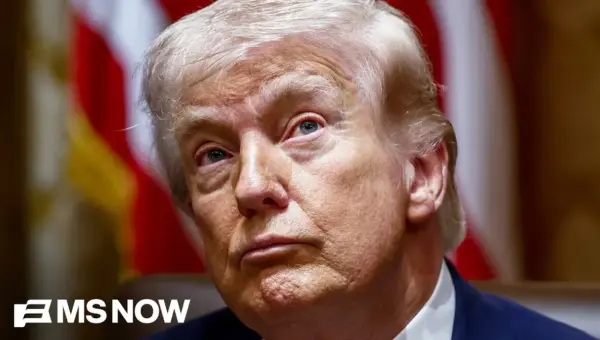
President Trump is reportedly seeking to end U.S. involvement in the Iran war, which has caused gas prices to surge and the Strait of Hormuz to close. The administration is now calling on allies to resolve the oil crisis it helped create, raising concerns about global economic stability and damaged international relations.


US Unleashes Strikes: Video Reveals Iran Targets Hit
The United States has released video footage showing its military forces carrying out strikes against targets in Iran. U.S. Central Command shared the video, offering a visual account of recent military actions. This release provides a direct look at the U.S. response to perceived threats or actions originating from Iran.