Trump’s Mideast Gambit Backfires as Allies Reject His Calls
Donald Trump's claims of a Mideast coalition to secure the Strait of Hormuz have been publicly refuted by key nations like Australia and Japan. This analysis explores the growing international skepticism towards US leadership, the economic implications of regional instability, and the complex diplomatic maneuvers underway.

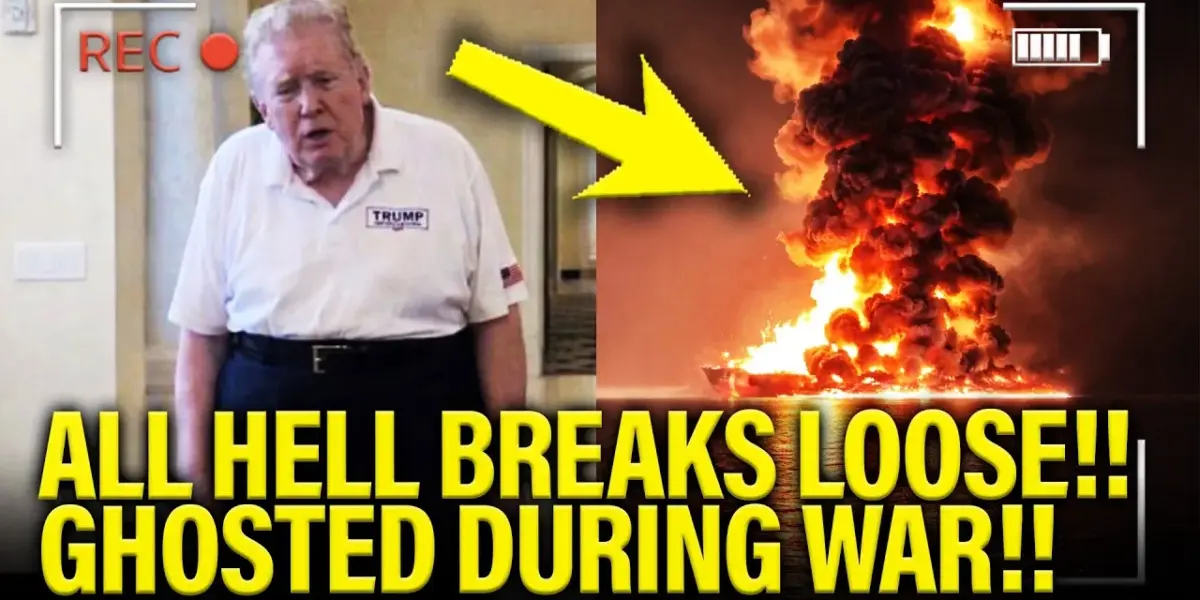
Trump’s Bold Claims on Mideast Coalition Collide with Harsh Reality
Donald Trump has recently claimed to have forged a coalition of nations ready to secure the Strait of Hormuz and normalize trade, a narrative vigorously challenged by recent international actions and statements. The former president’s assertion, made to The Wall Street Journal, that numerous countries are aligning with him for this critical maritime mission appears to be largely unsubstantiated. Instead, a growing number of nations are publicly distancing themselves from such initiatives, and in some cases, directly rebuking Trump’s pronouncements.
Nations Shun Trump’s Call for Naval Support
The transcript highlights a clear pattern of international rejection of Trump’s appeals. Australia has explicitly announced it will not be sending naval ships to assist in securing the Strait of Hormuz. Similarly, Japan’s Prime Minister Takahishi has stated that the nation is not considering deploying Navy vessels to the Middle East for this purpose, though Japan will participate in strategic oil reserve drawdowns as part of broader International Energy Agency efforts to stabilize markets—a move deemed insufficient by some analysts.
Germany, too, has expressed skepticism. German Foreign Minister Annalena Baerbock indicated that the European Union’s previous naval mission in the Red Sea, aimed at combating Houthi attacks on commercial shipping, had not been effective. Therefore, expanding such an operation to the Strait of Hormuz is unlikely to provide greater security, a sentiment that underscores a broader European reluctance to be drawn into a US-led initiative without clear efficacy.
France Pursues Independent Diplomacy with Iran
France’s approach further illustrates a divergence from Trump’s strategy. President Emmanuel Macron has engaged in direct negotiations with Iran, including recent calls with Iranian President Ebrahim Raisi. Macron’s discussions have reportedly focused on establishing a “new political and security framework” to ensure regional peace and security. This language is interpreted as a coded acknowledgment of Iran’s existing role and a potential move towards a framework that operates independently of, or with reduced reliance on, the United States. This suggests a European effort to de-escalate tensions through direct diplomacy rather than military posturing.
Economic Ramifications of Strait Blockade
The disruption at the Strait of Hormuz carries significant economic weight. A Goldman Sachs report cited in the transcript indicates that Qatar and Kuwait could face GDP contractions of up to 14% if the conflict persists through April. Saudi Arabia and the UAE, while better positioned due to their ability to reroute oil, could still see GDP drops of 3% to 5%. The analysis points out that rerouting oil to the Red Sea, while a temporary solution, presents its own risks, especially with the Houthi threat in the region.
The Houthis: A Persistent Red Sea Threat
The transcript emphasizes the ongoing threat posed by the Houthis in Yemen. Their success in disrupting shipping in the Red Sea, and their explicit statements indicating readiness to resume operations, serve as a cautionary tale. The German government’s assessment of the ineffectiveness of previous naval missions in the Red Sea is directly linked to the Houthi capabilities, suggesting that any coalition focused on the Strait of Hormuz must contend with the broader regional instability, particularly in the Red Sea.
Accusations of Pay-to-Play and Influence Peddling
A strong undercurrent in the analysis is the accusation that certain Middle Eastern nations have engaged in pay-to-play schemes with figures like Donald Trump and Jared Kushner, seeking influence or protection in return for financial investments. A Kuwaiti analyst, quoted in the transcript, criticizes Gulf policy toward Washington, stating that billions were spent for influence with no tangible return, directly pointing to funds flowing to Kushner and the Trump family. This perspective suggests that these financial channels did not yield the expected security guarantees, leaving the financing states vulnerable to strikes and pressure.
Iran’s Stance and Trump’s Counterclaims
The Iranian Foreign Ministry has directly contradicted Trump’s claims of ongoing negotiations. According to the transcript, Iran’s Foreign Minister stated that the country has neither sought a truce nor engaged in talks, dismissing such claims as delusional. This direct refutation casts Trump’s statements as misrepresentations and highlights a significant gap between his public narrative and the reality on the ground. Iran has also asserted its right to self-defense and demanded compensation for what it terms an “illegal war” imposed by Trump.
Escalation and Civilian Impact
The situation is further complicated by reports of ongoing drone and missile attacks impacting the region, including Dubai International Airport and areas in Bahrain and Saudi Arabia. While the US and Israel have reportedly targeted Iranian military assets, the transcript argues that Iran retains significant capabilities through its ballistic missile arsenal and drone production. The analysis also points to the devastating impact of Israeli strikes in Gaza and Lebanon, raising concerns about war crimes and civilian casualties, and suggesting that US policy, particularly under Trump, may be inadvertently strengthening hardline factions in Iran and exacerbating regional conflicts.
Historical Context and Shifting Alliances
The narrative presented draws parallels to past US foreign policy approaches and highlights a potential shift in global alliances. The critique of Trump’s rhetoric and actions, including his past statements on NATO and his dealings with China and Russia, suggests a broader trend of diminishing US influence and a growing desire among allies for greater strategic autonomy. The mention of Denmark’s Prime Minister’s gratitude for international support against US pressure regarding Greenland, and Ukrainian President Zelenskyy’s comments on the disparity of missile supplies between Ukraine and Middle Eastern partners, further underscore this theme of a recalibrating international order.
Why This Matters
The events described signal a critical juncture in international relations, particularly concerning Middle East security and the role of the United States. Donald Trump’s claims of a unified coalition to secure the Strait of Hormuz have been met with a stark reality of international skepticism and independent diplomatic efforts. This divergence highlights a potential erosion of US leadership and a growing desire among key nations for more autonomous foreign policy strategies. The economic repercussions of a blocked Strait of Hormuz are substantial, impacting global energy markets and regional economies. Furthermore, the persistent threat from groups like the Houthis and the complex geopolitical dynamics involving Iran, Israel, and various Arab states suggest a volatile and unpredictable future. The accusations of influence peddling and the potential for escalating conflicts with significant civilian costs raise profound questions about the effectiveness and morality of current international strategies. The apparent rejection of Trump’s overtures by former allies and the pursuit of alternative diplomatic frameworks by nations like France suggest a move towards a multipolar world order where US influence may be increasingly contested.
Implications, Trends, and Future Outlook
The analysis points to several key implications and trends. Firstly, the rejection of Trump’s coalition-building efforts suggests a significant decline in trust and reliance on US leadership for certain security matters. Nations are increasingly prioritizing their own strategic interests and pursuing bilateral or multilateral solutions independent of American direction. Secondly, the emphasis on independent diplomatic channels, as seen with France’s engagement with Iran, indicates a trend towards de-escalation through negotiation rather than military confrontation. This approach, while potentially slower, aims to address root causes and build sustainable peace frameworks. Thirdly, the economic vulnerabilities exposed by the potential closure of the Strait of Hormuz underscore the interconnectedness of global trade and energy security. The reliance on oil transit through this waterway makes it a critical chokepoint, and its disruption has far-reaching consequences. The ongoing Houthi threat in the Red Sea further complicates these dynamics, illustrating how regional proxy conflicts can have global impacts. The future outlook suggests a continued fragmentation of global security architectures, with nations hedging their bets and forging new alliances based on evolving geopolitical realities. The US, under current or future leadership, faces the challenge of rebuilding trust and demonstrating reliable leadership to regain its influence in a world increasingly seeking diverse partnerships.
Historical Context and Background
The current geopolitical tensions in the Middle East are deeply rooted in decades of complex regional rivalries, international interventions, and shifting power dynamics. The Strait of Hormuz has historically been a critical artery for global oil supply, making its security a persistent concern for major economic powers. The rise of Iran as a regional player, its complex relationship with Western powers, and the ongoing Israeli-Palestinian conflict have created a volatile environment. The transcript alludes to past US policies, including sanctions and military actions, and their unintended consequences, such as potentially strengthening hardline elements within targeted nations or alienating allies. The mention of previous Houthi disruptions in the Red Sea and the broader context of US-led coalitions in the region provide a backdrop against which current events are unfolding. The narrative also touches upon the transactional nature of some international relationships, particularly the alleged quid pro quo between financial investments and political influence, a theme that has recurred in various geopolitical contexts throughout history.
Source: All HELL BREAKS LOOSE as Trump gets GHOSTED IN WAR!! (YouTube)

Related Articles
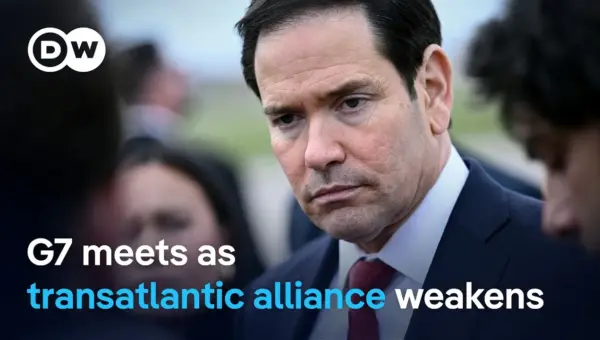
G7 Allies Clash Over Iran War Strategy, Urge Focus on Russia
G7 foreign ministers met in Paris, revealing deep divisions over the U.S. war with Iran. European allies urged the U.S. to pressure Russia, linking its actions to the conflict and fearing support for Ukraine will wane.

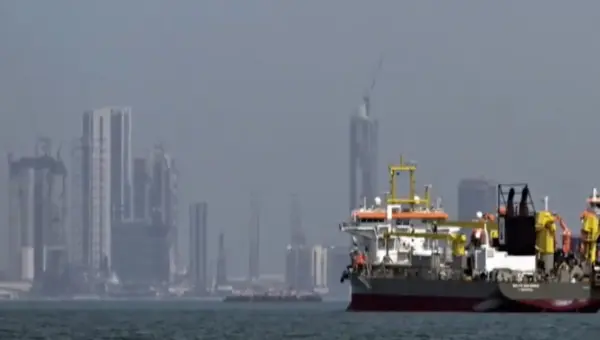
Iran Blocks China Ships, Exposing Beijing’s Weak Grip
Iran's recent decision to block Chinese ships at the Strait of Hormuz is exposing the limits of Beijing's influence in the Middle East. This action is causing delays and cancellations for Chinese manufacturers, turning a perceived geopolitical win into an economic strain.
Rubio: US Can Achieve Iran War Goals Without Troops
Senator Marco Rubio outlined a strategy to counter Iran without deploying U.S. ground troops, focusing on weakening the regime and enhancing maritime security. He also criticized Cuba's economic system and expressed concerns about West Bank violence.