Trump’s Market Moves: Iran Conflict Sparks Volatility
President Trump's social media post regarding potential talks with Iran and a delay in strikes caused significant market swings, boosting stocks and lowering oil prices. This event highlights the strong link between geopolitical news and financial markets, while also raising concerns about inflation and interest rates.

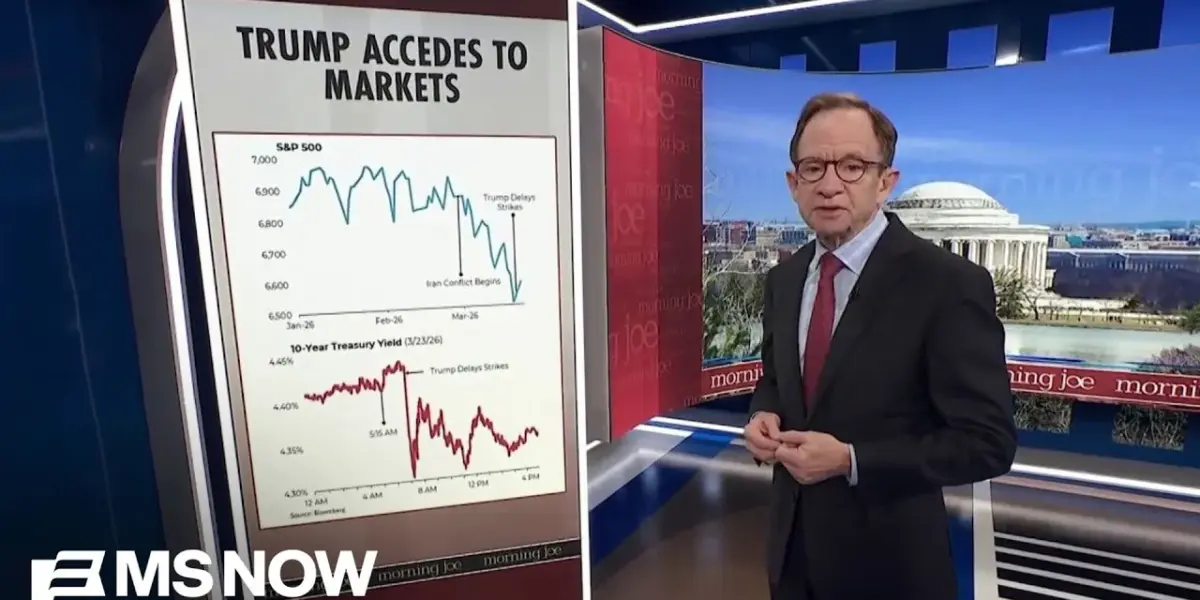
Trump’s Social Media Post Jolts Markets Amid Iran Tensions
President Trump’s early morning social media post on Tuesday sent shockwaves through the financial markets, influencing both stock and oil prices significantly. The announcement, which stated that the U.S. and Iran had held talks and that planned strikes on Iranian power plants and energy infrastructure were being delayed, came after unusual activity in futures trading. Specifically, CNBC noted a sharp, isolated jump in trading volume for S&P 500 and oil futures around 6:50 a.m., breaking a quiet pre-market session.
This declaration immediately triggered a rally in riskier assets. S&P 500 futures surged over 2.5% before the market opened. Simultaneously, West Texas Intermediate crude futures dropped nearly 6%. Fortune magazine highlighted the speed of these changes, stating that in the time it takes to walk from a car to a desk, President Trump’s post had added approximately $1.7 trillion to stock values and reduced oil prices by about $17 per barrel, or around 15%.
Market Reaction and Unusual Trading Activity
The swift market reaction suggests a strong link between geopolitical events and investor sentiment. The unusual pre-market trading volume in S&P 500 and oil futures before Trump’s post has raised questions. Some analysts point to this as potentially suspicious activity, especially given the timing. However, former Treasury official Steve Rattner commented on the broader context of Wall Street, suggesting that while not always fully compliant, such actions are not entirely surprising in the current political climate.
“There’s a lot of stuff that goes on on Wall Street that is not shall we say fully compliant. And now you have an administration that doesn’t seem to have any guardrails around what I’ll call corruption.”
Rattner also warned against trying to profit from perceived inside information, emphasizing that in today’s transparent environment, such actions are likely to be discovered, leading to severe consequences. He stressed that the people in power today might not be tomorrow, making illicit gains not worth the risk.
Trump’s Sensitivity to Market Performance
The transcript suggests that President Trump is highly responsive to market fluctuations. Throughout the year, the S&P 500 had been somewhat unstable, experiencing a significant drop of 4.3% at one point and 3.1% in the week prior to these events. Trump’s decision to announce delays in strikes on Iran came after his earlier statements on Saturday night about increasing bombing of energy infrastructure, which had already caused Asian markets to fall by about 3.5% on Sunday night.
This pattern of market-driven responses is not new. Rattner recalled a similar situation where Trump paused tariffs after bond yields rose sharply. The recent events show Trump reacting quickly to a market downturn, with Treasury yields initially rising due to the Iran situation and then falling back after his announcement. However, subsequent reports of Iran denying the talks caused yields to rise again, leading to a day of market fluctuation as investors tried to make sense of the situation.
Impact on Oil Prices and Inflation Concerns
The conflict in the Middle East has had a notable impact on oil prices. Even after Trump’s announcement, oil futures remained significantly higher than they were before the conflict began. Traders anticipate that oil prices will stay elevated, even if the immediate crisis is resolved. This expectation is partly due to damage to infrastructure in the Middle East, which could affect supply for a longer period.
The rising cost of oil has direct implications for consumers, particularly at the gas pump. Gasoline prices have seen a substantial jump, nearing $6 a gallon in California and increasing significantly even in areas with historically lower prices. This rise in energy costs feeds into broader inflation concerns. The Federal Reserve recently revised its inflation projections upward, now expecting inflation to reach 2.7% by year-end, largely due to increased oil and energy costs affecting various sectors, including transportation and air travel.
Federal Reserve Outlook and Interest Rate Hopes
The persistent inflation fueled by energy prices is also impacting the Federal Reserve’s outlook on interest rates. Before the conflict, the market anticipated a potential half-percentage-point decrease in interest rates over the year. President Trump has consistently advocated for lower interest rates, believing they are too high and hinder economic growth.
However, the recent surge in inflation has shifted market expectations. The market is now less optimistic about rate cuts and, at one point, was even pricing in a slight increase in interest rates by year-end. While Trump’s intervention caused a slight dip in yields, the overall outlook remains cautious. This economic pressure, particularly concerning inflation and interest rates, is seen as a key reason why President Trump is eager to de-escalate the conflict with Iran.
Looking Ahead: Market Stability and Geopolitical Risks
The coming weeks will be crucial in observing how markets react to ongoing geopolitical developments and any further statements from the White House. The potential for sustained higher oil prices and their ripple effect on inflation will be closely watched. Investors will also be paying attention to the Federal Reserve’s next moves regarding interest rates, which could be influenced by the evolving economic picture. The delicate balance between international relations and market stability remains a key concern for policymakers and investors alike.
Source: Steve Rattner: Trump responds to market pressure (YouTube)

Related Articles

Iran Escalates Global Conflict, Threatens World Economy
Yemen's Houthi rebels have officially joined the conflict, launching ballistic missiles at Israel and escalating regional tensions. This move threatens vital shipping lanes like the Red Sea's Bab al-Mandab strait, potentially causing catastrophic economic consequences. Meanwhile, US soldiers have been injured in Iranian missile strikes, adding to the mounting human and financial costs of the escalating war.


Trump’s Iran Claims: Shocked or Deluded by War Games?
Donald Trump claimed surprise over Iran's actions in the Strait of Hormuz, but experts suggest retaliation was inevitable. Military war games likely predicted such a scenario, raising questions about the advice given to the President.

Israel’s Strategy Against Iran Revealed
Israel's strategy to counter Iran's nuclear ambitions and regional influence centers on containment, utilizing a mix of covert military actions, intelligence operations, and diplomatic pressure. Analysts highlight the growing urgency due to Iran's nuclear advancements, while also noting the persistent risk of escalation in the volatile Middle East.