Trump’s Mail-In Voting Order Sparks ‘Preposterous’ Constitutional Clash
President Trump's new executive order on mail-in voting is facing intense criticism and immediate legal challenges, with opponents calling it 'wildly unconstitutional.' The order aims to create a federal database for eligible voters and influence how absentee ballots are distributed. Critics argue it oversteps presidential authority and encroaches on states' rights to manage elections.

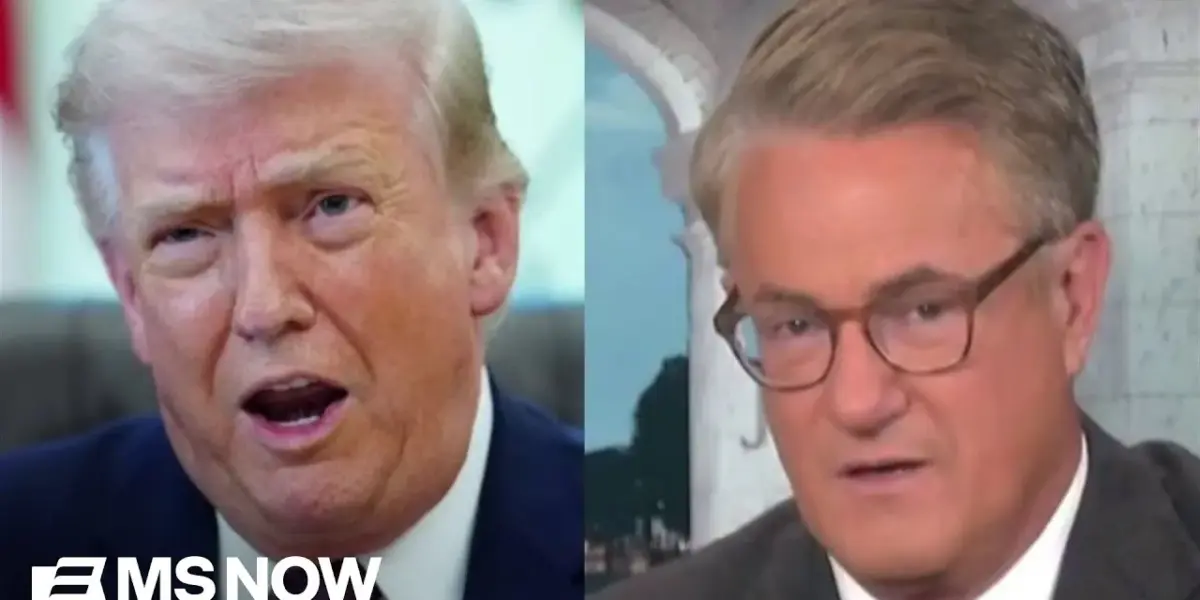
Trump Issues Sweeping Executive Order on Mail-In Voting
President Trump signed a sweeping executive order this morning that aims to change the rules for mail-in voting. The order requires the Department of Homeland Security to create a database of eligible U.S. citizens. The U.S. Postal Service would then use this list to send out absentee ballots. These ballots would be mailed in special envelopes with unique codes, sent only to voters approved through the DHS system. The order also directs the Attorney General to prioritize investigating and prosecuting election officials who send ballots to ineligible voters. Furthermore, it states the federal government will withhold funding from states that do not comply with these new directives.
Immediate Legal Challenges Emerge
The executive order is already facing immediate legal challenges from several states. These states argue that the order violates the Constitution. They claim election authority is given to states and Congress, not the president. President Trump has often criticized mail-in voting, suggesting it leads to cheating, despite a lack of widespread evidence. He recently cast his own mail-in ballot for a special election in Florida.
President Trump Defends the Order
Speaking about the new order, President Trump stated, “The cheating on mail and voting is legendary. It’s horrible what’s going on.” He believes the order will significantly help election integrity. He expressed confusion about how it could be challenged, suggesting that only “rogue judges” might attempt to do so. “I don’t know how it can be challenged,” he said, adding, “You’re going to open a lot of rogue judges, very bad, bad people.” He emphasized that the core issue is voter integrity.
Critics Denounce Order as ‘Wildly Unconstitutional’
Critics, however, argue that the order is clearly unconstitutional. They point to the Constitution’s assignment of election powers. “Everyone will challenge it and do so very easily because they’ll slide a copy of the Constitution across the table,” one commentator noted. The position is described as “preposterous,” with the assertion that the president knows it is unconstitutional. The argument is that presidents cannot change the Constitution with a simple executive order. “If presidents could do that, we would have had presidents changing the Constitution left and right,” a critic explained.
“He knows it’s unconstitutional… just like he knows that he can’t change the 14th Amendment with the stroke of a pen.”
Concerns Over Presidential Power and Election Integrity
Commentators expressed concern over the president’s actions. They questioned the president’s strategy of taking actions that are known to be unconstitutional. This is seen as a way to set up arguments for later, particularly after potential election losses. “He is setting this all up so after he loses, he can say, ‘Look, they rigged the election,'” one analysis suggested. There is a fear that the president is trying to undermine public trust in the electoral process.
Broader Implications for Federal vs. State Election Control
Even some conservatives have voiced concerns about the federal government’s increased involvement in state-level elections. They worry about the precedent it sets. “One day, guess what, there will be Democrats in control of the White House, the Senate, the House of Representatives and they will be the ones who say, ‘Okay, we want to run these elections our way,'” a commentator warned. The idea of federalizing elections and giving more power to the federal government over state elections is seen as a dangerous path. This is especially true given the erosion of the firewall between the Department of Justice and the White House.
Historical Precedents and Judicial Review
The current situation is being compared to past instances where presidents have attempted to overstep their constitutional authority through executive orders. Unlike previous actions by presidents like George W. Bush, Barack Obama, or Joe Biden, which were often related to specific policy implementations, this order is seen as an attempt to fundamentally rewrite election laws. When presidents have stepped over the line in the past, the Supreme Court has intervened. For example, the court blocked President Bush’s attempt to create military tribunals and limited President Obama’s DACA program. Similarly, the court ruled against President Biden’s student debt forgiveness plan. The argument is that the courts are meant to uphold the Constitution, and when a president oversteps, they will be told no.
The Future of Election Law and Judicial Independence
The president’s actions are seen as pushing the boundaries of the Constitution and basic law. Legal experts anticipate significant legal battles ahead. The situation highlights a potential clash between the president and the judiciary. If the president continues to challenge the courts and claim they are acting improperly, it could erode public trust in the judicial system. This could lead to a future where political figures use the judiciary as a scapegoat for election outcomes. The core principle is that the president must follow the established legal process for making significant changes, rather than relying on executive orders. The courts are expected to review the order based on existing law, and if it oversteps, it will likely be struck down. This process, while potentially leading to conflict, is seen as a vital part of maintaining a stable democracy.
Source: ‘SO PREPOSTEROUS’: Joe slams Trump’s ‘wildly unconstitutional’ attempt to change the 14th Amendment (YouTube)

Related Articles

Trump’s Florida Project: Hotel or Grift on Stolen Land?
Donald Trump's planned presidential library in Florida, featuring a golden statue, is facing accusations of being a "grift." The project, slated for land reportedly taken from a community college, is now being described by Trump himself as likely a luxury hotel, raising questions about its true purpose and the ethics of the land deal.

Bondi’s Loyalty Fails: Trump Fires AG Over Failed Grudges
Pam Bondi's departure from the Trump administration was reportedly driven by a failure to prosecute political enemies, not the Epstein files. Her exit highlights the transactional nature of loyalty in Trump's orbit and raises questions about DOJ priorities and future accountability.

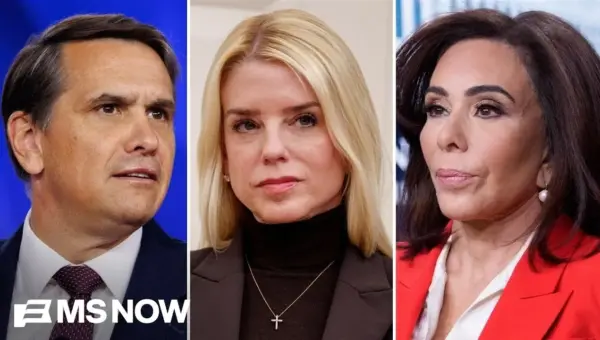
Trump’s Impossible Demands Reshape Justice Department
President Trump's demand for loyalty and action outside legal norms has reshaped the Justice Department. Recent departures, like Pam Bondi's, highlight the difficulty of fulfilling the President's "impossible tasks." The search for a new Attorney General continues amidst concerns about the DOJ's independence.