Trump’s Mail-In Vote Sparks Debate on Election Integrity
Donald Trump's decision to vote by mail in Florida, despite his public criticisms of the practice, has reignited the debate over election integrity. While Trump has often called mail-in voting corrupt, studies suggest widespread fraud is rare, leading critics to question his motives as a power play. This ongoing controversy highlights the tension between accessibility and security in American elections.

Trump Votes by Mail Amidst His Own Election Integrity Claims
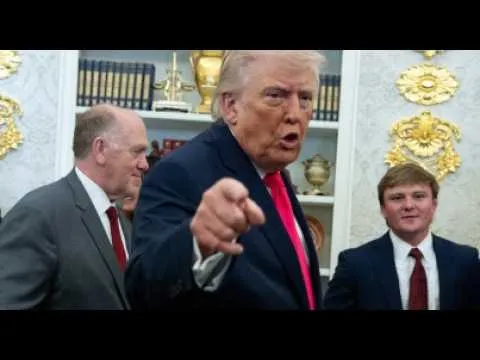
In a move that has drawn attention, former President Donald Trump cast his ballot by mail in a special election in Florida. This action occurred even as he has frequently voiced strong opposition to mail-in voting, often labeling it as a source of fraud and corruption. The contrast between his personal voting method and his public stance highlights a complex and often debated aspect of American elections.
Trump’s decision to vote by mail, confirmed by Palm Beach County records, occurred while he was actively trying to influence congressional Republicans regarding his “Save America Act.” He had urged them not to approve funding for TSA workers or the Department of Homeland Security unless it was tied to his legislation. Given his ability to travel by private plane, many observers expected him to vote in person, especially for the public relations aspect of demonstrating support for his party and agenda.
The Ongoing Battle Over Mail-In Voting
The controversy surrounding mail-in voting is not new for Donald Trump. He has consistently argued that “mail-in voting means mail-in cheating.” He has stated that honest elections are impossible with this method and has referred to it as “mail-in cheating.” This persistent criticism has become a central theme in his political discourse.
However, the reality of mail-in voting in the United States is more nuanced. A majority of states, including many Republican-led ones, already offer mail-in ballot options. Senate Majority Leader John Thun has acknowledged this, emphasizing the need to preserve mail-in options for legitimate reasons while focusing on eliminating practices he believes are prone to fraud, such as ballot harvesting, drop boxes, and unsolicited mailings.
Thun’s comments suggest a distinction between different types of mail-in voting. The implication is that some forms are acceptable and patriotic, while others, particularly those associated with Democratic-leaning areas, are seen as problematic. This framing attempts to reconcile the existence of mail-in voting with concerns about its integrity.
Historical Context and Legal Challenges
Donald Trump’s skepticism towards mail-in voting predates recent elections. He has previously called universal mail-in voting “catastrophic” and predicted it would make the U.S. a “laughingstock” internationally. While this prediction has not materialized in the way he described, the debate over election efficiency and confidence continues.
The issue has even reached the Supreme Court. The Republican National Committee challenged a Mississippi law allowing late-arriving mail-in ballots to be counted within five days of Election Day. The argument presented was that “election day means election day,” not a grace period, and that extending the deadline undermines the will of the people and democratic principles.
Beyond mail-in voting, concerns about election processes have also surfaced in other contexts. The handling of documents related to the Epstein case, where the Department of Justice missed a disclosure deadline, has raised questions about government processes and transparency, with a sarcastic remark noting that it’s fortunate these files weren’t handled by mail to avoid potential corruption claims.
Examining the Claims of Widespread Fraud
Critics argue that Trump’s focus on mail-in voting is a tactic to retain power, as he lacks a strong record on key issues like the economy or national security to campaign on. They contend that widespread voter fraud via mail-in ballots is not a significant problem.
Studies and reviews support this view. A lengthy review of voter rolls in Utah examined over 2 million registrations and found only one non-citizen registered to vote, who did not actually cast a ballot. Another analysis by Justin Levitt, a law professor, found only 31 instances of impersonation fraud out of one billion ballots cast between 2000 and 2014. These figures suggest that the risk of widespread impersonation fraud is extremely low.
These findings lead many to believe that Trump’s efforts are not genuinely about election integrity but are rather an attempt by a power-seeking individual to destabilize democratic processes. The argument is that any Republican who supports these efforts is complicit in undermining democracy.
Why This Matters
The debate over mail-in voting and election integrity touches upon fundamental aspects of democratic participation. When a prominent political figure consistently questions the legitimacy of voting methods, it can erode public trust in the electoral system. This erosion can have far-reaching consequences, potentially discouraging voter turnout and fueling political polarization.
The existence of mail-in voting options is crucial for accessibility, allowing citizens who may have mobility issues, live far from polling stations, or have other constraints to still participate in elections. Efforts to restrict or eliminate these options, particularly without clear evidence of widespread fraud, can disenfranchise voters.
Conversely, ensuring election security and public confidence is also vital. The challenge lies in finding a balance that upholds both accessibility and integrity. Open discussion, evidence-based policy-making, and a commitment to democratic norms are essential to maintaining a healthy electoral process.
Trends and Future Outlook
The trend of questioning election results and processes, particularly mail-in voting, is likely to continue in the current political climate. As elections become more closely contested, and as political rhetoric intensifies, debates over voting methods will remain a focal point.
Future outlooks suggest that legislative battles over voting laws will persist. We may see more states either expanding or restricting mail-in voting options based on their political leanings. Legal challenges to voting procedures are also expected to remain common, further testing the boundaries of election law.
Ultimately, the long-term impact on American democracy will depend on how these debates are resolved and whether public trust in elections can be restored and maintained. The emphasis will likely remain on whether politicians prioritize the integrity and accessibility of the vote over partisan advantage.
Source: HUMILIATION: Trump’s big SECRET gets exposed | Another Day (YouTube)

Related Articles
House Republicans Reject Senate Deal, Sparking Government Funding Clash
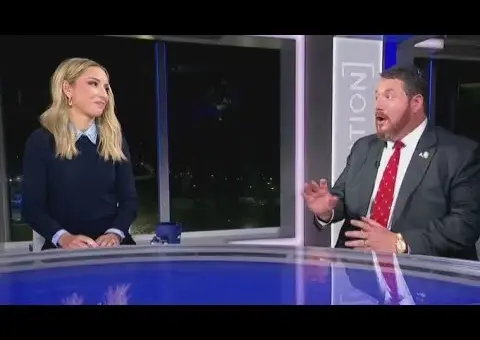
House Republicans have rejected a Senate bill to end the government shutdown, citing insufficient border security measures. Congressman Randy Fine called the Senate deal a "disgrace" and highlighted the ongoing fight for full government funding. President Trump's executive order to pay TSA agents offers temporary relief, but the core disagreement over border security continues to paralyze Washington.

Voter ID: Common Sense or Suppression?
A growing debate surrounds voter ID laws, with proponents calling them a common-sense measure against fraud and opponents fearing voter suppression. Many countries and U.S. states already require ID to vote.
Trump’s Name Everywhere: A ‘Stain’ on GOP Legacy?
Former President Donald Trump's efforts to brand national symbols, including a proposed signature on dollar bills, spark debate. Critics view this as an authoritarian attempt to embed his legacy, potentially staining the Republican Party's history and contrasting with democratic ideals of public ownership.