Trump’s Iran War Woes: A White House Meltdown Unfolds
A White House press conference reportedly showed President Trump struggling amidst a lack of international support for his Iran war policy. This isolation raises questions about U.S. diplomatic influence and regional stability.

Trump’s Iran War Woes: A White House Meltdown Unfolds
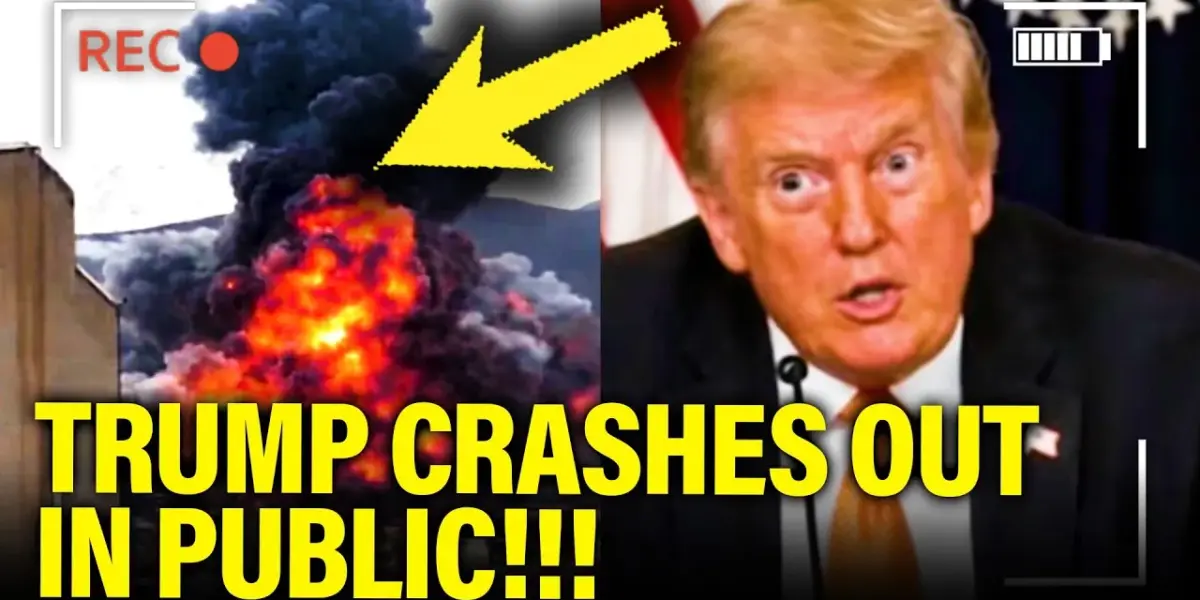
A recent White House press conference, as reported by MeidasTouch host Ben Meiselas, appears to have captured a moment of significant public strain for President Donald Trump. The core of the issue, according to the report, stems from the escalating conflict with Iran and a perceived lack of international support for the U.S. administration’s war efforts. The narrative suggests that Trump ‘crashed out’ during the presser, a phrase implying a loss of composure or control, directly linked to the perceived failure of his Iran policy.
The International Landscape of Conflict
The central claim is that no other countries are willing to join the United States in what is being characterized as a ‘disastrous war against Iran.’ This assertion, if accurate, points to a significant diplomatic isolation surrounding the U.S. approach to Iran. In international relations, coalition-building is often a key indicator of the perceived legitimacy and strategic soundness of a military action. The absence of allies can suggest a lack of shared threat perception, disagreement on strategy, or a broader skepticism about the objectives themselves.
Meiselas’s report frames the situation as ‘continuing to get worse by the day,’ a dire assessment that, if true, would undoubtedly place immense pressure on any leader. The implications of such a scenario are multifaceted. Diplomatically, it could embolden adversaries and undermine the credibility of the United States on the global stage. Militarily, a unilateral approach can lead to increased risks, higher costs, and a prolonged, potentially unwinnable conflict.
Historical Context: The Perils of Unilateralism
This situation echoes historical precedents where nations have pursued military objectives with limited international backing. The lead-up to the 2003 invasion of Iraq serves as a prominent example, where the U.S. faced significant international opposition and ultimately led a ‘coalition of the willing’ rather than a broad, unified international front. The subsequent prolonged insurgency and the immense human and financial costs of that conflict offer a stark reminder of the potential pitfalls of unilateral military action, particularly when international consensus is absent.
Throughout history, successful military interventions have often been characterized by strong international alliances and clear, widely accepted objectives. Conversely, conflicts pursued with minimal international support have frequently been mired in difficulty, facing sustained resistance and long-term instability. The reporting on Trump’s press conference suggests a potential parallel, with the U.S. finding itself increasingly isolated in its stance on Iran.
Analyzing the ‘Crash Out’ Narrative
The description of Trump ‘crashing out’ at the press conference is a potent, albeit subjective, observation. It implies a breakdown in the carefully constructed image of presidential authority. Such moments, if they occur, can be interpreted in various ways: as a sign of genuine frustration, a tactical error in managing public perception, or an indication of underlying strategic weaknesses. In the context of a high-stakes international crisis, a leader appearing flustered or defensive can have significant repercussions for domestic and international confidence.
Press conferences are often carefully choreographed events designed to project strength and control. When a leader deviates from this script, especially in a way that appears uncontrolled, it can create openings for critics and sow doubt among allies and adversaries alike. The specific context of the Iran war, a region with a long history of complex geopolitical dynamics, makes such moments particularly sensitive.
Why This Matters
The events described have significant implications for U.S. foreign policy, regional stability in the Middle East, and President Trump’s domestic political standing.
- Foreign Policy Implications: A lack of international consensus on confronting Iran could signal a weakening of U.S. diplomatic influence. It raises questions about the long-term viability of the administration’s strategy and its ability to achieve its stated goals without broader international cooperation.
- Regional Stability: Escalating tensions with Iran, especially without a strong coalition, can increase the risk of miscalculation and unintended escalation, potentially destabilizing an already volatile region.
- Domestic Politics: For the Trump administration, a perceived foreign policy failure, particularly one involving military engagement, can become a significant political liability, especially in the lead-up to elections. The narrative of a ‘disastrous war’ could resonate with voters concerned about foreign entanglements and the cost of conflict.
Trends and Future Outlook
The situation described highlights a broader trend in contemporary international relations: the increasing difficulty of unilateral action in an interconnected world. While a powerful nation can certainly act alone, the effectiveness and sustainability of such actions are often diminished without international legitimacy and support. The rise of multipolarity and the diffusion of power mean that fewer nations are willing to simply follow the lead of a single superpower without robust justification and shared interests.
Looking ahead, the U.S. approach to Iran will likely continue to be a focal point of international attention. Whether the administration can pivot towards a more multilateral strategy, de-escalate tensions through diplomacy, or continue on a path that risks further isolation remains to be seen. The outcome will have profound consequences not only for the U.S. and Iran but for the entire Middle East and the global order.
The report from MeidasTouch, while presenting a specific interpretation, points to a critical juncture. The perceived ‘meltdown’ at the press conference, if reflective of broader strategic challenges, underscores the complex and often unpredictable nature of international diplomacy and warfare, particularly when attempting to navigate a path without broad international consensus.
Source: OMG! Trump CRASHES OUT at WH PRESSER as WAR BACKFIRES!! (YouTube)

Related Articles

Protesters Challenge Presidential Power, Ignite Debate
Millions are protesting nationwide under the "No Kings" banner, challenging presidential authority and policies they deem unconstitutional. Organizers emphasize First Amendment rights while debating foreign policy, immigration, and the balance of power.


White House Launches “OnlyFarms” Website for Farmer Support
The White House has launched "OnlyFarms," a new website at onlyfarmms.gov, to highlight benefits and support for American farmers facing rising costs. The initiative aims to showcase how administration policies are intended to ease financial burdens and lower prices for both producers and consumers.
Polls Spell Doom: Republicans Face Voter Backlash
New polling data reveals a sharp decline in public confidence regarding the economic impact of Republican policies, particularly under Donald Trump. A significant majority now feel financially worse off, a trend that is especially pronounced among independent voters. This economic discontent poses a major challenge for the Republican party heading into future elections.