Trump’s Iran War: Unraveling Narratives, Strategic Blunders
A former US Marine and national security expert dissects the Trump administration's handling of the Iran conflict, revealing strategic communication failures, questionable decision-making, and a narrative that is beginning to unravel amid escalating costs and geopolitical complexities.

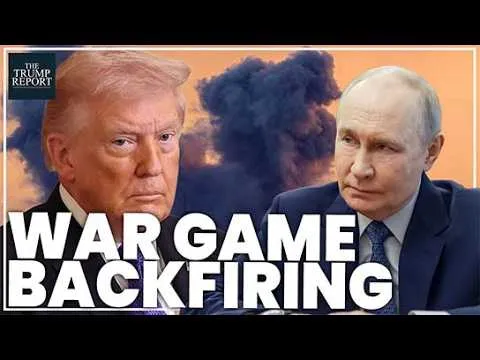
Trump’s Iran War Narrative Begins to Crumble
The escalating conflict with Iran, now in its second week, is revealing significant cracks in the Trump administration’s narrative and strategic approach. What began with bold pronouncements of “unconditional surrender” has devolved into a complex, costly engagement fraught with communication breakdowns, questionable decision-making, and a growing list of strategic vulnerabilities. A former US Marine and national security expert, Hal Kemper, offers a critical perspective on the unfolding situation, highlighting a concerning lack of cohesive strategy and a reliance on rhetoric over substance.
Conflicting Rhetoric and Shifting Objectives
The initial declaration of “unconditional surrender” from President Trump echoed a bygone era, immediately raising eyebrows. This was further complicated by subsequent statements from administration officials, such as Carolyn Levit, who offered a nebulous definition of the term, suggesting it would be determined solely by the President’s whim. Kemper notes the unprecedented nature of such a definition, where the surrendering party has no input on the terms of their surrender. This semantic ambiguity signals a potential lack of clear objectives or a strategic attempt to maintain flexibility, which, in practice, has led to perceptions of a “wishy-washy” and unfocused policy.
Russia and China: A Geopolitical Chess Game
The international response to Iran’s actions has been a complex dance of alliances and rivalries. While the UN Security Council condemned Iran’s recent attacks, the expected opposition from Russia and China materialized, with both nations abstaining from a resolution. Russia’s claim of not providing intelligence to Iran for tracking US forces, a claim the US administration stated it was taking at face value, was met with skepticism by Kemper. He points to the long-standing close relationship between Russia and Iran, suggesting that the US should be more assertive in condemning such intelligence sharing. The abstention of Russia and China, Kemper posits, was not due to a lack of support for Iran, but rather a calculated move to avoid alienating a broader international coalition and to protect their own economic interests. China’s significant oil imports from Iran and Venezuela, and Russia’s recently lifted oil sanctions, made a direct confrontation in the UN Security Council economically and politically unpalatable.
The Gulf Cooperation Council’s Swift Pivot
In contrast to the international division, the Gulf Cooperation Council (GCC) countries exhibited a remarkable and rapid shift in their stance following the attacks. Instead of succumbing to Iran’s perceived intimidation tactics, the GCC nations reportedly strengthened their resolve, identifying Iran as a common enemy. This unified front, amplified by the UN vote, underscores the growing regional consensus against Iran’s aggressive actions. This unity is partly attributed to the significant economic power and influence wielded by these Gulf states.
Strategic Communications Deficit and Leadership Vacuum
A critical deficiency highlighted by Kemper is the apparent lack of strategic communication within the Trump administration. The absence of a permanent National Security Advisor since May of the previous year has contributed to a perceived communication vacuum, leading to conflicting messages and an unclear articulation of war aims. Kemper, who trains foreign officials in strategic communications, emphasizes the fundamental principle of synchronizing messaging. The current approach, he suggests, appears to be a trial-and-error method of releasing information to gauge public reaction, a tactic that undermines credibility and fosters confusion.
The China Factor: A Hidden Strategic Driver?
Kemper theorizes that a significant, though perhaps unstated, driver of US policy towards Iran is its impact on China. With China heavily reliant on oil imports from both Venezuela and Iran, disrupting these supply lines could place considerable economic pressure on Beijing. This perspective frames the current geopolitical landscape through the lens of a near-peer competition with China, reminiscent of the Cold War dynamics with the Soviet Union. While acknowledging this as a plausible underlying strategy, Kemper doubts its public resonance with American voters.
The Peril of Unqualified Advice
The administration’s reliance on a narrow circle of advisors, potentially lacking sufficient military and intelligence experience, is another area of concern. Kemper, who previously served as Director of Intelligence for a command under then-General Jim Mattis, stresses the importance of having dissenting voices – “naysayers” – within the inner circle. Such individuals provide crucial counterpoints and prevent presidents from making potentially catastrophic errors. The current administration, Kemper suggests, may be less amenable to such counsel, particularly in a potential second term context, leading to decisions based on “feelings” rather than rigorous analysis, as exemplified by the justification for the initial strike on Iran.
Naval Escorts and Historical Precedents
The attacks on oil tankers in the Strait of Hormuz bring to the forefront the critical issue of freedom of navigation. Kemper draws a parallel to the 1980s, when the US implemented a “reflagging” program, placing reflagged tankers under American flags to provide a legal basis for naval escorts through the Strait. He suggests that a similar approach might be necessary again, potentially including escorting ships flagged by compact states like the Marshall Islands, with whom the US has security treaty obligations.
The Mine Warfare Challenge and Procurement Woes
The deployment of sea mines by Iran presents a significant logistical and strategic challenge. Kemper, drawing on his experience as a military planner, confirms that the threat of mine warfare was certainly considered during planning. However, the US faces a deficit in mine-clearing capabilities, a consequence of post-Cold War drawdowns and a lack of investment in specialized assets. Furthermore, the political challenges of soliciting mine-clearing assistance from NATO allies, who are not directly involved in the conflict, are considerable. This highlights a broader issue of military procurement, where essential but less glamorous capabilities like mine sweepers are often deprioritized in favor of more high-profile assets.
Assumed Risk and Redefined Victory
The administration appears to have undertaken the conflict with an “assumed risk” regarding Iran’s mine-laying capabilities, hoping that swift action and regime degradation would mitigate the threat. The current cost of the war, estimated at $800 million to $1 billion per day, is significantly higher than initial phases of the Iraq War, reflecting the different nature of the conflict and the vastness of Iran. This high expenditure, coupled with the potential for global oil disruption, raises questions about the long-term sustainability of the campaign and the administration’s endgame. Kemper anticipates a redefinition of “victory” if the stated objectives remain elusive, focusing perhaps on Iran’s diminished capacity to project power through proxies or launch missiles and drones, rather than a complete regime collapse or unconditional surrender.
Why This Matters
The analysis of the Iran conflict reveals a worrying pattern of strategic ambiguity, communication failures, and potentially flawed decision-making processes within the Trump administration. The reliance on rhetoric, the underestimation of geopolitical complexities, and the apparent lack of seasoned counsel raise serious questions about the efficacy and sustainability of US foreign policy. The economic ramifications, particularly concerning global oil prices, and the potential for a protracted and costly engagement, underscore the critical need for clear objectives, robust strategic planning, and transparent communication. The implications extend beyond the immediate conflict, impacting regional stability, global economic security, and the US’s standing on the international stage. The current trajectory suggests a potential for a costly conflict with unclear outcomes, driven by a narrative that may be unraveling under the weight of reality.
The Future Outlook
The future of the Iran conflict hinges on several factors: the administration’s ability to articulate clear and achievable objectives, the effectiveness of its military strategy in the face of Iranian tactics like mine-laying, and its capacity to manage the escalating economic fallout. The potential for a redefined victory, focusing on degrading Iran’s capabilities rather than achieving total capitulation, seems likely. However, the broader geopolitical implications, particularly concerning China’s role and the stability of global energy markets, will continue to shape the strategic calculus. The administration’s approach to international alliances and its ability to leverage collective security mechanisms will also be crucial in navigating this complex and volatile situation.
Source: Trump’s Iran war narrative starts to unravel | Fmr US Marine (YouTube)

Related Articles


Iran Targets US With Cyberattacks, Escalating Digital Warfare
Iran is increasingly using cyberattacks to challenge the U.S., as seen in a recent hack of the FBI director's account. Experts say this is a strategic shift due to Iran's limitations in conventional warfare. The U.S. needs to strengthen its digital defenses, focusing on encryption and cloud computing, rather than solely relying on traditional security measures.


Iran Hacks FBI Chief, Exposing U.S. Cyber Vulnerabilities
A recent hack of FBI Director Kash Patel's personal email by an Iran-linked group highlights Iran's growing cyber threat to the U.S. Experts explain how simple security oversights are exploited, emphasizing the need for basic defenses like two-factor authentication to protect against propaganda and potential infrastructure attacks.
Ukraine Strikes Russian Oil Refinery, Eyes Iran Threat
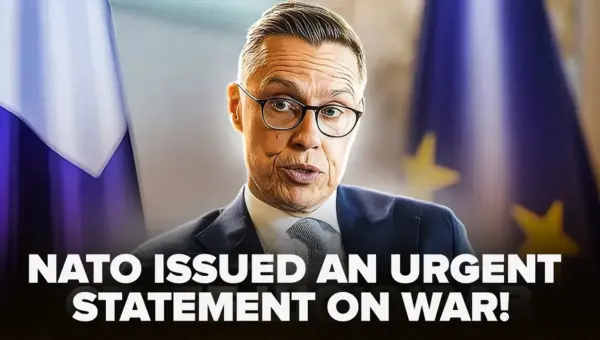
Ukrainian forces struck a key Russian oil refinery, disrupting Moscow's war capabilities. Meanwhile, Finland's president urged continued U.S. support for Ukraine, as Kyiv shares its air defense expertise globally amid growing geopolitical complexities involving Iran and potential sanctions against Hungary.