Trump’s Iran War: Public Outcry Meets GOP Defense
A new poll shows low public support for U.S. military action in Iran, fueling a debate over whether these are "strategic strikes" or an "unlawful war." Congressional efforts to assert oversight face strong Republican opposition, exposing deep partisan divides on presidential war powers and the justification for conflict.

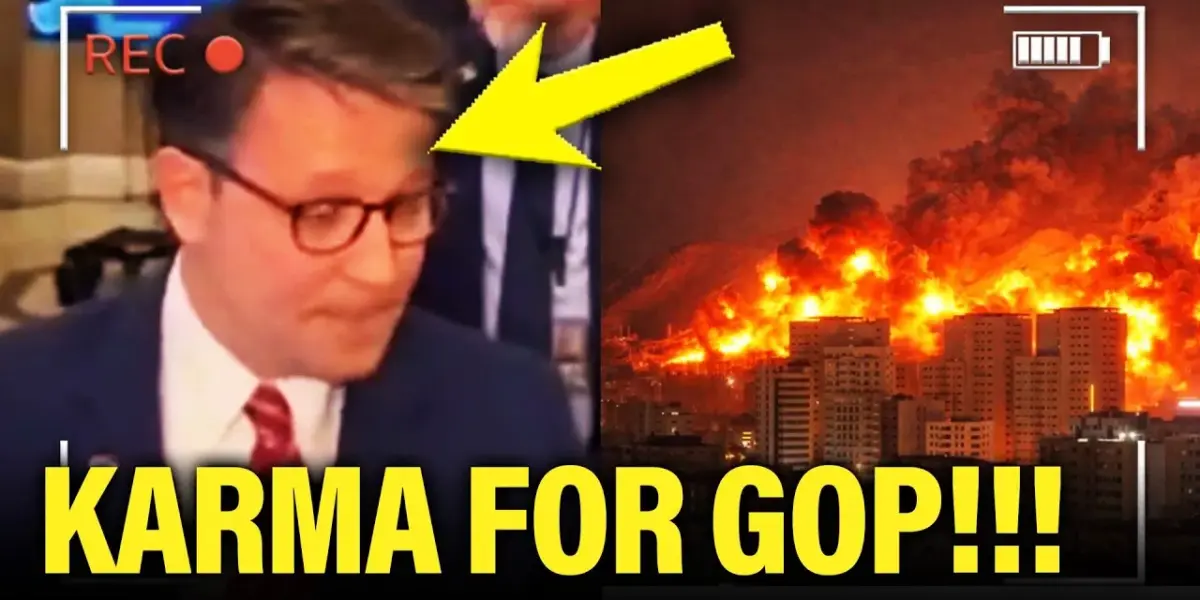
Trump’s Iran War: Public Outcry Meets GOP Defense
A recent Ipsos Reuters poll revealing that a mere 25-27% of Americans support the military action against Iran has sent shockwaves through Republican leadership, suggesting a significant disconnect between the administration’s actions and public sentiment. This burgeoning controversy is amplified by trending Google searches that highlight public concern: “war authorization,” “Donald Trump’s approval,” and questions about congressional consent, all alongside searches related to the Epstein case, indicating a public grappling with multiple high-profile issues.
The Shifting Narrative on “War”
In the face of this public scrutiny, the Trump administration and its allies have engaged in a linguistic battle, attempting to reframe the military engagement. Statements from administration figures and sympathetic Republican lawmakers insist that what is occurring is not a “war” but rather “strategic strikes.” This distinction is a point of contention, especially when juxtaposed with Donald Trump’s own past statements, where he has, at times, referred to the situation as a “war.” Critics argue this is a deliberate attempt to “gaslight” the public and circumvent the need for formal congressional authorization, which is typically required for declarations of war.
This semantic debate is further complicated by the fact that “strategic strikes” have resulted in casualties. The transcript highlights the deaths and injuries of American service members, a stark reality that clashes with the administration’s narrative of limited, controlled actions. The Pentagon’s restriction of information flow to the press, as noted by observers like Brian Stelter, only adds to the opacity and public’s desire for clarity.
Congressional Pushback and Partisan Divide
A significant portion of the political response to the Iran action has been a push for congressional oversight. Democratic members of Congress, alongside a few Republicans like Thomas Massie, are working to force a vote on a War Powers Resolution. Their stated aim is to prohibit military action against Iran without explicit congressional approval, deeming the current operations “unlawful.” This effort is being met with fierce resistance from “MAGA Republicans,” including House Speaker Mike Johnson, who are reportedly working to block any attempts to restrain President Trump’s actions.
The public discourse reveals a stark partisan divide. While Democrats and some Republicans emphasize the need for congressional approval and transparency, many within the GOP are aligning behind the administration’s framing and actions. For instance, Anna Paulina Luna asserts that “strategic strikes are not wars” and that “boots on the ground” are not intended, even as service members are wounded. Similarly, Markwayne Mullin insists, “We’re not at war. This is not a war,” while acknowledging the president’s warning of potential troop deaths. This stance is often justified by citing Iran’s long history of “terror” and attacks against the United States, framing the action as a necessary response to decades of aggression.
“Freedom is Never Free”: The Justification for Sacrifice
In response to the loss of American lives, some Republican figures have offered justifications that have drawn criticism. Statements like “Freedom is never free,” attributed to former Ambassador Mike Waltz, and others suggesting that dying in conflict is a “glorious way to die” or the “highest form of patriotism,” as voiced by figures like Bill Ament and Lindsey Graham, have been interpreted by critics as dismissive of the human cost and an attempt to valorize sacrifice to an extreme degree.
Donald Trump himself has reportedly cited personal paranoia – the belief that the Ayatollah intended to kill him – as a primary motivation for the strikes, stating, “I killed him first.” He has also reportedly downplayed the potential for high casualties, with the Pentagon’s grim predictions of “a lot of casualties” and “a lot of Americans are going to die” being met with a resigned “it is what it is” from Trump. This fatalistic acceptance of potential loss is a recurring theme among some supporters.
Historical Context and the “No More Wars” Promise
The current situation invokes historical debates surrounding presidential war powers and congressional authority. The War Powers Resolution of 1973 was enacted to limit the president’s ability to commit U.S. armed forces abroad without congressional approval. Critics argue that the current administration’s actions potentially violate the spirit, if not the letter, of this resolution.
Furthermore, the conflict arises in the context of Donald Trump’s “America First” platform, which often included a promise of “no more wars.” Many in the MAGA base feel that the current military engagement contradicts this core tenet of his political identity. Tucker Carlson, for example, has been quoted as calling the decision to strike Iran “absolutely disgusting and evil.” However, allies like Tom Cotton contend that the action is consistent with Trump’s resolve to confront state sponsors of terrorism and prevent nuclear proliferation, arguing that past presidents lacked the “backbone” to take such decisive action.
Intelligence, Imminence, and Intent
A key point of contention revolves around the intelligence justifying the strikes. While the administration has cited Iran’s long-standing “campaign of terror” and its pursuit of nuclear capabilities as justification, some intelligence assessments, including those briefed to Congress by Trump’s own regime, reportedly indicated that Iran did not pose an *imminent* threat of direct strikes against the U.S. and would only retaliate if attacked by Israel. This discrepancy fuels arguments that the war is one “of choice” rather than necessity.
The debate also touches on the concept of “intent” versus action. Some justifications for the strikes, as articulated by figures like Mike Turner, hinge on Iran’s *intent* to pursue nuclear enrichment, even if they had not yet achieved it. This raises the specter of preemptive action based on perceived future threats, a doctrine that has historically been controversial.
Future Outlook and Shifting Objectives
The stated objectives of the operation appear to be in flux. Initially framed as a response to specific provocations, some now suggest the goal is to “change the threat, not the regime,” aiming to strip Iran of capabilities like ballistic missiles and its status as a state sponsor of terror, regardless of who governs the country. Lindsey Graham, who previously advocated for regime change, now states the objective is to prevent Iran from harming the U.S. or its allies, while asserting that the U.S. will not be responsible for rebuilding Iran.
The specter of a protracted conflict and escalating casualties looms large. The potential depletion of U.S. munition stocks and the strategic implications for rivals like Russia and China are also concerns raised by lawmakers like Seth Moulton. The administration’s communication strategy, relying on social media posts and private briefings, has been criticized as inadequate for a presidential decision to commit troops to combat. The lack of a clear, publicly articulated plan and justification leaves many Americans searching for answers, while the political landscape remains deeply divided over the necessity, legality, and wisdom of this military intervention.
Why This Matters
The ongoing military action in Iran, framed by the administration as “strategic strikes” but viewed by critics as an “unlawful war,” represents a critical moment in the balance of power between the executive and legislative branches of the U.S. government. The public’s confusion and concern, reflected in search trends and polling data, highlight a desire for transparency and accountability. The partisan divide over the definition of “war,” the justification for military engagement, and the role of Congress underscores the deep ideological fissures within American politics. The administration’s narrative control efforts, coupled with the restriction of information, raise fundamental questions about democratic governance and the public’s right to know when their nation is engaging in potentially costly and deadly conflicts. The human cost, evidenced by the deaths and injuries of service members, makes these debates not just political but profoundly consequential for American families and the nation’s standing in the world.
Source: GOP gets INSTANT KARMA over Trump’s DISASTER WAR!! (YouTube)

Related Articles
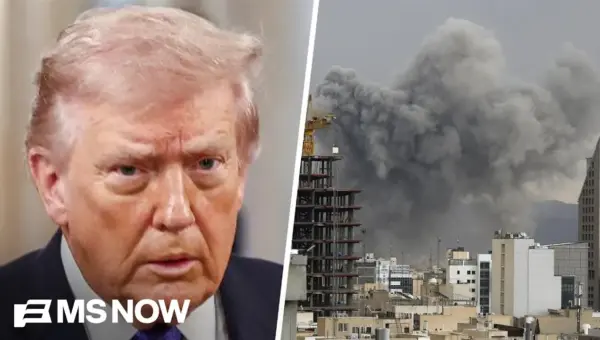
Retired General Slams Trump’s Iran Policy as ‘Political Mess’
Retired General Barry McCaffrey has condemned President Trump's approach to Iran as a "political mess," citing a lack of congressional authorization and diplomatic engagement. While commending the effectiveness of recent military strikes, McCaffrey emphasized the critical need for de-escalation and a return to nuclear talks.
Epstein Files, Iran War: Trump’s Dark Past Fuels Current Crises
As the Iran conflict escalates, allegations of Donald Trump's involvement in the Epstein scandal resurface, fueling claims of a deliberate cover-up. The intertwined narratives raise critical questions about transparency, accountability, and the integrity of political processes.


Drapes Over Diplomacy: Trump’s Priorities Under Fire
Donald Trump's focus on drapes and building aesthetics over the human cost of military action against Iran has drawn sharp criticism. The lack of a consistent narrative from his administration regarding foreign policy raises concerns about leadership priorities and accountability.