Trump’s Iran War Panic Fuels Escalation Fears
President Trump's aggressive rhetoric towards Iran signals desperation and a potential for massive escalation. Experts fear a breakdown in military-civilian communication and warn of a looming humanitarian catastrophe. A peaceful resolution seems distant as strategic options narrow.

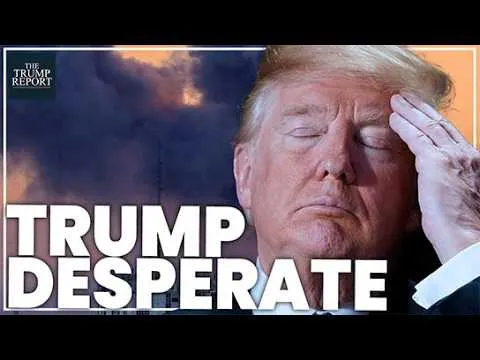
Trump’s Iran War Panic Fuels Escalation Fears
The world watched with alarm as President Trump’s social media posts on Easter Sunday revealed a leader seemingly cornered and desperate. His message to Iran was stark: “Tuesday will be power plant day and bridge day all wrapped up in one in Iran. Open the effing straight. Uh you crazy bastards or you’ll be living in hell.” This aggressive, uncharacteristic language, especially on a religious holiday, sparked widespread concern. Many, including commentators and even a Republican delegate, questioned his mental state, with one stating, “He has absolutely lost me. In fact, I’m eyeing the 25th Amendment for him because he’s lost his damn mind.” This unprecedented public display from a world leader signals a deep sense of panic and a potential push toward massive escalation.
A Leader Backed into a Corner
General Sir Richard Sheriff, former Deputy Supreme Allied Commander Europe for NATO, described Trump’s posts not as a show of strength, but as a sign of desperation. “This guy is really worried. He realizes that it’s not going his way,” Sheriff explained. He compared the president’s threats to the wolf in “The Three Little Pigs,” huffing and puffing because his initial strategy wasn’t working. The Iranian regime, despite its own oppressive nature, was holding its ground, frustrating Trump’s plans.
This public display of rattled nerves, Sheriff noted, is a significant advantage for Iran. In an information war, Iran can frame itself as the underdog fighting a powerful aggressor. Their media operations are sophisticated, effectively countering Trump’s narrative and further enraging him. The constant resetting of deadlines by Trump, pushing negotiations six times since March, only highlights his lack of progress and growing frustration.
The Grim Choices: Negotiation or Destruction
With Iran refusing to be intimidated by threats, the situation presents few easy options for the U.S. Sheriff pointed out that Iran has offered its terms for negotiation, understanding that holding the Strait of Hormuz gives them leverage. They know that as long as the strait is blocked, Trump loses. Their stance is simple: what do they have left to lose when their navy is destroyed and their infrastructure is under attack?
The U.S. faces a difficult choice. Negotiation, while offering a path to reopening the Strait of Hormuz, would likely be seen as a humiliation for Trump, as he hasn’t achieved his initial objectives despite significant military action. The alternative is escalation. Trump has threatened to destroy civilian infrastructure like bridges and power plants. This path, however, risks wider conflict, potentially drawing in other groups like the Houthis to attack shipping in the Bab el-Mandeb strait. Sheriff even suggested a land invasion could be a possibility, potentially involving complex operations like securing Kharg Island.
The Strait of Hormuz Dilemma
Opening the Strait of Hormuz permanently is a monumental challenge. Even a large-scale military operation involving tens of thousands of troops might not secure the strait long-term. Iran, even weakened, can threaten shipping by launching attacks from hundreds of miles inland. Any perceived threat, however small, could deter shipping companies from transiting the vital waterway. This creates a strategic bind for the U.S., where military might hasn’t translated into achieving its primary goal.
Reports of Strikes on Kharg Island
Amidst these tensions, reports emerged of multiple strikes and large explosions hitting Kharg Island, an Iranian military base. While unconfirmed by independent sources, these events occurred hours before Trump’s threatened deadline. Sheriff noted it was too early to confirm the source or intent but acknowledged that such actions could be the beginning of a broader plan. He reiterated that if a ground invasion was an option, troops should have been in place before the war began, suggesting a reactive rather than proactive strategy.
Crossing the Line: War Crimes and Military Ethics
Trump’s threats to destroy civilian infrastructure raise serious ethical and legal concerns. Targeting power plants and bridges, essential for daily life, could lead to civilian casualties and violate international humanitarian law, potentially breaching the Geneva Conventions. Experts warn that U.S. troops could face a moral and legal dilemma, possibly refusing unlawful orders.
Sheriff expressed deep concern over the potential breakdown between civilian leadership and the military. In a democratic state, military leaders are expected to provide candid advice, outlining the risks and implications of any proposed action. The fact that Trump has allegedly replaced or sidelined senior military figures, such as the head of the army and a senior chaplain, suggests a willingness to ignore such advice and surround himself with those who will comply. He voiced worries that warnings from Central Command might have been dismissed by top Pentagon officials and the President himself, bypassing normal checks and balances.
A Plan in Progress?
Trump’s public statements about having a plan he won’t reveal have fueled doubts. While it’s normal for military plans to remain secret, his phrasing has raised questions about whether a coherent strategy truly exists. Sheriff believes a plan is likely in place, possibly unfolding in real-time, but its development seems reactive. The movement of troops after the war started suggests an improvisation rather than a pre-war contingency. He speculated that the U.S. might be capable of causing immense damage to Iran, potentially leading to a humanitarian catastrophe, but this would likely provoke massive retaliation, possibly targeting desalination plants in Gulf States and rendering them uninhabitable.
Israel’s Role and Allied Disconnect
Even if Trump backs down, Israel has issued warnings to Iranians to avoid public transport, suggesting independent military action. However, Sheriff believes Israel would be unlikely to act alone, relying heavily on U.S. support and coordination. Trump’s continued criticism of NATO and allies like South Korea, Australia, and Japan further strains international relationships. Allies are unlikely to align with a leader whose rhetoric is increasingly alienating.
A Path to Peace?
A Pakistani proposal for an immediate ceasefire followed by negotiations offers a potential middle ground. However, it requires the U.S. to accept that force will not achieve its aims. Until Trump and his administration realize that Iran will not open the Strait of Hormuz willingly without talks, and that destruction only leads to further catastrophe, a peaceful resolution remains distant. The current path leads towards deeper conflict and widespread humanitarian suffering.
“This guy is really worried. He realizes that it’s not going his way. This is the sound of a man who is desperate and threatening.” – General Sir Richard Sheriff
Source: Trump ‘losing his mind’ as Iran war panic spirals out of control (YouTube)

Related Articles

Ukraine Strikes Russian Oil Ports, Crippling Exports
Ukraine's targeted strikes on Russian oil export terminals are crippling its war machine and reducing vital revenue. Retired General David Petraeus highlights Ukraine's advanced drone technology and its growing role as a global defense innovator.

Trump Threatens Iran’s Infrastructure in Hormuz Standoff
President Trump has threatened to cripple Iran's infrastructure, including bridges and its power grid, if it continues to harass shipping in the Strait of Hormuz. Former Congressman Bob McEwen explained this strategy aims to force Iran to negotiate by severely damaging its operational capacity. The discussion also addressed the potential for such actions to be considered war crimes, with McEwen distinguishing between infrastructure attacks and the targeting of civilians.
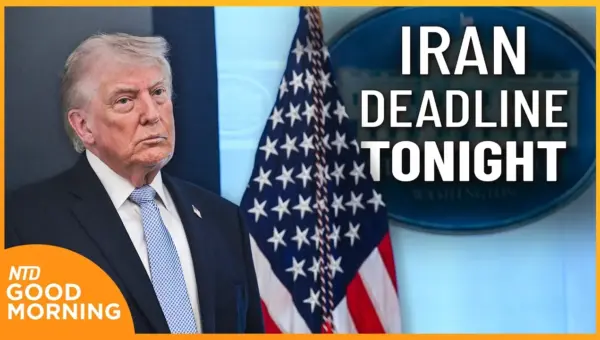
Trump’s Iran Threat Looms as Artemis II Reaches New Space Heights
Former President Trump issued a stern warning to Iran regarding a potential deal, while the Artemis II mission achieved a new distance record in space. The Education Department also announced it is rescinding Title IX agreements related to gender identity policies.