Trump’s Iran War Narrative: A Cascade of Contradictions
A live reaction to a meeting between Donald Trump and Olaf Scholz reveals a pattern of shifting justifications and boastful claims surrounding the Iran conflict. The analysis contrasts Trump's rhetoric with Scholz's pragmatic outlook, questioning the coherence of U.S. foreign policy.

Trump’s Iran War Narrative: A Cascade of Contradictions
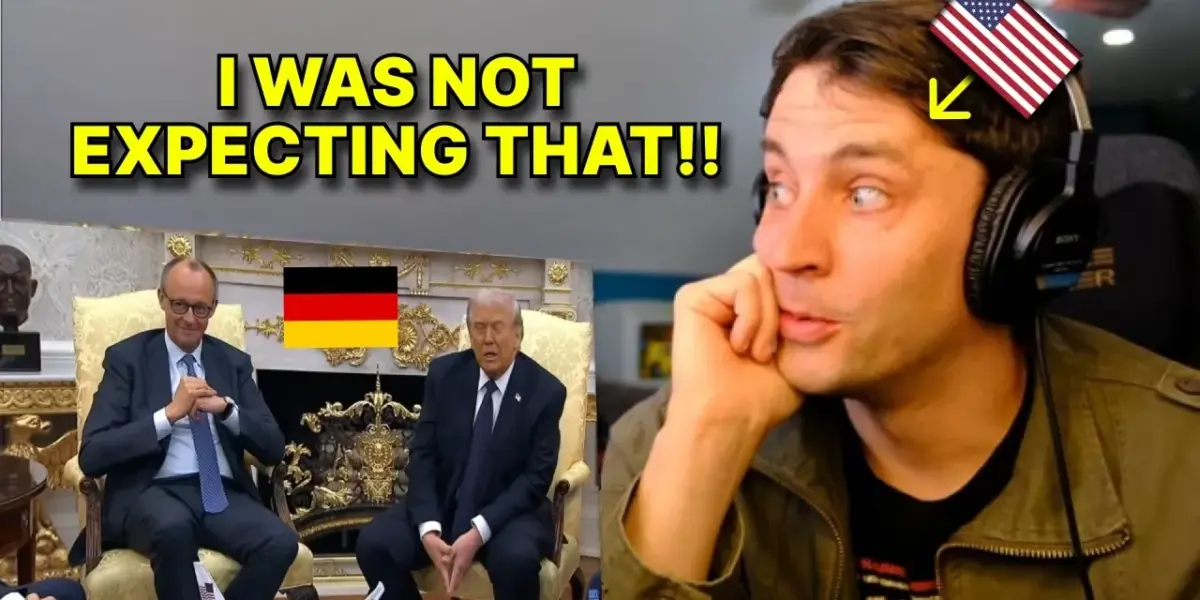
The recent meeting between former President Donald Trump and German Chancellor Olaf Scholz offered a stark glimpse into the former president’s approach to foreign policy and conflict. While the official agenda likely included discussions on global security and bilateral relations, the real drama, as captured by a live reaction video, unfolded in Trump’s characteristic pronouncements, particularly concerning the escalating tensions with Iran. The encounter, framed by the backdrop of ongoing conflict, revealed a pattern of shifting justifications, boastful claims, and a striking disregard for factual consistency, leaving observers to question the coherence and reliability of his foreign policy pronouncements.
A Tale of Shifting Justifications
From the outset, the narrative surrounding the strikes against Iran appeared to be in flux. Trump’s initial remarks, as observed in the reaction video, painted a picture of decisive action against a weakened foe: “They have no navy, it’s been knocked out. They have no air force that’s been knocked out. They have no air detection that’s been knocked out. Their radar has been knocked out.” This aggressive framing, however, was quickly juxtaposed with a seemingly contradictory explanation for the impetus behind the strikes. When pressed by a reporter on whether Israel had forced Trump’s hand, the former president offered a convoluted rationale.
“No, I might have forced their hand. You see, we were having negotiations with these lunatics and it was my opinion that they were going to attack first. They were going to attack. If we didn’t do it, they were going it.”
This claim, that Iran was on the verge of attacking and that the U.S. strikes were preemptive, directly contradicted earlier statements and the widely reported narrative that Israel was the primary driver for military action. As the video’s commentator pointed out:
“Now, now he’s saying Iran was going to attack us. That has not been what he was saying the past few days.”
The commentator’s incredulity was palpable, highlighting the apparent lack of a consistent or pre-established narrative for a significant military action. This inconsistency raises serious questions about the decision-making process and the clarity of strategic objectives. The assertion that he “might have forced Israel’s hand” was particularly baffling to the observer, who noted Israel’s long-standing advocacy for confronting Iran:
“How did you force Israel’s hand? Israel has been the number one proponent of going to war against Iran. Everybody knows that. That’s not a secret. So, how can you say you forced their hand? They’ve been chomping at the bit to do it. I just I’m I’m shocked at what I’m hearing.”
The Specter of Civilian Harm and Historical Parallels
The discussion also touched upon the sensitive issue of civilian casualties and the targeting of infrastructure. Trump’s description of Iran’s actions—hitting civilian structures and neutral countries—was met with a sharp, ironic observation from the commentator, drawing a parallel to the criticisms leveled against Israel’s conduct in Gaza:
“The irony of having to sit here and listen to this after this has of course been the critique against Israel in their war in Gaza for years years. You know, Israel targeting civilian structures. Now, of course, the they say it’s because Hamas was inside the structures. Okay. Okay. Okay, we all know, but that’s been the critique and it’s been obviously that has happened. You know, is Israel has killed a lot of civilians in Gaza. So to sit here and listen, oh, now Israel and USA now Iran’s targeting civilians struck, can you believe it?”
This pointed commentary underscores the often-selective application of moral and strategic principles in international relations. The historical context of U.S. involvement in the Middle East, including the aftermath of the Iraq War, was invoked by Trump to draw parallels with Venezuela, a comparison that the commentator found illogical and inappropriate:
“What the [__] is he talking about? How is Venezuela comparable to Iraq? Like, you can’t even pretend, dude. You can’t even pretend. Like the regime of Iraq is comparable to Venezuela. Oh my god.”
Trump’s penchant for hyperbole was on full display when discussing military capabilities and outcomes. His assertion that “Everything’s big in my book. Venezuela is big. This is big. The original hit Midnight Hammer was big. Everything you view is big,” was met with derision:
“Could he sound more [__] stupid? I’m sorry. What are you even saying? Everything’s big. Dude, please shut up. You’re such an embarrassment to us. Just the way he speaks, everything’s big.”
A Glimpse of Pragmatism from Scholz?
In contrast to Trump’s often bombastic and self-referential discourse, German Chancellor Olaf Scholz offered a more measured and pragmatic perspective, particularly on the economic ramifications of the conflict. When asked about rising gas and oil prices impacting the American economy, Scholz acknowledged the detrimental effects:
“Sure. This this is of course damaging our economies. This is true for the oil prices. It’s true for the gas prices as well. So that’s the reason why we all hope that this war will come to an end as soon as possible.”
The video’s commentator found this statement noteworthy, interpreting it as a subtle departure from Trump’s prolonged war rhetoric:
“I actually like that. And he acknowledges, you know, the the rising oil prices. I said it was a boring question because it kind of is, but you know, I didn’t expect him to just say, you know, it’s really bad. It’s really bad for our economies, you know.”
This brief exchange highlighted a potential divergence in perspectives, with Scholz appearing more attuned to the immediate economic consequences and the desire for a swift resolution, a sentiment that Trump himself had often espoused regarding other nations’ conflicts but seemed to contradict in his own approach to Iran.
The Road Ahead: Uncertainty and Rhetoric
The meeting underscored the challenges inherent in navigating complex geopolitical situations, especially when intertwined with domestic political considerations. Trump’s rhetoric, characterized by a blend of assertive claims, shifting narratives, and personal anecdotes, often overshadowed the substantive issues at hand. The commentator’s consistent critique suggests a deep skepticism regarding the former president’s consistency and a concern that his pronouncements lack a solid foundation.
The future outlook remains uncertain. The efficacy of military action, the stability of the region, and the long-term implications of the U.S. approach to Iran are all subjects of ongoing debate. What is clear from this encounter is that the discourse surrounding these critical issues is heavily influenced by personalities and perceptions, often at the expense of clear, consistent, and fact-based strategic communication.
Why This Matters
The analysis of this meeting is crucial because it offers a window into the potential foreign policy of a future Trump administration. The observed pattern of rhetorical inconsistency, the shifting justifications for military action, and the personalistic approach to diplomacy raise significant concerns about predictability and stability in international relations. The commentator’s reaction, mirroring the sentiments of many observers, highlights the public’s struggle to reconcile Trump’s pronouncements with verifiable facts and established strategic doctrines. Understanding these dynamics is essential for evaluating the potential impact on global alliances, regional security, and the very principles of international diplomacy. The contrast with Scholz’s more grounded assessment also serves as a reminder of alternative approaches to statecraft, emphasizing pragmatic considerations and a clear-eyed view of economic realities.
Source: American reacts to Merz CONFRONTS TRUMP on Iran War! (YouTube)

Related Articles
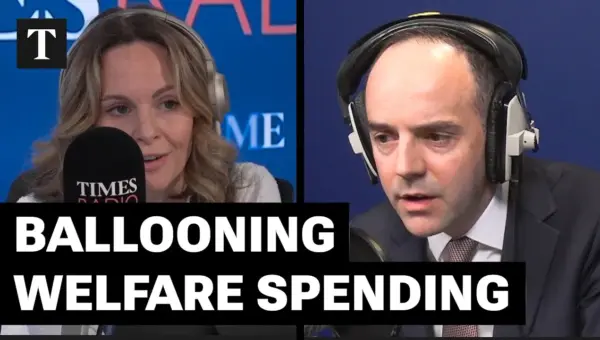
Minister Dodges Welfare Cut Question Amid Defense Concerns
UK Chief Secretary to the Treasury, James Murray, faced intense questioning on welfare spending and defense readiness. Murray repeatedly sidestepped direct answers on whether the government plans to reduce the welfare budget, despite projected increases and concerns over defense funding.
Nuclear Shield: Why Putin Remains Untouchable by Trump’s Fury
The US-Israeli strikes on Iran highlight a critical geopolitical distinction: Russia's nuclear arsenal acts as an unassailable shield against similar direct action. This analysis delves into the nuances of international responses, the limitations of 'axis of evil' narratives, and the pragmatic nature of state alliances in a world grappling with disorder.


Iran Faces World Cup Ouster After Regional Attack
Iran's participation in the 2026 FIFA World Cup is in jeopardy following a recent attack involving Israel and the US. The head of Iran's football federation expressed deep concern, while fans remain divided. FIFA regulations allow for decisive action should Iran withdraw.