Trump’s Iran War Justification Called ‘Clear As Mud’ by Experts
Experts are questioning the clarity of President Trump's justifications and goals for military action against Iran, with some describing the rationale as "clear as mud." The shifting objectives and potential for unintended consequences are raising concerns among national security analysts and the public.

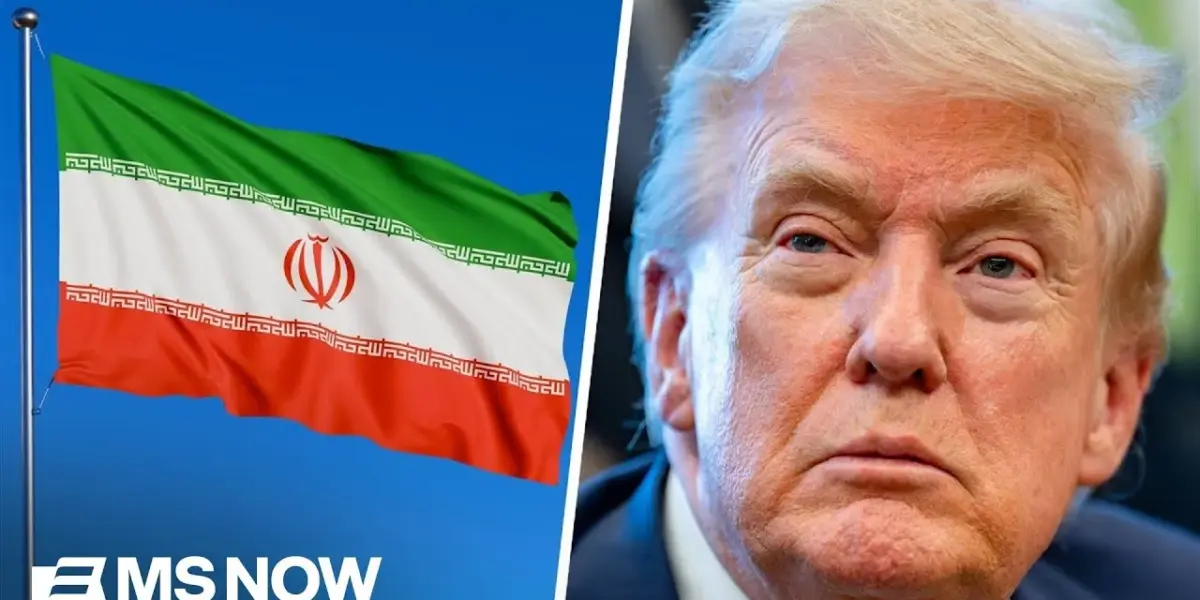
Unclear Goals Plague Trump Administration’s Iran Military Action
WASHINGTON D.C. – The justification and ultimate goals behind the United States’ recent military engagement with Iran have been described as “clear as mud” by journalists and national security experts, raising significant questions about the administration’s strategy and potential outcomes. While President Trump has articulated a range of objectives, from dismantling Iran’s nuclear and missile programs to regime change, the shifting rationales and ambiguous pronouncements have left many struggling to understand the precise aims of the military action.
Shifting Justifications and Amorphous Objectives
Max Boot, a Washington Post columnist and senior fellow at the Council on Foreign Relations, highlighted the evolving justifications for the conflict. “The justifications for this were all over the place,” Boot stated, recalling that the escalation began after protests in Iran in early January, with Trump initially promising “help is on the way” for demonstrators who were subsequently suppressed. The rationale then shifted to Iran’s nuclear arsenal, with stated goals now including the destruction of its nuclear program, missile program, and navy. However, Boot also noted the administration’s rhetoric about regime change and calls for the Iranian people to rise up, albeit without a guarantee of U.S. support should they face reprisal.
Boot suggested that this ambiguity might be a strategic choice, allowing the administration to claim victory regardless of the outcome. “I think the upside from Trump’s perspective, Katie, of keeping it so amorphous and confusing is that almost anything that happens he can claim as a victory,” he observed. Yet, he cautioned that it remains “very hard to know what in-state U.S. troops are actually trying to achieve beyond simply degrading the Iranian nuclear arsenal,” and warned of the “real risk of chaos following in the wake of U.S. military action.”
Potential End States and Historical Parallels
General Rusty Clark, former NATO Supreme Allied Commander, discussed potential end states for the conflict, drawing parallels to historical interventions. He outlined three possibilities: the Iranians losing their capacity for “chaos,” the U.S. military successfully empowering resistance groups, or the Iranians hunkering down defensively. Clark also referenced the Kosovo intervention, which lasted 11 weeks and involved significant air power and the threat of ground troops before a diplomatic resolution was reached.
“War is difficult. You can’t always predict it. It’s just what it is.” – General Rusty Clark
Clark emphasized the unpredictable nature of war, stating, “War is difficult. You can’t always predict it. It’s just what it is.” He also noted Iran’s long-standing adversarial stance towards the United States, suggesting that the current confrontation is something the regime has, in a way, sought.
Iran’s Unique System Presents Challenges
Stephen Cook, a senior fellow at the Council on Foreign Relations, underscored the fundamental differences between Iran and other countries the U.S. has engaged with militarily, such as Iraq or Venezuela. “Iran is so different. It’s so fundamentally different than any other country in the region,” Cook asserted. He described the Islamic Republic as a deeply ingrained “system” where the clerical and technocratic elements are intertwined, making regime change a complex undertaking.
Cook argued that genuine overthrow of the regime “is by the hand of the Iranian people.” He expressed doubt that the United States is prepared for a full-scale ground invasion and cautioned against drawing parallels to Venezuela, suggesting the president may not fully grasp the distinctions. “He’ll also have another problem with his partner, which are the Israelis who do not want a Venezuela option,” Cook added, noting Israel’s preference for regime collapse rather than a negotiated settlement that might preserve aspects of the current state.
Divergent U.S.-Israeli Strategies and Public Opinion
The cooperation between the U.S. and Israel on this matter is described as unprecedented, extending to full military collaboration. However, Cook suggested a potential divergence in ultimate aims: “I think when push comes to shove, the Israelis are much more interested in creating a pathway for Iranians to get out into the streets and bring down the Islamic Republic, whereas whereas the president might be tempted to try to find someone within the power structure there with whom he can have a deal. Get out quicker.”
Sam Stein, a journalist with The Bulwark and MSNBC contributor, presented polling data indicating low public support for military action against Iran. “It was 21% that supported an attack on only 21% supported an attack on Iran of the American people,” Stein reported, with figures only slightly increasing to around 23-27% after the engagement began. He noted that while Republicans are generally supportive, the numbers are not as high as for typical Trump initiatives. Independents, who often include former Republicans and MAGA-aligned voters, are particularly opposed. Stein pointed out that even within Trump’s base, figures like Marjorie Taylor Greene and Steve Bannon have questioned the action, suggesting it does not align with campaign promises.
Looking Ahead: The Risk of Prolonged Conflict
As the situation unfolds, the lack of clear objectives and the potential for prolonged engagement pose significant risks. Stein cautioned that if the conflict lasts for weeks, involves ground troops, or results in casualties, public support, already low, is likely to decline further. The coming days and weeks will be critical in determining whether the administration can articulate a coherent strategy and achieve its stated or unstated goals in Iran, or if the current course leads to further instability and unintended consequences.
Source: Trump's justification for war with Iran is 'clear as mud': Journalist (YouTube)

Related Articles
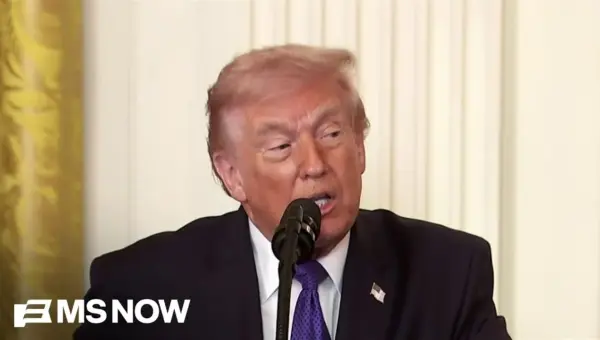
Conflicting Messages Emerge on Iran Conflict Goals, Duration
The Trump administration is facing scrutiny over conflicting messages regarding the ongoing conflict with Iran. Varying timelines for the duration of operations and divergent stated objectives, from destroying missile capabilities to regime change, are creating confusion. The human cost is also rising, with six U.S. service members killed in action.
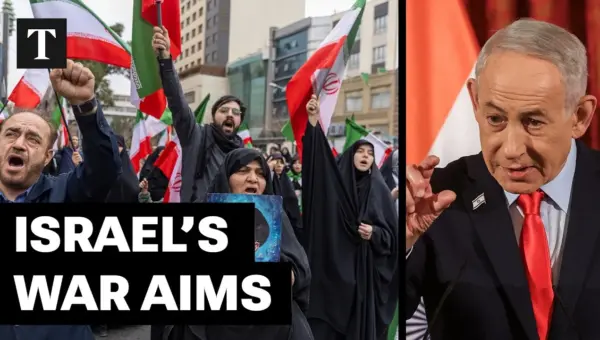
Israel Unveils Ambitious War Aims: Target Iran’s Nuclear Program
Israel has declared three primary war aims in its conflict with Iran: the complete eradication of its nuclear program, the cessation of ballistic missile production, and the empowerment of the Iranian people to overthrow their current regime. Spokesperson Alex Gandler detailed the strategy, acknowledging the ambitious nature of the goals and highlighting the importance of Iranian internal support and international cooperation.

Trump: A Pawn in Middle East Power Plays?
A report suggests Donald Trump's administration was pushed into military action against Iran by Israeli and Saudi leaders. This analysis questions the autonomy of U.S. foreign policy and its susceptibility to external influence, painting a grim picture of potential long-term consequences.