Trump’s Iran War Gambit: A Confused Strategy With Real Consequences
Donald Trump's recent military actions against Iran are mired in contradictory justifications and shifting rationales, raising serious questions about the administration's foreign policy strategy. From claims of an imminent threat to assertions of obliterated capabilities, the messaging is confused, leading to regional instability and economic volatility.

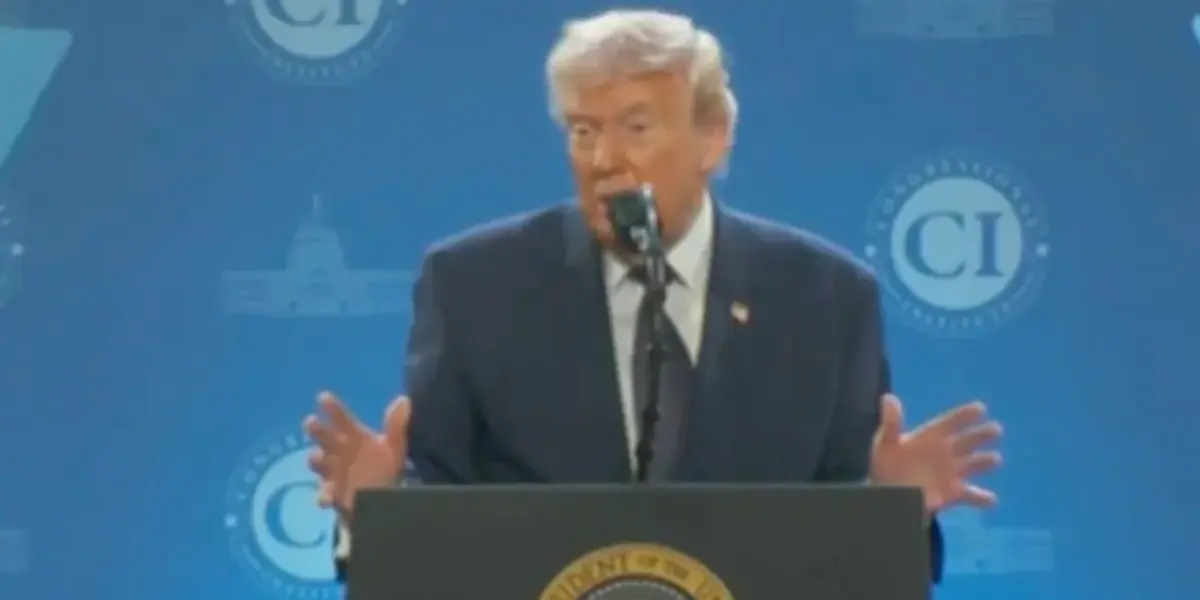
Trump’s Iran War Gambit: A Confused Strategy With Real Consequences
In a whirlwind of pronouncements and actions regarding Iran, former President Donald Trump appears to be navigating a foreign policy landscape marked by contradiction and a distinct lack of clear strategy. The recent military engagements and the justifications offered have raised serious questions about the administration’s decision-making process, its impact on regional stability, and its adherence to campaign promises.
The Justification for Escalation: An Imminent Threat?
The central argument presented for the recent military actions against Iran hinges on the assertion of an imminent threat. According to the narrative, Iran was on the verge of launching a significant attack within a week, targeting not only American interests but also allies in the Middle East, including Israel. The claim is that this preemptive strike was necessary to neutralize Iran’s missile capabilities and drone production facilities, thereby averting a larger conflict.
“Within a week, if we didn’t go in, they would have come in after us because I see the Democrats trying to justify it and they’re failing because the voter on the street is saying it, you got to be kidding,” the transcript highlights, reflecting a defensive posture against perceived criticism. The argument continues: “if they had a nuclear weapon, they would have used it on Israel. And this was going to be a major attack on all. They had all of those missile sites and all those launches that we got rid of about 80% of them right now, by the way.”
Inconsistency and Contradiction: A Pattern of Confusion
However, this justification is immediately undermined by a series of glaring inconsistencies. Critics point to a previous declaration, just six months prior, where the Trump administration claimed to have “completely and totally obliterated” Iran’s key nuclear enrichment facilities. This assertion of complete destruction makes the subsequent need to re-engage due to an imminent threat seem illogical. If Iran’s capabilities were indeed obliterated, how could they pose an immediate danger?
The transcript voices this incredulity: “So Iran’s nuclear capabilities were obliterated and yet we needed to go back in because otherwise they would have been able to strike us with the apparently not any more obliterated capabilities. Please someone who speaks help me.” This rhetorical question underscores the perceived incoherence of the strategy.
Furthermore, the rationales for engagement have shifted rapidly. Initially framed as a response to an imminent attack, the justification has morphed to include the nuclear program, missile capabilities, proxies, militias, and naval threats. This constant “shapeshifting,” as described in the transcript, suggests a lack of a foundational, consistent strategy.
The “Limited Excursion” vs. “Only Just Begun”: Conflicting Signals
The confusion extends to the very nature and duration of the conflict. Trump himself has offered conflicting statements, describing the engagement as a “little excursion” and a “short-term excursion” that is “very complete” and a “tremendous success.” Yet, in the same breath, he suggests it’s “the beginning of building a new country” and that “we’re going to go further.”
This dichotomy is starkly contrasted with statements from other officials. The Department of War, for instance, declared, “we have only just begun to fight.” The transcript captures this bewildering messaging: “It’s better, stronger, and our country is uh doing really well. I mean, at a level that nobody thought. We took a little excursion because we felt we had to do that to get rid of some evil. And uh I think you’ll see it’s going to be a short-term excursion.” This is juxtaposed with: “we have only just begun to fight. Yeah, see, we’re finally at war. But also, this is just a minor conflict. But we’re going to make them wish they were never born. But also, it’s just a limited incursion. But we have only just begun. But also, I wouldn’t quite call this a war. Are you following along yet?”
When directly questioned about these contradictory messages, the response offered was: “Well, I think you could say it both for the beginning. It’s the beginning of building a new country, but they certainly they have no navy. They have no air force. They have no anti-aircraft uh equipment. It’s all been blown up.” This response, rather than clarifying, amplifies the sense of an unplanned and reactive approach.
Historical Context: Campaign Promises and Shifting Realities
This situation stands in stark contrast to Trump’s explicit campaign promises. He repeatedly vowed to end “endless wars” and bring about peace and prosperity. “I’m not going to start a war. I’m going to stop wars,” he declared. “No more wars, no more disruptions. We will have prosperity and we will have peace. Under Trump, we will have no more wars, no more disruptions, and we will have prosperity and peace for all. I am the candidate of peace. I am peace.” The current engagement with Iran directly challenges these foundational pledges.
The transcript observes: “And yet, here we are in the middle of a war with no end date, no objective, no information, and no plan. And yet, this is exactly what you could come to expect from a president who has made a career out of saying one thing to his voters and then delivering another once he has power.” This pattern is extended to other policy areas, suggesting a broader tendency towards rhetoric over substantive, consistent action.
Why This Matters: The Ripple Effects of Unclear Policy
The implications of this perceived strategic confusion are significant and far-reaching. Regionally, the conflict has already led to attacks on Gulf States and allies, disruptions in vital shipping lanes like the Strait of Hormuz (through which 20% of the world’s oil passes), and a surge in oil prices. The loss of life within the military, with six members already deceased and others at risk, underscores the human cost of these actions.
Economically, market volatility is a direct consequence. The uncertainty surrounding the conflict and its potential escalation creates instability that impacts global markets. The transcript notes, “We got straight from use or moose which has 20% of the world’s oil passing through it with not a lot of activity. We’ve seen the market volatility. Uh we’re now going to pay the price.”
Politically, the lack of a clear plan and the reliance on shifting justifications erode public trust and raise questions about the competence of foreign policy leadership. This is particularly concerning given the administration’s campaign platform of non-interventionism and ending wars. The disconnect between campaign promises and current actions could have a significant impact on voter perceptions and future political landscapes.
Implications, Trends, and Future Outlook
The current situation points to a troubling trend in foreign policy decision-making, characterized by impulsivity, a reliance on rhetoric, and a disconnect between stated goals and actions. The challenge for the current administration, and indeed for future leaders, is to develop and articulate clear, consistent, and well-reasoned foreign policy strategies that are grounded in a comprehensive understanding of geopolitical realities and potential consequences.
The future outlook suggests a continued need for vigilance and critical analysis. The transcript implicitly calls for greater transparency and accountability in foreign policy. The ability of independent media to report on these issues is highlighted as crucial, especially in an environment where social media platforms may be influenced by political pressure. The call for direct communication channels, such as newsletters, reflects a concern about the potential for censorship or suppression of critical coverage.
Ultimately, the events surrounding the Trump administration’s actions in Iran serve as a stark reminder that foreign policy decisions, especially those involving military engagement, carry profound and lasting consequences. The lack of a clear plan, coupled with contradictory messaging, not only undermines credibility but also risks escalating regional tensions and incurring significant human and economic costs for all involved.
Source: Trump FLAILS with INSANE war announcement (YouTube)

Related Articles

Iran and Bahrain Strike Water Infrastructure, Sparking Regional Fears
Critical desalination plants, the lifeline for most Gulf states' water supply, have reportedly been targeted in the conflict between Iran and Bahrain. This escalation raises fears of a humanitarian crisis and regional instability as water is weaponized.

Carville Slams Trump’s Iran Stance as ‘Surrender,’ Warns of Economic Fallout
Political strategist James Carville sharply criticized President Trump's Iran policy as a "surrender" and warned of economic fallout from rising oil prices. He argued that the conflict's unpopularity and the administration's handling of the economy would significantly impact upcoming elections.


Trump Declares Iran War ‘Complete’ Amid Market Rebound
President Trump declared the war in Iran "very complete," leading to a market rebound and dropping oil prices. However, mixed messaging from the administration on the conflict's timeline and ongoing regional tensions persist. The U.S. also faces severe weather and a thwarted bomb plot in New York.