Trump’s Iran War Fuels Economic Crisis, Lacks Clear Goals
President Trump's war in Iran has triggered a severe global energy crisis, driving up oil and gas prices and impacting everyday goods. Despite the economic fallout, the war's objectives remain unclear, marked by shifting threats and a lack of historical precedent for such actions. Meanwhile, domestic political maneuvers, like the deployment of ICE agents to airports, are criticized as unproductive stunts.

Trump’s Iran War Triggers Global Energy Crisis
President Donald Trump’s military actions against Iran have plunged the world into its worst energy crisis in history. The conflict has caused global oil supplies to drop by 11 million barrels a day, according to the International Energy Agency. This drastic reduction impacts not only oil prices but also critical supplies like diesel fuel for trucks, jet fuel for airlines, and even fertilizers for farmers. The situation has sent oil prices soaring and gasoline costs climbing, directly affecting American families’ budgets.
Unclear Objectives and Shifting Threats
Despite the severe economic fallout, the objectives of Trump’s war remain unclear. Experts suggest Trump’s initial strategy of using coercion and violence to force Iran’s capitulation has failed. Iran, a nation experienced in handling sanctions and conflict, has shown resilience, surviving the initial shock of U.S. attacks. This has left Trump in a difficult position, with limited options for escalation that do not further harm the Iranian people or escalate the conflict.
Compounding the confusion are Trump’s shifting threats. He initially threatened to bomb civilian infrastructure in Iran, a move widely condemned as a potential war crime. However, he later retreated from this threat, delaying it by five days. This retreat, driven by concerns over the stock market’s reaction, highlights the administration’s focus on economic stability over clear military or political goals.
Historical Parallels and Lack of Decency
The transcript draws parallels between Trump’s actions and historical figures like Richard Nixon. While Nixon faced investigations by special prosecutor Leon Jaworski, leading to his resignation, Nixon maintained a level of public decorum. In contrast, Trump reportedly expressed gladness at the death of Robert Mueller, the special prosecutor who investigated Russian interference in the 2016 election. This perceived lack of basic human decency is contrasted with Mueller’s distinguished service record as a Marine, prosecutor, and FBI director.
The article also criticizes figures like Senator Lindsey Graham for their public statements regarding the conflict and the death of Robert Mueller. Graham’s past criticisms of Trump are juxtaposed with his current support, while his military service as a lawyer is contrasted with the combat experiences of individuals like Mueller.
Economic Impact on American Families
The ongoing conflict has a direct and significant impact on American consumers. The rise in oil prices has led to higher gasoline costs, with averages expected to reach $4 per gallon. Furthermore, the increased cost of diesel fuel affects food prices and the cost of goods delivered by trucks. These combined price hikes, alongside rising electricity costs, are putting a strain on household budgets across the country.
Experts like Amos Hochstein, former White House senior adviser, emphasize that this is not just an oil crisis but a broader energy crisis affecting various sectors. The disruption to the global economy is substantial, and the longer the war continues, the longer it will take for energy markets to normalize.
Political Stunts and Funding Battles
Beyond the Iran conflict, the transcript touches on other political maneuvers. The deployment of ICE agents to airports, a move criticized by the TSA union, is labeled a “meaningless stunt.” Republicans, reportedly at Trump’s direction, have repeatedly blocked funding for the TSA, creating long lines at airports. This tactic is seen as using ICE as a political tool rather than addressing genuine security needs.
The article highlights a Senate negotiation that would have funded homeland security, including the TSA, but was ultimately killed by Trump. This pattern suggests a preference for political obstruction over constructive policy solutions, particularly when bipartisan agreements are within reach.
What’s Next?
As the war in Iran continues and the economic consequences mount, the focus will be on whether President Trump can find a diplomatic solution or if he will continue to escalate the conflict. The upcoming months will reveal whether the economic pain caused by the war will influence voters in the next election, and whether political stunts like the airport deployments will gain any traction. The long-term stability of global energy markets remains a significant concern, with potential for further disruptions if the conflict is not resolved.
Source: The Last Word with Lawrence O'Donnell – March 23 | Audio Only (YouTube)

Related Articles

House Funds DHS Short-Term, Senate Stalemate Looms
The House has passed a short-term bill to fund the Department of Homeland Security, but the Senate is expected to reject it. This temporary measure highlights ongoing political divisions and the challenges in reaching long-term budget agreements in the U.S. Congress.
Congress Stalemate Threatens Border Security Funding
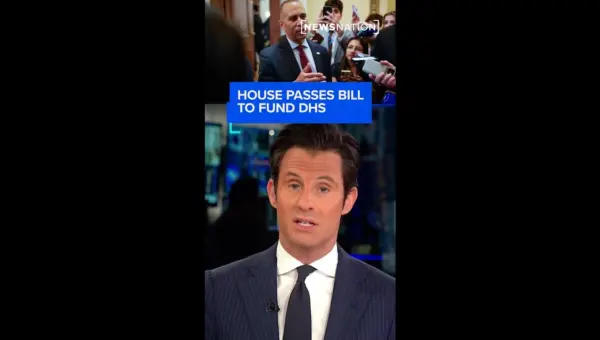
The U.S. House passed a temporary funding bill for the Department of Homeland Security, but Senate Democrats are expected to block it. This recurring stalemate highlights deep divisions over border policy and funding, potentially impacting national security and international perceptions of U.S. stability.
Polls Spell Doom: Republicans Face Voter Backlash
New polling data reveals a sharp decline in public confidence regarding the economic impact of Republican policies, particularly under Donald Trump. A significant majority now feel financially worse off, a trend that is especially pronounced among independent voters. This economic discontent poses a major challenge for the Republican party heading into future elections.