Trump’s Iran War: Conflicting Explanations Ignite Public Fury
The Trump administration is facing intense scrutiny over its conflicting and confusing explanations for initiating military action against Iran. With justifications ranging from "imminent threats" to "feelings" and ambiguous goals regarding regime change, the public and even allies are left questioning the rationale and objectives of the escalating conflict.

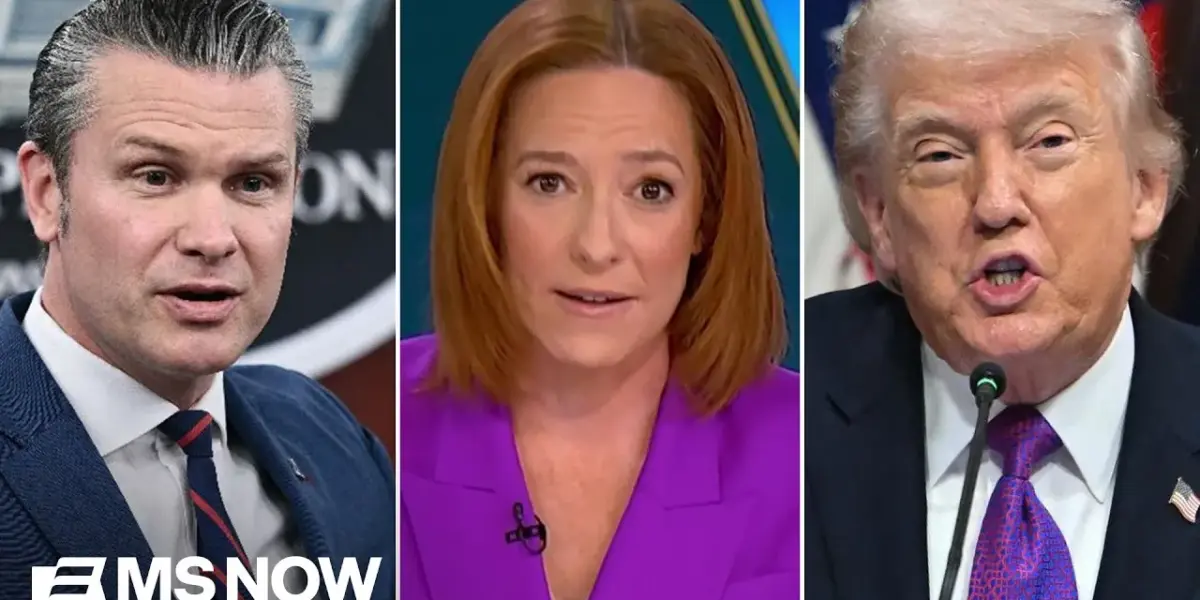
Trump Administration Offers Confusing Justifications for Iran Conflict
In a move that has sparked widespread confusion and condemnation, the Trump administration is struggling to provide a coherent explanation for its recent military actions against Iran. Five days into what President Trump himself has referred to as a “war,” the justifications offered by top officials and the President himself have been mired in contradiction, leaving the American public and even allies in the dark.
Conflicting Rationales Emerge for Military Strikes
The initial stated reason for the strikes, as articulated by Secretary of State Marco Rubio, was the existence of an “imminent threat” of an Iranian attack on the United States. However, this assertion was quickly undermined by reports from Reuters indicating that the Pentagon had informed Congress of no such imminent threat. Adding to the confusion, the White House’s official notification to Congress about the strikes made no mention of an imminent danger.
Rubio also suggested that the U.S. acted preemptively because Israel was planning an attack on Iran, which would have precipitated an Iranian response against American forces. This explanation, however, was directly contradicted by President Trump, who, when questioned, stated, “Israel didn’t force their hand. We forced theirs.” This apparent shift in rationale left many questioning the administration’s strategic thinking.
“There absolutely was an imminent threat, and the imminent threat was that we knew that if Iran was attacked, and we animals to resorb a blow.” – Secretary of State Marco Rubio (as quoted in the transcript)
Further adding to the cacophony of explanations, Secretary Hegseth later suggested the strikes were in part a revenge mission for Iran’s alleged past attempt to assassinate President Trump. Another reported justification from a combat unit commander cited a “biblically sanctioned” reason, linking the action to the approach of Armageddon.
President Trump’s ‘Feeling’ as a Basis for War
Ultimately, President Trump himself offered an explanation that seemed to be the most personally driven: his “opinion” and “feeling” that Iran was planning to attack first if the U.S. did not act preemptively. “It was my opinion that they were going to attack first. They were going to attack if we didn’t do it. They were going to attack first. I felt strongly about that,” Trump stated. This reliance on a gut feeling, rather than concrete intelligence, for initiating military conflict has been widely criticized as insufficient and reckless.
The White House has seemingly coalesced around this notion, with officials stating the President had a “good feeling” that Iran intended to strike U.S. assets and personnel. Critics argue that such “feelings,” especially when not backed by verifiable facts, are an inadequate basis for plunging a nation into war.
Ambiguous Goals: Regime Change or Not?
The objectives of the military action are equally unclear. On the day of the strikes, President Trump directly addressed the people of Iran, stating, “the hour of your freedom is at hand,” and encouraging them to “take over your government.” This was widely interpreted as a clear call for regime change.
However, in a subsequent interview, Secretary Hegseth explicitly denied that the operation was a “so-called regime change war.” This stark contradiction leaves observers bewildered about the administration’s true intentions. The confusion is further compounded by the apparent lack of a post-strike plan for Iran’s leadership. When questioned about who would be in charge if the regime were overthrown, officials indicated that their preferred candidates might be dead, leaving a void in planning.
Uncertainty Over Duration and Troop Deployment
The duration of the conflict and the potential for ground troop deployment remain subjects of intense speculation and conflicting statements. While initial projections suggested a four-to-five-week operation, officials have indicated the capability to continue for much longer, with timelines ranging from two to eight weeks, offering little clarity.
Senator Lindsey Graham, a staunch ally of President Trump, initially ruled out American “boots on the ground” in Iran. However, President Trump himself later refused to rule out sending U.S. troops into the country, further highlighting the administration’s lack of a consistent message.
Public Disapproval and Republican Confusion
The conflicting narratives and lack of clear objectives have fueled public discontent. An NBC poll revealed that voters disapprove of Trump’s handling of Iran by a 13-point margin. Even within the Republican party, there appears to be significant confusion, with some members struggling to maintain a consistent stance, at times acknowledging it as a “war” and at other times denying it, attributing the term “misspoke” to explain the contradictions.
With the Trump administration unable to provide clear, consistent answers, reliable information regarding the situation has largely come from Democratic lawmakers who have been briefed on the matter. The ongoing ambiguity raises serious concerns about the stability and long-term implications of the U.S. involvement in Iran.
What’s Next?
As the situation in Iran continues to develop, the focus will be on whether the Trump administration can articulate a clear and unified strategy. The international community and the American public will be closely watching for any concrete intelligence that justifies the ongoing conflict and for a coherent plan regarding the conflict’s objectives and end game. The lack of transparency and consistency thus far raises significant questions about the future of U.S. foreign policy in the region.
Source: 'WHAT THE HELL IS GOING ON?': Trump admin unable to explain attack on Iran (YouTube)

Related Articles
Trump’s Iran War: A Personal Vendetta Fuels Conflict
President Trump's stated reasons for attacking Iran have shifted, with a recent admission suggesting a personal vendetta over alleged assassination attempts. This raises serious questions about the true motivations behind the conflict and the absence of a clear exit strategy.

Trump’s Media War Fuels Authoritarianism, Undermines Truth
The Trump administration's sustained attacks on the media are not just about policy; they actively foster distrust, creating a vacuum where authoritarianism can thrive. This strategy erodes objective truth, making citizens vulnerable to manipulation and undermining democratic principles.

Trump’s War: A Nation’s Sacrifice, a President’s Indifference
A combat veteran and analyst critique President Trump's focus on decor during wartime, highlighting a perceived callousness and detachment from the sacrifices of American service members. The piece examines the potential for war profiteering and the long-term, global consequences of military adventurism.