Trump’s Iran Threats Spark Global Instability Fears
Former President Trump's threats to bomb Iranian power plants and his contradictory statements on dialogue and peace talks raise serious concerns about global stability and economic impact. The strategy's risks and potential for retaliation could escalate regional conflict and further disrupt global trade, leading to increased inflation and fuel prices for consumers.


Trump’s Iran Threats Spark Global Instability Fears
In a jarring announcement made on social media, former President Donald Trump issued a stark warning to Iran. He stated that if Iran did not fully open the Strait of Hormuz within 48 hours, the United States would “hit and obliterate their various power plants, starting with the biggest one first.” This statement, coming from a former Commander-in-Chief, raises serious concerns about escalating conflict in the Middle East and its global ripple effects.
Trump’s recent messages regarding Iran present a confusing picture. Just days before this threat, he reportedly called for a ceasefire and reopening of dialogue. However, he also expressed a disinclination for a ceasefire, stating, “you don’t do a ceasefire when you’re literally obliterating the other side.” He described Iran’s military as effectively defeated, with no navy, air force, or significant equipment. He also suggested that other countries, like China and Japan, which heavily rely on the Strait of Hormuz for energy transport, should get involved in ensuring its openness.
Adding to the confusion, reports from Axios indicated that the Trump administration was preparing for peace talks with Iran. This news followed weeks of conflict. The sudden shift from discussing peace talks to issuing threats of bombing power plants has led many to question whether there is a coherent strategy in place. It raises the possibility that actions are being taken reactively, rather than as part of a well-defined plan.
Examining the Strategy and its Risks
The proposed action of attacking civilian targets like power plants carries significant legal and ethical implications. Such actions could be considered war crimes unless they were exclusively aimed at military infrastructure. There is also a strong likelihood of retaliation. If Iran’s power grid is damaged, it could retaliate against neighboring countries or even United States infrastructure, potentially widening the conflict and putting the entire region, and possibly the world, at heightened risk.
Economically, the consequences could be severe. Disruptions to global trade, especially through the Strait of Hormuz, would likely lead to further price increases for essential goods. The transcript highlights the critical role of the Strait, through which China transports 90% of its energy and Japan transports 95%. Any closure or disruption directly impacts global energy supplies and, consequently, prices for consumers worldwide. For instance, rising oil and diesel prices can lead to higher costs for transportation, affecting everything from everyday commutes to the delivery of goods.
Strategically, the idea of Iran reopening the Strait under threat seems counterintuitive. The Strait is Iran’s primary leverage point in its conflict with the United States. Surrendering this leverage voluntarily would leave Iran with few options. Given that Iran’s leadership is reportedly fighting for its survival, it is unlikely to give up its most powerful bargaining chip simply due to a social media post.
Historical Context and Motivations
The desire for regime change in Iran has been a long-standing topic of discussion and planning since 1979. However, previous administrations have been deterred by the immense potential consequences, particularly due to Iran’s size, its governmental structure, and its control over the Strait of Hormuz. The current situation suggests a potential underestimation of these complexities.
Some analysts suggest that past successes, like operations in Venezuela, may have led to an overestimation of the United States’ ability to achieve quick and easy results in Iran. There’s also a potential motivation tied to legacy-building, with the idea of achieving significant geopolitical changes appealing to a desire for historical recognition. This perspective suggests that the decision-making process might be influenced more by personal ambition than by a thorough consideration of all potential outcomes.
The communication strategy surrounding the Iran issue has also been noted as unusual for Trump, who is often seen as adept at controlling media narratives. The lack of a clear, overarching speech explaining the rationale, combined with a series of conflicting statements and public appearances, has created confusion and potentially weakened the administration’s position.
Why This Matters
The immediate concern is the potential for a wider conflict that could destabilize the Middle East and disrupt global markets. The economic fallout, including rising inflation and fuel prices, directly impacts everyday Americans. Furthermore, the situation raises questions about the coherence and effectiveness of foreign policy decision-making. The reliance on social media for major policy announcements and the apparent lack of a clear, consistent strategy are worrying trends.
The conflict’s impact is already being felt. Reports indicate rising inflation expectations, directly linked to the supply disruptions in the Middle East. Gas prices have seen a significant increase, with diesel fuel experiencing even sharper spikes. This affects not only individual drivers but also the cost of transporting goods, leading to a trickle-down effect on the prices of everyday items.
Future Outlook
The current trajectory suggests a situation that is difficult to de-escalate quickly. The conflict is reportedly expanding into neighboring countries, and damaged infrastructure will take time to repair. The closure of the Strait of Hormuz has created a significant choke point that will have lasting effects on global supply chains. Even if the immediate conflict were resolved, the economic repercussions, including higher costs and inflation, would likely persist for months.
The situation underscores a broader concern about the political environment and the potential for suppression of critical coverage. In an era where social media platforms can be influenced by administrations, independent media faces challenges in reaching audiences directly. This highlights the importance of alternative communication channels and the support of independent journalism to ensure a well-informed public.
Source: Trump makes UNHINGED announcement putting WORLD at risk (YouTube)

Related Articles
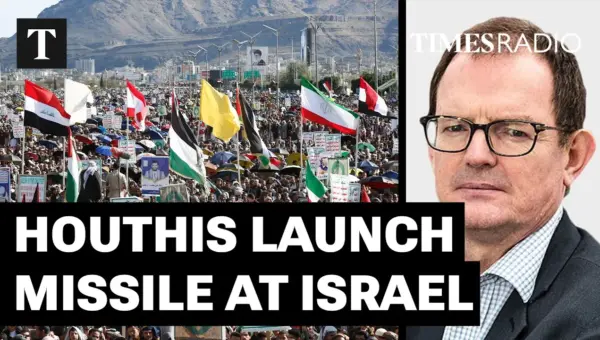
Houthis Fire Missile at Israel, Iran’s Guard Takes Center Stage
Yemen's Houthi group has fired a missile at Israel, signaling a potential escalation of the regional conflict. Meanwhile, Iran's powerful Islamic Revolutionary Guard Corps (IRGC) appears to be consolidating its control over the country's leadership following reported strikes. This shift places hardline figures at the forefront of decision-making.

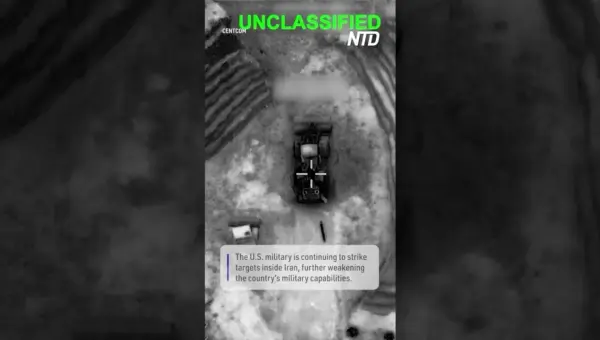
US Strikes Cripple Iran’s Military Might, CENTCOM Reports
U.S. Central Command reports ongoing strikes inside Iran are significantly weakening its military power. This direct action aims to reshape regional security dynamics, but carries risks of escalation. The long-term impact depends on Iran's response and ability to adapt.

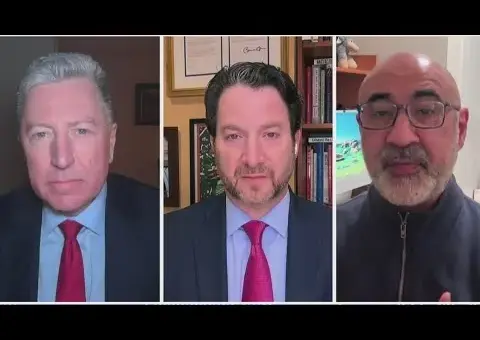
U.S. Iran Tensions Rise Amid Shifting Alliances
Rising tensions between the U.S. and Iran are creating a volatile geopolitical situation. With conflicting signals on de-escalation and potential shifts in alliances like NATO and U.S.-Israel relations, the path forward remains uncertain. The global economy and regional stability hang in the balance.