Trump’s Iran Threats Met With Laughter, Expert Says
Former Royal Navy officer John Foreman believes Iran is 'laughing' at President Trump's escalating threats over the Strait of Hormuz. Foreman suggests Trump's "outlandish rhetoric" stems from miscalculations and a lack of preparedness for the conflict, while military officials convene to plan for the vital waterway's eventual reopening.

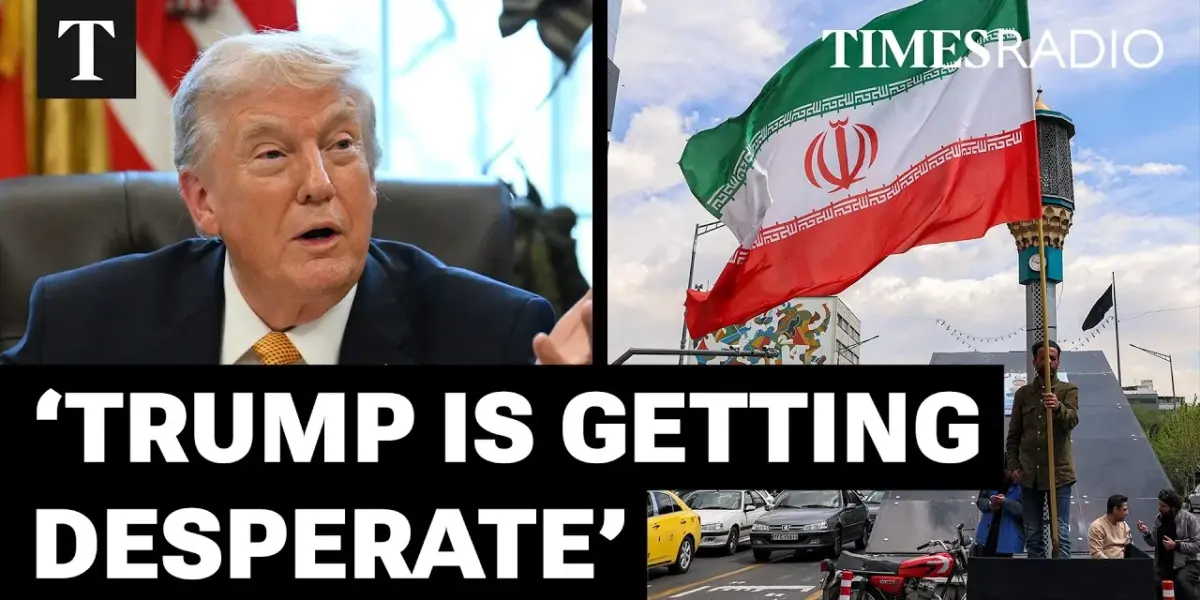
Trump’s Outlandish Demands on Iran Draw Scorn
In a dramatic escalation of rhetoric, U.S. President Donald Trump issued a stark ultimatum to Iran on social media, warning that an entire civilization would face destruction if the Strait of Hormuz was not reopened. Trump set a midnight deadline, threatening to bomb Iran “back to the stone ages” if no agreement was reached. This aggressive stance comes as Western military officials convene in North London to discuss contingency plans for the vital waterway, through which roughly one-fifth of the world’s oil is transported. The strait has been closed since the conflict began, causing significant global economic ripples.
Iran’s Reaction: Desperate and ‘Laughing’
John Foreman, a former Royal Navy officer and defense attaché, offered a sharp critique of Trump’s approach. He suggested that Iran’s response to Trump’s previous comments, which described his statements as “helpless, nervous, stupid,” could now be updated to include “desperate.” Foreman believes Trump’s escalating and “outlandish rhetoric” stems from a realization that his actions have led to a war the U.S. was unprepared for. He argues that Trump’s threats, which have moved from targeting infrastructure to implying genocide and war crimes, are unlikely to be effective. Instead, Foreman posits that Iran is likely “laughing at him,” seeing his pronouncements as increasingly detached from reality.
Contradictions and Unintended Consequences
Foreman highlighted the contradictory nature of Trump’s statements, pointing out that the president simultaneously declared a civilization would die while also offering a blessing to the “great people of Iran.” This, he suggests, is a consequence of Trump’s miscalculation. The former officer explained that Trump likely expected a swift victory, similar to the intervention in Venezuela, leading to regime change and peace. However, he failed to recognize the limits of American power, the inability to achieve regime change solely through air power, and the lack of international alliances and economic preparation. These failures, Foreman stated, are now confronting Trump, fueling his increasingly erratic pronouncements.
Economic Impact and Global Concerns
The closure of the Strait of Hormuz has immediate and far-reaching economic consequences. While the U.S. has attempted to mitigate oil shortages by sanctioning Russian “shadow fleet” vessels, the disruption to this critical trade route is severe. Foreman noted that the impact is already being felt in the Far East and is expected to reach Europe soon. The situation, he warned, is spiraling out of Trump’s control, leading to his more extreme statements.
Planning for a Post-Conflict Scenario
The meeting in North London focuses on plans for securing the Strait of Hormuz once the fighting ceases. Foreman suggested that political leaders have discussed further sanctions and international cooperation, but acknowledged the limitations of military options while the conflict rages. He noted that even French President Macron has deemed military options unrealistic. The primary goal, according to the Prime Minister, is to make the strait accessible and safe after the conflict ends. However, Foreman cautioned that physically forcing the strait open militarily carries significant risks to ships and sailors.
Historical Precedents for Securing the Strait
Foreman drew parallels to past operations, recalling his own experience in the 1980s escorting friendly shipping through the strait. He mentioned the involvement of international mine hunters to keep the passage clear. Such an operation would likely involve an international coalition, similar to past efforts by the French, British, Americans, and Italians. The future approach, Foreman explained, would depend on Iran agreeing not to attack merchant or warships. The tasks would include maritime surveillance via aircraft and drones, escorting vessels to reassure merchant ships, and mine countermeasures. Reports suggest a British Royal Fleet Auxiliary ship is being prepared for this role.
A Long Road Ahead
The extensive preparations required for securing the strait suggest that military planners do not anticipate an imminent ceasefire. Foreman indicated that these plans are likely weeks, if not months, away from implementation rather than days. This timeline underscores the complexity and protracted nature of the current geopolitical crisis surrounding the Strait of Hormuz.
Source: The Iranians ‘Will Be Laughing’ At Trump | Former Royal Navy Officer (YouTube)

Related Articles

Trump’s Cold Shoulder: Vance Stumbles on Global Stage
Senator JD Vance faced public embarrassment during a trip to Hungary, appearing uninformed on U.S. actions against Iran and unable to reach Donald Trump by phone. The incident highlights communication breakdowns and raises questions about Vance's diplomatic effectiveness.

Trump’s ‘Civilization Dies’ Threat Sparks War Crime Fears
Former President Donald Trump's social media threat that "a whole civilization will die tonight" has sparked international outcry, with experts warning of potential war crimes. Analysts question the feasibility of such an attack and its devastating implications for regional stability and international law.

Trump’s Quiet Purge: Why He’s Firing Staff Strategically
Donald Trump's administration is reportedly moving away from large-scale firings towards a more strategic "slow churn" of staff. This approach aims to manage public perception and avoid the appearance of chaos, while potentially capitalizing on public dislike for certain officials.