Trump’s Iran Threat: War Crimes or Diplomacy?
President Trump's threats to 'decimate' Iranian infrastructure have raised alarms about war crimes and a major escalation in the Middle East. With civilians reportedly forming human shields, international law experts and analysts debate the president's motives and the potential consequences.

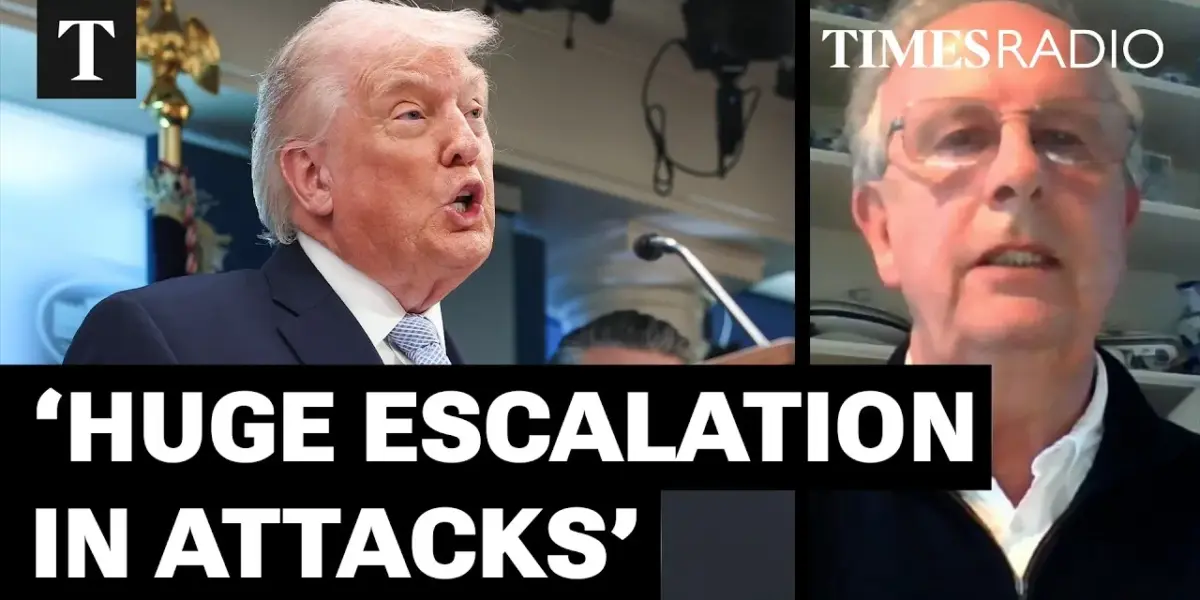
Trump Threatens ‘Decimation’ of Iran, Sparks War Crime Fears
As a midnight deadline loomed, President Donald Trump issued stark warnings of widespread destruction against Iran, threatening to target the nation’s bridges and energy facilities. These statements have ignited serious concerns about potential international law violations and a dangerous escalation in the Middle East. The president’s rhetoric, described as potentially leading to the “obliteration of civilization,” has drawn sharp criticism and calls for intervention from political figures and commentators.
Escalation Fears Grip the Middle East
With a critical deadline approaching, the Middle East faces the prospect of a significant military escalation not seen since the 2003 invasion of Iraq. Michael Evans, former defense editor for The Times, discussed the tense situation, noting that President Trump had previously vowed to “unleash hell” against Iran. While some hope this is mere rhetoric, the potential for actual strikes on Iranian infrastructure, such as bridges and energy plants, raises alarms about widespread civilian casualties.
Human Shields and International Law
Disturbing images emerged of Iranian civilians, including women and children, forming human chains around bridges and power plants, seemingly acting as human shields. This tactic, though potentially a smart move by Iran to deter attacks, presents a grave challenge. “One would hope not,” stated Michael Evans when asked if a U.S. president would consider bombing civilian infrastructure with people present. He suggested that such actions would be against the Geneva Convention. The effectiveness of such human shields is debated, with the possibility of satellite detection and the military’s potential reluctance to target sites with civilians present.
“It will be against the Geneva Convention if nothing else. So I think what we’ll just see is a huge escalation in attacks and then hoping that that will be sufficient to persuade Iran at last to negotiate a deal.”
Michael Evans, Former Defense Editor, The Times
Rhetoric vs. Reality: A Business Approach to Diplomacy?
Kimberly Strassel, a columnist at The Wall Street Journal, offered insight into President Trump’s negotiating style, comparing it to his business career. “You go out and you ask for the moon in a deal,” she explained, suggesting that the president often lays out dire consequences to achieve his aims. This approach, she noted, means that sometimes he might back down if progress is perceived. However, the uncertainty surrounding his actions and his proven willingness to follow through on some threats mean his words must be taken seriously.
Targeting Infrastructure: Civilian vs. Military Nexus
The question of striking bridges and energy facilities is complex. Strassel pointed out that while Trump has used the word “civilian,” some infrastructure might have a connection to Iranian military assets. Striking such sites could be viewed differently than targeting purely civilian energy plants. She also raised questions about the authenticity of some images, noting Iran’s history of image manipulation. Strassel found it hard to believe the president would intentionally attack civilians, suggesting his motivation stemmed from disgust over the execution of Iranians after recent protests. Targeting infrastructure risks alienating the Iranian population, which could be counterproductive.
Iran’s Retaliation and Regional Warnings
Iran has vowed to retaliate if the United States launches a large-scale assault. While Iran lacks the capacity for massive infrastructure attacks comparable to the U.S. or Israel, it can deploy effective drones capable of causing significant damage. Neighboring countries, including Kuwait and Bahrain, have issued stay-in-place warnings for their citizens as the deadline approaches. The potential for Iran to extend attacks beyond the immediate region adds another layer of concern to the already volatile situation.
Looking Ahead: Diplomacy or Devastation?
As the deadline passed, the world watched with bated breath. The immediate hours and days will reveal whether President Trump’s threats translate into military action or if last-minute diplomacy prevails. The response from Iran and the international community will be crucial in shaping the future of this tense standoff. The potential consequences, ranging from a diplomatic breakthrough to devastating conflict, remain profoundly uncertain.
Source: Trump’s Proposed Strikes Would Be Against The Geneva Convention | Michael Evans (YouTube)

Related Articles


Trump’s Iran Deadline Backfires, Exposing Global Humiliation
Then-President Trump's extreme threats against Iran, including a "civilization ending deadline," backfired by undermining US credibility. His shifting ultimatums and the disbelief from his own supporters exposed a loss of global standing, creating long-term damage to America's reputation.


Middle East Tensions Flare as Trump Issues Iran Deadline
President Trump has issued an ultimatum to Iran, demanding the reopening of the Strait of Hormuz by tonight or face severe consequences, including targeting critical infrastructure. Meanwhile, the Artemis 2 crew is returning home after a historic journey around the far side of the Moon. In sports, the Michigan Wolverines have won their first national basketball championship in 37 years.
Trump’s War Threats: A Pattern of Bluster, Not Power
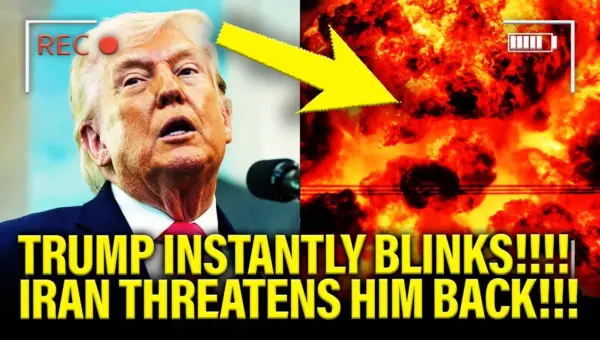
Donald Trump's history of extreme threats, particularly regarding Iran, reveals a pattern of bluster rather than genuine policy, according to analysts. This tactic, often followed by de-escalation, raises concerns about international stability and the role of the Republican party and media in enabling such behavior. The discussion highlights the difference between wielding power and abusing it, urging a more virtuous approach to governance.