Trump’s Iran Threat: Media Softens, Risks Normalizing Dangerous Talk
Former President Trump's aggressive post threatening Iran has been met with softened reporting by major news outlets, raising concerns about normalizing dangerous rhetoric. Critics argue for unvarnished reporting to ensure public understanding of potential geopolitical risks.


Trump’s Iran Threat: Media Softens, Risks Normalizing Dangerous Talk
Former President Donald Trump recently posted a message that has raised serious concerns about his rhetoric and how it’s being reported. His words, directed towards Iran, contained strong threats. Some media outlets, however, appear to have softened these remarks, potentially leading the public to misunderstand the severity of the situation. This raises questions about journalistic responsibility and the public’s right to accurate information.
Trump’s Stark Warning to Iran
Trump’s message was direct and alarming. He wrote, “Tuesday will be power plant day and bridge day all wrapped up in one in Iran. There will be nothing like it. Open the [__] straight, you crazy bastards, or you’ll be living in hell. Just watch. Praise be to Allah. President Donald J. Trump.” This statement clearly suggests a willingness to attack critical infrastructure in Iran if certain demands are not met. The inclusion of “Praise be to Allah” at the end, while potentially part of a quote or a specific rhetorical choice, adds an unusual and provocative element to his threat.
Media’s Muted Response
The way major news organizations covered this statement is where the controversy lies. The New York Times, for instance, reported, “Trump escalates threat to hit Iranian power plants after US rescues downed airmen.” They described his post as an “exploitative Latin social media post to taunt Iranian leaders.” The article further stated, “Mr. Trump, seemingly emboldened by the successful US rescue of an American airman in Iran over the weekend, issued a new ultimatum to Iran to end its chokehold over the Strait of Hormuz.” However, the Times also edited Trump’s original statement. They omitted phrases like “you crazy bastards, or you’ll be living in hell” and the full context of “Praise be to Allah.” Readers of the New York Times were shown a version of Trump’s post that read, “Tuesday will be power plant day and bridge day all wrapped up in one in Iran. There will be nothing like it.” Mr. Trump wrote on social media. “Praise be to Allah,” Mr. Trump added before signing off in all caps.
The Associated Press also presented a softened version. Reporter Sungman Kim wrote, “Washington AP Trump promises strikes on Iran’s power plants and bridges on Tuesday if the Strait of Hormuz is not reopened.” An editor noted that this report left out several key elements from Trump’s original post.
The Danger of Normalizing Extreme Rhetoric
The core issue highlighted by critics is the potential for this kind of reporting to normalize extreme and dangerous rhetoric. When aggressive threats are presented in a toned-down or edited manner, they lose their shock value. This can lead the public to accept such language as standard political discourse, rather than recognizing it as a potential precursor to conflict. The call is for media to present information directly and without sanitization, allowing audiences to form their own judgments based on the full context.
Historical Context: Inflammatory Language and Foreign Policy
Throughout history, inflammatory language has often preceded international crises. Leaders using aggressive rhetoric can escalate tensions, provoke reactions, and create an environment where diplomatic solutions become harder to find. In the context of foreign policy, especially concerning nations like Iran, where relations have been historically complex and fraught with tension, precise and unvarnished communication is crucial. The Strait of Hormuz is a vital waterway for global oil transport, making any threat to its stability a matter of international concern. Past incidents involving threats and military posturing have often stemmed from misinterpretations or downplaying of aggressive statements.
Why This Matters
This situation matters because it speaks to the fundamental role of the media in a democracy. The public relies on news organizations to provide accurate and complete information, especially when it concerns national security and international relations. When reporting on potentially dangerous statements by public figures, especially former presidents, the media has a responsibility to avoid sanitizing or selectively editing the content. Failing to do so can lead to a public that is ill-informed about the true nature of political discourse and the potential risks involved. It also places a burden on citizens to seek out multiple sources and critically evaluate the information they receive.
Implications, Trends, and Future Outlook
The trend of media outlets softening or sanitizing controversial statements reflects a broader challenge in the digital age. Social media platforms often host raw, unfiltered communication, which then gets filtered through traditional news outlets. This can create a disconnect between what is actually said and what is reported. The future outlook suggests that media literacy will become even more important for the public. Audiences will need to be more proactive in seeking out original sources, comparing different reports, and understanding the potential biases or editorial decisions that shape the news they consume. For journalists, the challenge remains to balance the need for objective reporting with the ethical imperative to accurately convey the gravity of potentially dangerous statements without sensationalizing them.
The call to action from critics is clear: media should present information without attempting to make it more palatable. For the public, the message is to be vigilant, share information responsibly, and ensure that friends and family are exposed to the full picture. In an era where information can be easily manipulated or obscured, direct and honest reporting is not just preferred—it’s essential for an informed citizenry.
Source: Important PSA This Morning – 4/5/26 (YouTube)

Related Articles

Trump Threatens Iran, Shaking Global Stability
Former President Trump's aggressive Easter Sunday warning to Iran has ignited global concerns, highlighting a volatile intersection of politics, religion, and foreign policy. The analysis explores the motivations behind such rhetoric, the deep divisions within American society, and the potential for severe economic and geopolitical repercussions worldwide.
Trump’s Rhetoric Fuels Iran Tensions, Raises War Crime Alarms
Former President Donald Trump's aggressive Easter weekend social media posts directed at Iran have sparked international concern. His threats of military action and ultimatums, coupled with conflicting narratives about military engagements, have raised alarms about potential war crimes and a dangerous escalation of conflict. Critics accuse both Trump and segments of the media of downplaying the severity of his rhetoric.

Trump Threatens Iran: “Open Strait or Live in Hell”
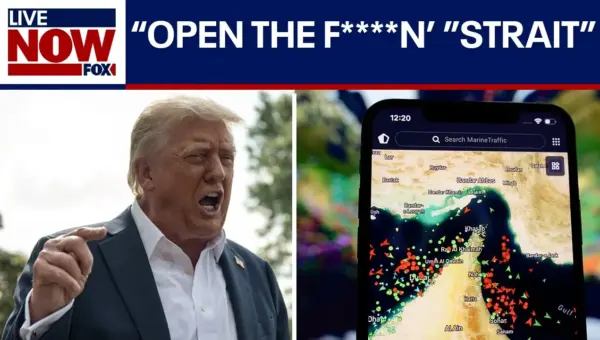
President Trump issued a severe warning to Iran, threatening "hell" if the Strait of Hormuz is not reopened, while U.S. forces successfully rescued a downed airman. Experts suggest potential escalation and regional realignments are unfolding.