Trump’s Iran Strikes Lacked Legal Basis, Ex-DOJ Lawyer Claims
Former Assistant U.S. Attorney Margaret Donovan stated that the Trump administration lacked legal authority for its strikes on Iran. Donovan asserted there was no domestic or international legal basis, nor a threat that justified action under the UN charter.

Legal Experts Question Trump Administration’s Authority for Iran Strikes
Former Assistant U.S. Attorney and Army lawyer Margaret Donovan has asserted that the Trump administration lacked both domestic and international legal authority for its strikes against Iran. Speaking on a panel, Donovan stated unequivocally, “There is no domestic or international legal authority for the strikes… there was no threat that might have justified a strike under the UN charter.” Her comments, made available through MS NOW, cast significant doubt on the legal underpinnings of the U.S. military actions during the Trump presidency.
Analyzing the Legal Framework: Domestic vs. International Law
Donovan’s analysis delves into the critical distinction between domestic and international legal frameworks governing the use of military force. Domestically, the U.S. Constitution grants Congress the power to declare war, and the President’s authority to use military force is typically limited to repelling sudden attacks or situations explicitly authorized by Congress. Internationally, the UN Charter serves as the primary legal instrument governing the use of force between states. Article 2(4) prohibits the threat or use of force against the territorial integrity or political independence of any state. Exceptions exist, most notably under Article 51, which allows for self-defense in response to an armed attack.
The UN Charter and Self-Defense
Donovan’s direct reference to the UN Charter suggests a thorough examination of whether the actions taken by the Trump administration met the stringent criteria for self-defense. The principle of self-defense under international law is generally understood to require an imminent threat or an actual armed attack. Without such a demonstrable threat, any unilateral use of force by a state can be viewed as a violation of international law.
Domestic Legal Challenges
While the transcript does not elaborate on the specific domestic legal arguments, Donovan’s assertion implies that the administration did not rely on Congressional authorization for the strikes. This would place the legality of the actions solely on the President’s inherent executive powers, which are often debated and contested, particularly when involving offensive military operations abroad.
Broader Implications for U.S. Foreign Policy and International Law
The assertion that the Trump administration’s strikes on Iran lacked legal authority carries significant weight, especially given Donovan’s background as a former assistant U.S. attorney and Army lawyer. Such claims, if widely substantiated by legal scholars and international bodies, could have far-reaching consequences. They raise questions about the U.S.’s adherence to international norms and the potential for a shift in how military interventions are perceived and challenged on the global stage.
The use of force by any nation, particularly a global superpower like the United States, is subject to intense scrutiny. When these actions are perceived as being outside the bounds of established international law, it can erode trust, embolden adversaries, and weaken the international legal order. Furthermore, it can set dangerous precedents for future military engagements, potentially leading to increased global instability.
The Trump administration, like many before it, often invoked national security interests to justify its foreign policy decisions. However, the legal justification for military action is a distinct and crucial element. The absence of a clear, articulable threat that meets international legal standards, as suggested by Donovan, would imply that the strikes were based on political or strategic considerations rather than established legal principles.
What’s Next?
Margaret Donovan’s claims necessitate further examination by legal experts and potentially international bodies. The precise nature of the intelligence or perceived threats that led to the strikes, and the legal interpretations applied by the Trump administration at the time, will be crucial in understanding the full context. As legal scholars and policymakers continue to debate the boundaries of executive power and the application of international law in the context of national security, the legality of past military actions, such as the strikes on Iran, may face renewed scrutiny.
Source: Did Trump have legal authority to strike Iran? (YouTube)

Related Articles
Global Travel Chaos Erupts After Iran Military Strikes
Global travel has descended into chaos following Iran's missile and drone attacks on the Middle East, leading to widespread airspace closures and over 1,500 flight cancellations. Thousands of passengers are stranded worldwide, with major airports in Dubai and Kuwait suffering damage and evacuations.
US Strikes Iran: What’s Next for Trump’s Regime Change Strategy?
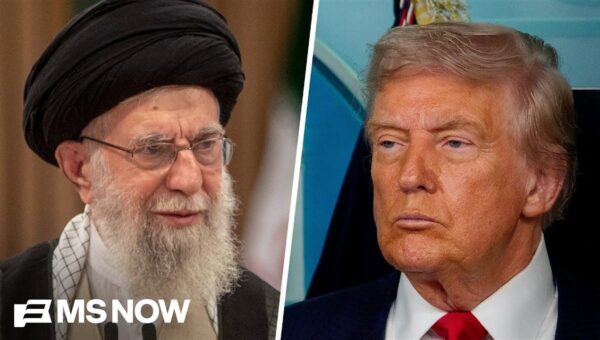
The U.S. has launched significant strikes against Iran, targeting its leadership and military capabilities. While President Trump claims progress, experts question the long-term strategy, potential diplomatic engagement, and support for the Iranian people amidst a leadership vacuum.
Putin Condemns US Strikes on Iran as ‘Cynical Violation’
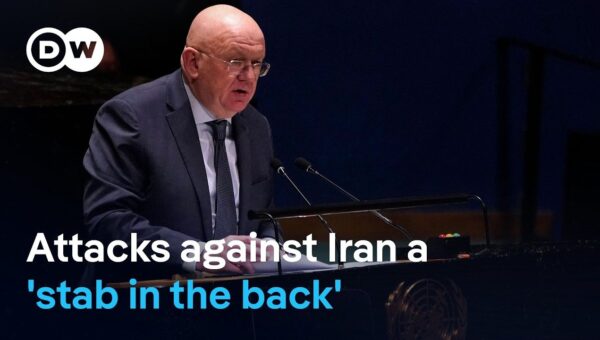
Russian President Vladimir Putin has condemned US air strikes on Iran, calling them a "cynical violation" of international law and morality. While Moscow offers strong words of support, experts suggest Russia's practical aid to Iran may be limited by capacity and logistical constraints. The incident also raises questions about Russia's global standing and its impact on the war in Ukraine.