Trump’s Iran Strike Jolts Putin, Weakens Russia’s Global Stance
President Trump's recent military action against Iran has significantly impacted Vladimir Putin's global standing, exposing Russia's weakened influence. The intervention, met with public skepticism in the U.S., highlights the interconnectedness of global conflicts and raises questions about future security guarantees.

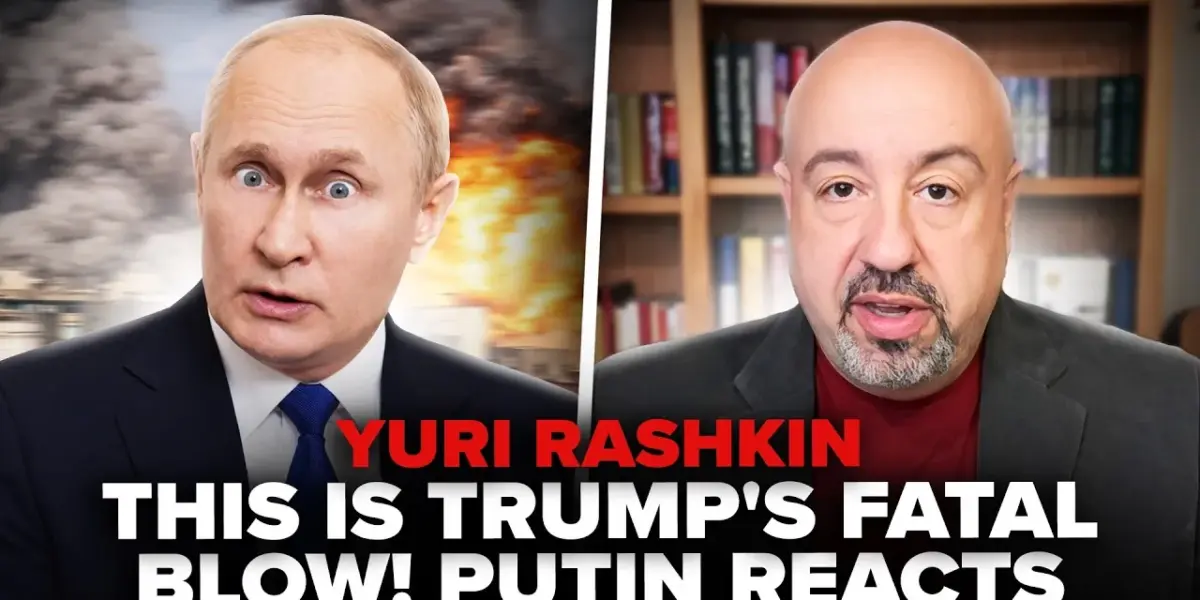
Trump’s Bold Move on Iran Amidst Global Tensions
In a significant geopolitical development, U.S. President Donald Trump has initiated a high-risk operation targeting Iran’s leadership. This bold move, aimed at potentially reshaping the Middle East, carries substantial implications for global power dynamics, particularly impacting Russia and its leader, Vladimir Putin. The decision, made without explicit congressional approval or a public case presented to the American people, has left many in the United States feeling unenthusiastic and concerned about the potential fallout.
American Public Divided on Iran Intervention
Unlike previous military engagements, the American public appears largely unconvinced by the rationale behind the Iran strike. Host of the “Rashkin Report” channels, Yuri Rashkin, noted that Americans are not accustomed to being drawn into conflicts without a clear justification, such as a direct attack on U.S. interests. “We are used to being presented with a case why we need to do this. At least I don’t know they sunk our battleship something,” Rashkin stated. He further elaborated that even Trump’s base, while supportive of a show of force, is wary of the potential costs in American lives and resources. The perception that the intervention was driven by lobbying from Saudi Arabia and Israel has also generated negative sentiment, raising concerns about the U.S. being led into military action by allies.
“The American people in the United States are not really on board with this at all. We are and and even his base, which is traditionally um interested in a show of force, but voted for him specifically because they don’t want these kinds of um uh situations where American soldiers are going to be involved and where America will have to pay price.”
– Yuri Rashkin
Putin’s Weakened Position Amidst Global Instability
The U.S. action against Iran has starkly highlighted Vladimir Putin’s diminished global standing. Rashkin observed that Putin’s response, characterized by diplomatic condemnation and appeals to international law, signals a position of weakness. “Putin is showing himself very, very weak and that is something that should not be lost when we’re discussing the madness or irrationality of or rationality approach of this administration in the United States,” Rashkin commented. He argued that Putin’s resort to the language of democracies and laws indicates a lack of leverage and strength, particularly when compared to his previous assertive posture.
The war in Ukraine has been identified as a primary reason for Russia’s weakened state. Rashkin explained that the extensive resources Russia has expended in Ukraine have curtailed its ability to act as a regional or global power. “Had Russia not wasted all of its resources in Ukraine over the last essentially 12 years, but particularly in the last four plus years, then Russia would be in a much better position to act as a regional hegemoin that it or world hegeimon that it imagines itself to be,” he said. The weakening of allies like Iran and Venezuela is seen as a direct consequence of Russia’s overextension in Ukraine, with credit attributed to the Ukrainian armed forces for disrupting Putin’s global influence.
The ‘Axis of Evil’ Concept Re-examined
The term “axis of evil,” originally coined to describe nations posing threats to world order, has been revisited in light of current events. Rashkin suggested that while Iran faces pressure, other nations like North Korea and Russia appear to be navigating the global landscape more smoothly. He questioned the effectiveness of pursuing nuclear weapons as a defense policy, referencing Ukraine’s situation and the Budapest Memorandum. This leads to the broader implication that future security guarantees may lie not with superpowers, but with individual states investing in their own institutions and people, particularly their armed forces.
The interconnectedness of these nations, particularly their reliance on China for manufacturing and parts, raises questions about a larger geopolitical strategy. Rashkin mused, “Is it that really this is just one big Chinese conspiracy and we are just marionets and puppets working their evil schemes? Well, not necessarily, but we certainly seem to be using them to make everything.” He emphasized the need to identify the actual actors and beneficiaries of global instability.
Ukraine’s Role and Future Security Guarantees
The conflict in Ukraine continues to be a central factor influencing international relations. Rashkin highlighted Ukraine’s remarkable achievements with drones, demonstrating its proactive approach to security in the absence of immediate global support. The situation in Iran is seen as further evidence that authoritarian regimes are vulnerable. The use of Iranian-supplied drones by Russia against Ukraine underscores the interconnected nature of these conflicts.
Regarding future security, Rashkin stressed that reliance on external powers like the United States for guarantees is increasingly untenable. “The United States can’t provide security guarantee for anybody for for people inside the United States for people outside of the United States,” he stated. The ongoing war serves as proof of the limitations of presidential assurances. He also pointed to recent reports of Russian willingness to consider U.S.-proposed security guarantees for Ukraine, though he expressed skepticism about their long-term reliability given previous Russian stances and Trump’s transactional approach to diplomacy.
Trump’s Distractions and Shifting Priorities
The Iran crisis has also raised concerns about its potential to distract President Trump from other geopolitical priorities, including the war in Ukraine. Rashkin suggested that Trump may be seeking successes in new arenas to divert attention from perceived failures in resolving the Russia-Ukraine conflict within his promised timeframe. “This president is looking for successes. He wants to be with winners and right now he sees that Putin is stuck and and and he would like to help Putin get out but Putin won’t,” Rashkin explained. Trump’s focus on areas where he can exert influence, such as the Iran situation, could lead to Ukraine receiving less international focus.
The discussion also touched upon the complexities of negotiations between Russia and Ukraine. While progress on prisoner exchanges is anticipated, the territorial issue remains a significant hurdle. The potential for security guarantees, however, is seen as an area where compromise might be found, though the trustworthiness of such agreements, particularly under a Trump administration, remains a subject of debate. Rashkin concluded by noting that while Trump may appear to be managing Putin, the underlying dynamics suggest a precarious balance, with potential for unforeseen consequences.
Source: ⚡️Putin's EMERGENCY DECISION on Iran! World EXPLODED FROM Trump's WAR. Russia is ready to SURRENDER (YouTube)

Related Articles

Iran Conflict Sparks Global Oil Supply Fears
Escalating tensions between Iran and Israel are raising serious concerns about potential disruptions to global oil supplies. The conflict's impact on critical shipping lanes and the Strait of Hormuz could lead to significant price volatility. Analysts are closely watching diplomatic efforts and military actions for signs of further market impact.

Zelensky Warns of New Russian Spring Attacks
Ukrainian President Volodymyr Zelensky has warned of impending Russian infrastructure attacks this spring, following a winter of intense missile and drone assaults. He emphasized Ukraine's resilience and the critical need for enhanced air defense, while urging international cooperation and readiness.

Voters See Trump’s Decline: Polls Reveal Growing Doubts
Three recent polls reveal a majority of Americans, including a notable number of Republicans, now doubt Donald Trump's mental and physical health. The data suggests a growing public concern over his fitness for office, a trend that appears to be accelerating.