Trump’s Iran Strategy Sparks Fears of High Oil Prices
A report suggesting President Trump might end conflict without reopening the Strait of Hormuz is causing alarm. Experts warn this could lead to sustained high oil prices and disrupt global trade for essential goods like fertilizer and helium.

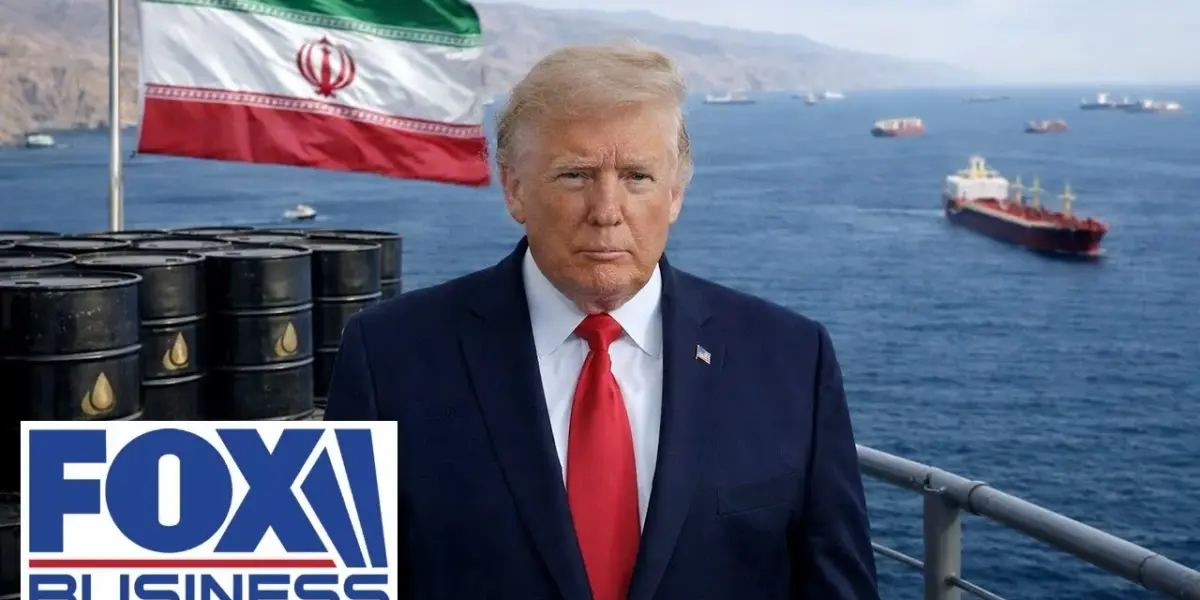
Trump’s Iran Strategy Sparks Fears of High Oil Prices
A recent report suggests President Trump might be willing to end conflict without reopening the vital Strait of Hormuz. This potential strategy is raising serious concerns among energy experts about long-term oil prices and global trade. The Wall Street Journal reported that the President indicated a readiness to conclude hostilities without ensuring the Strait’s passage is clear.
This development has led to strong criticism from former Energy Secretary Dan Brouillette. He finds it hard to believe such a move would be the final strategy. Brouillette stated that if the report is accurate, it would be highly problematic. Leaving the Strait closed after a conflict would essentially give Iran exactly what it wants. This includes achieving a cease-fire while maintaining control over a critical global trade route. He described this scenario as looking more like a temporary pause than a lasting deal.
Brouillette characterized this potential strategy as very bad if the reporting is true. He emphasized the strategic importance of the Strait of Hormuz. It is a vital waterway through which a significant portion of the world’s oil supply flows. Any disruption or control over this passage can have immediate and lasting effects on global energy markets.
Market Impact: Oil Prices and Global Trade at Risk
If the United States were to leave the Strait of Hormuz closed after a conflict, the implications for oil prices could be severe. Experts predict this could lead to persistently high gasoline prices and oil trading at $100 a barrel for an extended period. This situation would directly impact consumers at the pump and businesses reliant on stable energy costs.
However, the impact extends beyond just oil. The Strait of Hormuz is crucial for many other goods. Fertilizer, essential for farmers in the United States and worldwide, passes through this waterway. Additionally, imports of helium, vital for data centers powering artificial intelligence (AI) technologies, also rely on this passage. These are not minor commodities; they are critical components for modern economies and technological advancements.
Brouillette finds it difficult to accept that the ultimate strategy would be to allow Iran to retain control over such a critical chokepoint. He acknowledged and applauded the administration’s efforts in addressing nuclear weapons concerns with Iran. However, he stressed that allowing Iran to maintain control over a chokepoint that influences a significant portion of the global oil flow is strategically unsound.
What Investors Should Know
For investors, the situation in the Strait of Hormuz is a significant geopolitical risk factor. The potential for sustained high oil prices directly affects inflation and corporate earnings across many sectors. Companies in transportation, manufacturing, and technology could face increased operating costs.
The broader implications for global trade are also substantial. Disruptions to the flow of fertilizers could impact agricultural output and food prices. Restricted access to helium could slow the development and expansion of data centers and AI infrastructure, affecting the tech sector.
Investors should monitor developments related to the Strait of Hormuz closely. Geopolitical tensions in the region and any agreements or disagreements regarding passage rights can lead to increased volatility in energy markets and related industries. The strategic importance of this waterway means that any perceived instability can have far-reaching economic consequences, influencing investment decisions across various asset classes.
While the Trump administration has focused on nuclear proliferation, the potential for Iran to maintain control over the Strait of Hormuz presents a different kind of challenge. This challenge is economic and logistical, affecting the daily lives and business operations of people and companies worldwide. The long-term stability of global energy supplies and critical trade routes hangs in the balance.
Source: 'VERY BAD STRATEGY': Iran gets 'EXACTLY' what it wants if Trump does this (YouTube)

Related Articles


US Bombers Rule Iran’s Skies as Strikes Intensify
U.S. B-52 bombers are conducting overland operations deep within Iran, indicating a severe degradation of Iranian air defenses. Alongside intensified strikes on Hezbollah and IRGC targets, the U.S. is deploying advanced naval assets and leaving open the possibility of ground operations. The conflict's escalation raises concerns about wider regional instability.

Airspace Closures Spark Trump Fears Amidst Global Tensions
Recent airspace closures by France and Italy reportedly caused significant anxiety for former President Donald Trump. This event highlights how international conflicts can disrupt travel and create widespread unease, affecting even high-profile figures.
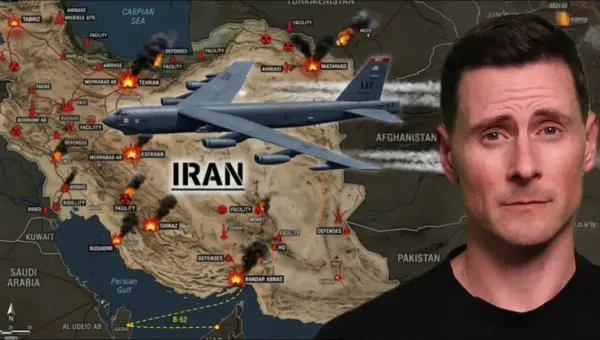
B-52 Bombers Strike Iran’s Missile Hubs
U.S. B-52 bombers have conducted their first overland missions into Iran, striking key ammunition depots linked to the country's ballistic missile program. These operations mark a significant escalation, demonstrating U.S. air superiority and degrading Iranian air defenses.