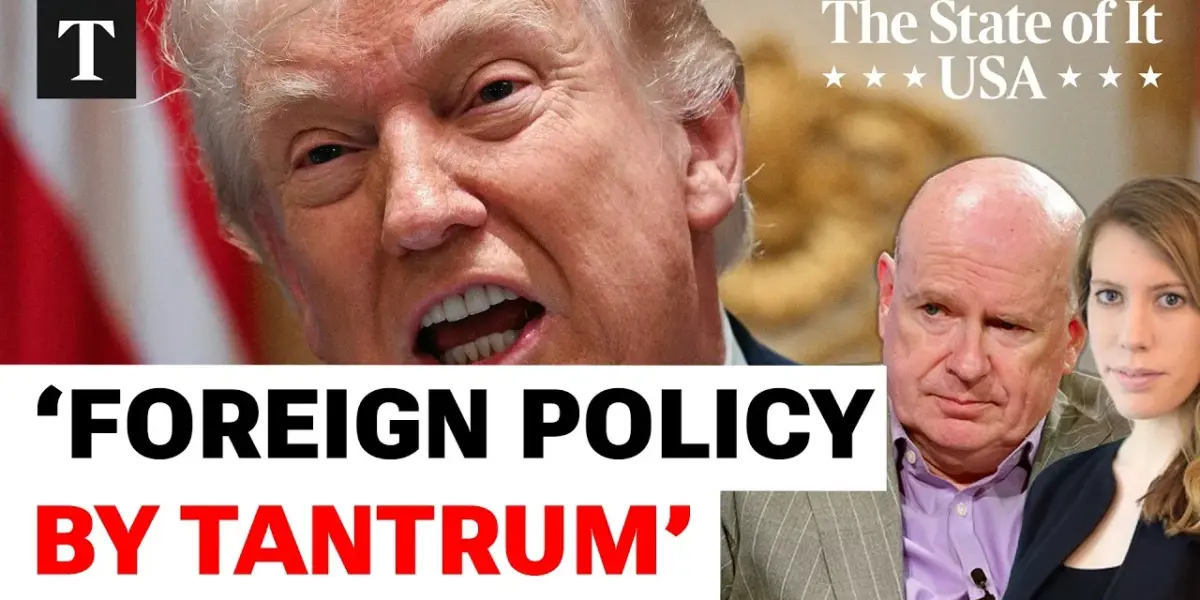
Trump’s Iran Strategy: ‘Foreign Policy by Tantrum’?
President Trump's foreign policy, particularly regarding the Iran conflict, is described as "foreign policy by tantrum," marked by conflicting signals and a disregard for traditional norms. Domestic political and economic pressures are mounting, while international alliances like NATO face unprecedented strain.

Trump’s Conflicting Signals on Iran War Exit
President Trump’s approach to the ongoing conflict in the Middle East is characterized by shifting and often contradictory messages, leaving allies and observers uncertain about his endgame. This has led to descriptions of his foreign policy as “foreign policy by tantrum” and “the fog of Trump,” suggesting a departure from traditional diplomatic and strategic norms.
In the space of a single day, conflicting statements have emerged regarding the war’s duration and success. While Trump has claimed significant progress, stating “we’re hitting him very hard” and “job done,” he has also suggested the need for “two weeks, maybe two weeks, maybe three” more, potentially extending beyond the initial White House projection of a 4 to 6-week operation.
Domestic Pressures and Economic Realities
The war’s impact on the U.S. economy and Trump’s domestic political standing are significant factors. With oil prices hovering around $100 a barrel, and concerns about physical shortages in the coming weeks, the economic fallout is palpable. Rising inflation expectations and a weakening labor market are further pressuring the administration.
Polls indicate Trump’s approval ratings are at an all-time low, creating immense political pressure to conclude the conflict swiftly. However, some analysts suggest Trump may prioritize his personal historical legacy over domestic political concerns or even the Republican Party’s electoral success.
“So much of this is personal. So much of it is, you know, the the sort of the the rantings of um, you know, of a kind of angry monarch. This is sort of foreign policy by tantrum.”
Strategic Questions and the Strait of Hormuz
A key strategic question revolves around the future control of the Strait of Hormuz, a vital chokepoint for global oil supply. Trump’s recent statements suggest a potential willingness to leave Iran in control, a move that critics argue would represent a strategic defeat for the United States.
The U.S. military’s actions, primarily an aerial bombing campaign, have not aimed to overthrow the Iranian regime or occupy territory, unlike past conflicts. However, if the situation requires more extensive ground forces or if Iran retains control of the Strait, it could necessitate a significant escalation, raising further political questions.
The idea of allies taking responsibility for securing the Strait has been floated, with Trump reportedly telling European nations, “go and get your own oil.” However, oil is a global commodity, and even a largely self-sufficient U.S. cannot escape the impact of higher global prices, which affect everything from gasoline to food.
NATO Under Strain: ‘Foreign Policy by Tantrum’
Trump’s skepticism towards NATO is a recurring theme, fueled by his perception that European allies are not contributing sufficiently and are not adequately protecting their own energy supplies.
While Trump cannot unilaterally withdraw the U.S. from NATO due to congressional action, he could effectively render the alliance ineffective by disavowing its core commitments, particularly Article 5. This approach, characterized as “foreign policy by tantrum,” stems from a dislike of unpredictable alliances and a belief that America gives more than it receives.
The damage to trust within the alliance is seen by some as potentially permanent, regardless of future U.S. administrations. This has forced European leaders to adjust to a fundamental shift in America’s global role.
The Christine Blasey Ford Controversy
In a separate development, the personal life of former Secretary of Homeland Security, Kristie Noem, has become a subject of intense media scrutiny. Reports have emerged detailing alleged extramarital activities of her husband, including instances of cross-dressing and engaging with online sex workers.
This story has garnered significant attention, with some suggesting it could have implications beyond personal gossip, potentially raising concerns about blackmail due to the sensitive nature of the revelations and Noem’s past public stances on LGBTQ+ issues.
The situation raises questions about Noem’s awareness of her husband’s alleged activities and the impact on her own career. The controversy adds another layer of complexity to the political landscape, even as the war in the Middle East continues to dominate headlines.
Looking Ahead: Uncertainty and Shifting Alliances
The coming weeks will be crucial in determining the trajectory of the Iran conflict and its broader geopolitical consequences. Trump’s decision-making process, driven by a blend of personal impulses and strategic calculations, remains opaque. The strain on international alliances, particularly NATO, is likely to persist, forcing nations to recalibrate their security strategies in an increasingly unpredictable world.
Furthermore, the personal controversies surrounding political figures highlight the intersection of private lives and public office, adding another layer of complexity to an already turbulent political climate.
Source: ‘The Rantings Of An Angry Monarch’: Trump’s Iran Endgame | Gerard Baker & Katy Balls (YouTube)

Related Articles
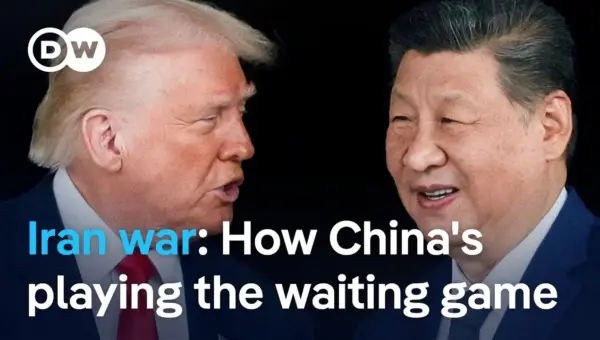
China Warns of Global Fallout as Iran War Escalates
China is calling for a ceasefire in the escalating Iran war, warning of global economic fallout and blaming the US and Israel for disruptions. Beijing's response is cautious, prioritizing stability for its export-driven economy over actively shaping the conflict's outcome. The war highlights China's complex position, needing a stable global system it has also sought to challenge.
US Claims Victory in Iran; NATO Alliance Strong, Expert Says
A retired U.S. Army Lieutenant Colonel asserts that the United States has achieved its primary objectives in Iran, effectively winning the conflict. He also defends the strategic importance of the NATO alliance, arguing its value is often underestimated by focusing on a few key members.


Trump’s Iran Claims Crumbled as Jets Fall from Sky
President Trump's claims about Iran's weakened air defenses were sharply contradicted when U.S. jets were shot down over Iranian territory and the Strait of Hormuz. This forced an emergency meeting, highlighting a dangerous gap between rhetoric and reality in a volatile region.